
US Arrears Leave Chemical Weapons Watchdog in Budget Crisis as Syria Work Pauses
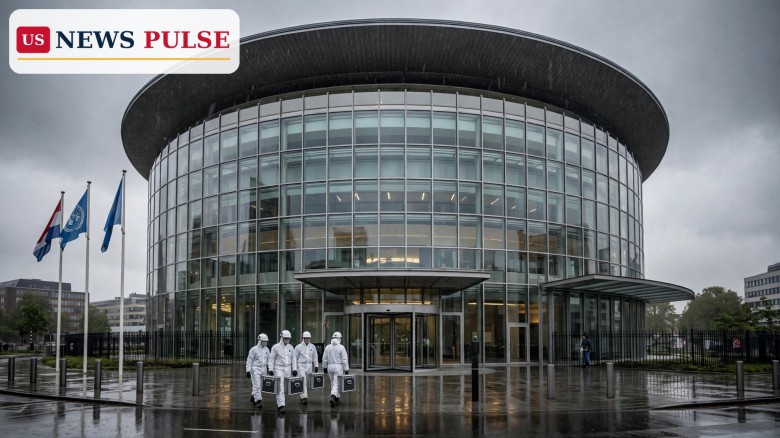
The Hague, Netherlands — The world's chemical weapons watchdog warned on Monday, November 23, 2026, that it is running out of money, blaming unpaid dues from the United States, its largest contributor, for a budget shortfall that threatens to halt its work destroying newly discovered chemical weapons in Syria. The Organisation for the Prohibition of Chemical Weapons (OPCW) said it is missing about a quarter of its 83 million euro ($91 million) annual budget, leaving the Nobel Peace Prize-winning body in what its director-general called a "precarious situation".
Key Points
- The OPCW is missing about a quarter of its €83 million ($91 million) annual budget, Director-General Sabrina Dallafior told member states in The Hague on Monday, November 23, 2026.
- The United States, the OPCW's largest payer, has paid only 20% of its €17 million 2026 contribution as of October, expert Greg Koblentz said.
- Operations will pause in December while the organisation takes stock and revises its 2027 plans, including deployments to Syria.
- In Syria, inspectors have found large quantities of lethal, previously undeclared chemical weapons since Bashar al-Assad's ousting in December 2024.
- The OPCW has exhausted its €8 million reserve, and the shortfall will also block new investigations into Russia's alleged chemical weapons use in Ukraine and Sudan's production and use of them.
What Happened
Dallafior delivered the warning to the OPCW's member states at a meeting in The Hague on Monday, telling them the organisation's finances had reached a critical point. Roughly €20 million of the annual budget has not arrived, and the gap falls overwhelmingly on a single member — the United States, which pays the largest share of any country.
The alarm had already been raised inside the organisation days earlier. In an email to staff late on Friday, November 21, Dallafior wrote that "in recent weeks, the financial challenge has become particularly acute, with the OPCW's largest payer having thus far not made its full 2026 assessed contribution payment". The message, first reported by Reuters, made clear the problem was not a one-off delay but a shortfall with immediate consequences.
The consequences arrive in December, when the OPCW will pause operational activities to take stock and revise its 2027 plans. The pause covers capacity-building and deployments to Syria, where inspectors are cataloguing chemical weapons stockpiles disclosed since Assad's fall.
Background and Context
The OPCW polices the Chemical Weapons Convention, the 1997 treaty banning chemical weapons joined by 193 states. Its inspectors verify that declared stockpiles are destroyed, investigate alleged use, and help countries handle dangerous chemicals safely. It won the Nobel Peace Prize in 2013 for eliminating deadly stockpiles in Syria and elsewhere.
The current crisis in Syria began after Assad was ousted in December 2024. Since then, inspectors working with the new Syrian authorities have found large quantities of lethal chemical weapons that had never been declared, and they have spent much of 2026 mapping the stockpiles and preparing their destruction. The Trump administration, meanwhile, has cut funding to some UN bodies and left many commitments unpaid while demanding reforms; the US assessment for 2026 is about €17 million, of which only around €3.4 million had been paid by October.
The Chemical Weapons Watchdog's Budget Crisis
The numbers explain the alarm. Losing a quarter of an €83 million budget — roughly €20 million — leaves little room to absorb the blow. The United States owes about €13.6 million of its €17 million assessment, a sum that alone accounts for most of the gap, and the OPCW has already burned through its €8 million reserve.
The shortfall will also prevent new operations, including investigations into Russia's alleged use of chemical weapons against Ukraine and Sudan's production and use of them. Those findings carry weight precisely because they come from a neutral, technical body rather than any government — and without funding, the investigations cannot begin.
Reactions and Quotes
Dallafior's message to staff was blunt about where the problem lies, even as she avoided naming the United States directly. "In recent weeks, the financial challenge has become particularly acute, with the OPCW's largest payer having thus far not made its full 2026 assessed contribution payment," she wrote.
The scale of the shortfall was spelled out by Greg Koblentz, a US biological and chemical weapons expert, who said that as of October the United States had paid only 20% of its €17 million contribution for 2026. The administration has not publicly explained the delay; its dues are assessed under the treaty, not voluntary.
Why It Matters
The crisis matters first because of what is at stake in Syria. Undeclared chemical weapons do not become safe by being discovered; they remain lethal until destroyed under controlled conditions, and every month of delay leaves stockpiles sitting in a country still rebuilding its institutions.
It matters second because the global ban on chemical weapons rests on verification — inspectors showing up, taking samples and reporting what they find. If the body that runs that system cannot pay its inspectors, the ban is harder to enforce, and the blocked Ukraine and Sudan investigations are exactly the cases where independent verification matters most.
What Happens Next
The immediate next step is the December pause, during which the OPCW will take stock and revise its 2027 plans. Member states will be pressed to settle arrears, and whether Washington pays the rest of its 2026 assessment will dominate those talks.
In Syria, the timetable for destroying the newly found stockpiles is now uncertain. The episode is also likely to sharpen the debate in Washington: the administration frames its cuts as a demand for reform, while the OPCW's warning frames them as a threat to the chemical weapons ban.
Frequently Asked Questions
What is the OPCW?
The Organisation for the Prohibition of Chemical Weapons oversees the Chemical Weapons Convention, verifies stockpile destruction and investigates alleged use. It won the Nobel Peace Prize in 2013.
How big is the shortfall?
The OPCW is missing about a quarter of its €83 million ($91 million) annual budget, largely because the US has paid only 20% of its €17 million 2026 contribution. Its €8 million reserve is exhausted.
Why pause work in Syria?
With money running out, the OPCW will pause operations in December to reassess its 2027 plans, including deployments to Syria, where inspectors found large quantities of undeclared chemical weapons since December 2024.
What investigations are blocked?
Investigations into Russia's alleged use of chemical weapons in Ukraine and Sudan's production and use of chemical weapons cannot start without funding.
When will the OPCW know if the money is coming?
It will take stock during the December pause and revise its 2027 plans. Whether the US pays the rest of its 2026 assessment will be decisive.
Read more: Syria Troops Join Saudi Fight Against Houthis; ICC President Accuses Trump Administration of Obstructing Justice; US and Venezuela Sign Deal to Reestablish Military Ties.
© 2026 US News Pulse. All rights reserved.
 Print
 Save