


 | Today's Date:


ICC President Akane Accuses Trump Administration of Obstructing Justice
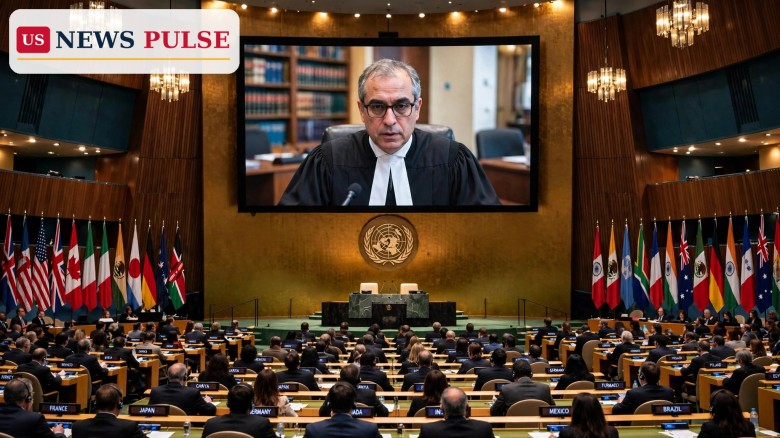
International Criminal Court President Tomoko Akane has accused the Trump administration of trying to obstruct international justice, telling the United Nations General Assembly that sweeping United States sanctions against the court are an extraordinary and unprecedented attempt to dismantle the tribunal. Delivering the court’s annual report on Monday, November 2, 2026, Akane urged all 193 UN member states — not only the 125 states that are parties to the court — to take concrete action in defence of the institution. Her address was delivered by prerecorded video because US sanctions imposed on her in August have made her unable to enter the United States.
Akane’s warning centred on a two-stage sanctions campaign. The administration first sanctioned individual ICC judges and prosecutors over investigations touching the United States and its allies, including Israel, and then, on October 9, 2026, imposed sweeping sanctions on the court itself. Secretary of State Marco Rubio said at the time that the United States would ban transactions with the court in order to cut off its resources. Akane told the General Assembly that nine of the court’s 18 judges are now under US sanctions.
Key Points
- ICC President Judge Tomoko Akane delivered the court’s annual report to the UN General Assembly on Monday, November 2, 2026, by prerecorded video.
- She accused the Trump administration of trying to obstruct international justice and dismantle the tribunal, calling the steps “extraordinary” and “unprecedented”.
- Akane urged all 193 UN member states, not just the court’s 125 parties, to take concrete action in defence of the court.
- Nine of the court’s 18 judges are now under US sanctions, following individual designations and sweeping sanctions imposed on the court itself on October 9, 2026.
- She vowed the court will continue its mandate with independence and impartiality, acting only on the basis of the law and the evidence. The State Department had no immediate comment.
What Happened
Akane, a Japanese jurist who serves as president of the International Criminal Court, presented the tribunal’s annual report to the General Assembly in New York. The format of her appearance was itself part of the story: because she was sanctioned by the United States in August, she could not travel to the United States to deliver the report in person, and instead addressed member states through a prerecorded video message.
Background and Context
The International Criminal Court was set up in 2002 to prosecute war crimes, crimes against humanity and genocide, the most serious crimes of concern to the international community. It is a court of last resort: it steps in only when national courts are unwilling or unable to investigate and prosecute such crimes genuinely. Its 125 states parties have accepted its jurisdiction under the Rome Statute, while other major states, including the United States, China, Russia and Israel, are not parties. That structure has always made the court’s relationship with non-party states politically sensitive, particularly when its prosecutors examine conduct involving their nationals or allies.
ICC President Tomoko Akane and the Sanctions Challenge
At the heart of Akane’s address was a claim about purpose. She did not present the sanctions as a routine foreign-policy disagreement or as a dispute over a single case. She presented them as an effort to obstruct international justice itself and to dismantle the tribunal. That framing invites member states to respond not as bystanders to a bilateral dispute between Washington and The Hague, but as stakeholders in a system of international law that the court embodies.
Reactions and Quotes
Akane closed her message with a vow that the court would not be deflected by the pressure. “The court will continue to fully discharge its mandate with independence and impartiality, acting only on the basis of the law and the evidence,” she said. The sentence was the address’s clearest statement of intent: whatever the sanctions’ practical effects, the court’s leadership intends to present its work as unchanged in its legal standards and its independence.
The State Department had no immediate comment on Akane’s address, according to the reports of the speech. That silence leaves the administration’s most recent public position as the one set out when the sweeping sanctions were announced: that the United States would ban transactions with the court to cut off its resources, in response to investigations the administration regards as illegitimate. No new US response to Akane’s specific charge of obstruction was reported at the time of her address.
Related coverage of the court’s work and of the wider diplomacy around international law continues on US News Pulse, including the UN’s liquidation of its Western Sahara mission after 35 years, Qatar’s account of US-Iran interim-deal talks and North Korea’s rebuke of an FBI attribution.
Why It Matters
The confrontation matters first for the victims and communities whose cases are before the court. The ICC exists for situations where national justice systems cannot or will not act, and delays or disruptions to its work can mean witnesses grow older, evidence degrades and suspects remain beyond reach. If sanctions make it harder for the court to operate, the cost is measured not only in institutional terms but in the prospects for accountability in some of the world’s gravest conflicts.
What Happens Next
The immediate question is whether member states answer Akane’s call with concrete steps. Diplomats and court-watchers will be looking for joint statements, practical support measures and any steps to mitigate the sanctions’ effects on the court’s banking, travel and contracting. The General Assembly debate that follows the annual report will be an early test of whether her appeal commands broad support or divides along familiar geopolitical lines.
Frequently Asked Questions
Who is Tomoko Akane?
Tomoko Akane is a Japanese judge and the president of the International Criminal Court. She delivered the court’s annual report to the UN General Assembly on November 2, 2026, by prerecorded video because US sanctions imposed on her in August prevent her from entering the United States.
What did Akane accuse the Trump administration of doing?
She accused the administration of trying to obstruct international justice and dismantle the tribunal, calling its sanctions steps “extraordinary” and “unprecedented” and urging all 193 UN member states to take concrete action in defence of the court.
What sanctions has the US imposed on the ICC?
The administration first sanctioned individual ICC judges and prosecutors over investigations into the United States and its allies, including Israel, and then imposed sweeping sanctions on the court itself on October 9, 2026, with Secretary of State Marco Rubio saying the US would ban transactions with the court to cut off its resources. Nine of the court’s 18 judges are now under US sanctions.
What happens next for the court?
Member states will be watched for concrete diplomatic and practical support, the United States’ position on maintaining or adjusting the sanctions will be tested, and the court’s ongoing proceedings will show whether it can keep working with independence and impartiality despite the financial and practical pressure.
Image: An illustrative view of a judge addressing the United Nations General Assembly by video, as ICC President Tomoko Akane did on November 2, 2026. The image is an original illustration, not a photograph of Judge Akane.
Leave a Comment