
Iowa Lead Azide Detonation Cleared: Eighth Circuit Lets Army Blast Go Ahead
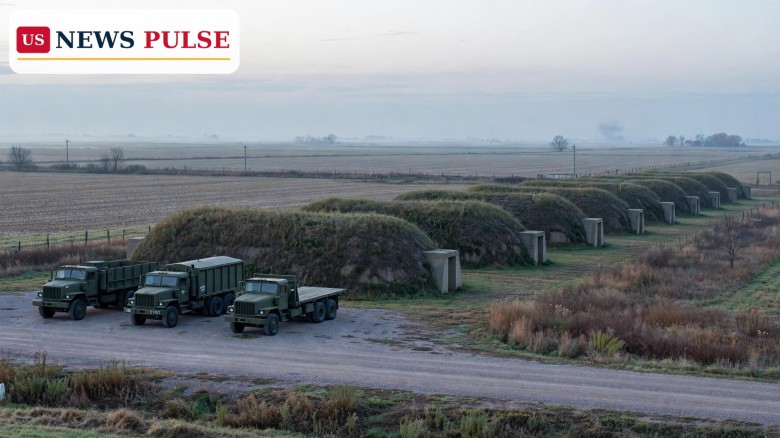
A federal appeals court has cleared the way for the U.S. Army to blow up 68 barrels of unstable, toxic lead azide at an Iowa ammunition plant, and the Army said late Monday it will go ahead with the controlled detonation on Wednesday morning, the day before Thanksgiving. The Eighth U.S. Circuit Court of Appeals on Monday, November 23, 2026, lifted a temporary stay that had blocked the Environmental Protection Agency permit for the blast at the Iowa Army Ammunition Plant in Middletown — hours after President Donald Trump ordered the Army to hold off until the court agreed.
Key Points
- The Eighth Circuit on Monday, November 23, lifted its stay on the EPA permit for detonating 68 barrels of lead azide in Middletown, Iowa.
- The Army said late Monday it will proceed with the controlled detonation on Wednesday morning, November 25.
- The court found the EPA "adequately incorporated safeguards to minimize the dispersal of lead dust".
- The Army has warned the blast could release toxic lead dust reaching up to 100 miles.
- The groups' underlying challenge is still pending; the ruling covered only the emergency stay.
What Happened
In an unsigned order, the Eighth Circuit judges held that the Iowa Environmental Council and the Sierra Club had "failed to show they are likely to prevail" in their challenge to the EPA permit, and lifted the administrative stay that had frozen it. The judges wrote: "A controlled detonation with attendant safety measures better alleviates the risk of irreparable harm than the risk of an uncontrolled explosion."
The ruling came hours after President Trump said on Truth Social on Monday that he had ordered the Army not to move forward until a federal court agreed and until Iowa's incoming governor-elect, Rob Sand, agreed. The court has now agreed. Sand's position remained publicly unclear on Monday night, but the Army moved ahead, saying late Monday it is proceeding with state, local and federal authorities "unanimous" in its support. Acting Army Secretary Adam Telle confirmed the detonation will take place on Wednesday morning, and the Des Moines Register reported Governor Kim Reynolds concurs.
Background and Context
The stockpile has been stored for more than 20 years at the Iowa Army Ammunition Plant, a roughly 19,000-acre installation in Middletown, about 160 miles southeast of Des Moines. A March survey found the lead azide — a volatile explosive used to set off munitions — had recrystallised and become too sensitive to move safely. The Army says the nearly 9,500 pounds must be destroyed where it sits, inside earth-covered magazines.
The EPA issued an emergency hazardous-waste permit on November 13 authorising the blast, and the Army first planned to detonate the barrels on Friday, November 20, telling nearby residents to leave for much of the day. That plan was postponed after an outcry from residents, farmers and Iowa officials, and after the Iowa Environmental Council and the Sierra Club sued. The Eighth Circuit froze the permit the day before the scheduled blast.
The date has slipped repeatedly: pushed to Monday, November 23, then to Wednesday, November 25, announced on Sunday night and chosen for optimal weather.
Iowa Lead Azide Detonation: What the Court Decided
The decision turned on the balance of risks. The judges accepted that the EPA had "adequately incorporated safeguards to minimize the dispersal of lead dust" and found the Army had evaluated "a full range" of alternatives, including on-site chemical treatment, closed-chamber thermal treatment, relocation of the drums and detonation inside the magazines. The court said it was "mindful of the very real risks" of the planned blast — but weighed those against the danger of leaving the material in place.
The ruling was narrow. It decided only the emergency request to freeze the permit while the case is heard; the groups' underlying petition remains pending, and the court did not rule on the Army's separate plan to use an emergency exclusion.
Reactions and Quotes
The Army's late-Monday statement framed the decision as a green light, saying it would proceed with the controlled removal of the barrels with state, local and federal authorities "unanimous" in support. Telle's confirmation on social media set the timing: Wednesday morning.
The environmental groups had argued the EPA permit did not adequately protect against lead dust or show that safer alternatives had been properly reviewed — the argument the court has now rejected at this stage. They have not yet said whether they will seek further relief before Wednesday.
Iowa's political leaders have been divided throughout. Governor-elect Sand had earlier criticised an "unacceptable lack of communication and clarity" around the plan, and Senator-elect Josh Turek had called for a delay until the health risks were better understood. Residents and farmers nearby have raised concerns about toxic lead dust drifting over fields and towns.
Related coverage: Trump ordering the Army to halt the Iowa lead-azide detonation, the original plan to detonate 68 barrels of lead azide in Iowa and the Army's plan to act under emergency powers.
Why It Matters
The ruling resolves, for now, a standoff between two dangers. On one side sits nearly five tons of explosive that has grown more unstable with age and could detonate on its own, possibly when cold weather arrives. On the other is a deliberate blast that the Army itself says could scatter toxic lead dust up to 100 miles. The court chose the controlled risk over the uncontrolled one.
It also matters because of the timing. A blast the day before Thanksgiving, after days of shifting dates, has left nearby communities with little certainty about when to leave or where the plume might go.
What Happens Next
Barring a last-minute court intervention, the detonation goes ahead on Wednesday morning, November 25, at the Middletown plant. The Army is expected to issue updated public-safety guidance for nearby residents, including evacuation or shelter instructions and air monitoring.
Attention will also turn to Governor-elect Sand, whose agreement was the second condition in Trump's order and which he has not publicly given. After the blast, the focus shifts to monitoring: whether lead dust is detected beyond the plant and how far it travels.
Frequently Asked Questions
When will the detonation happen?
The Army says the controlled detonation of the 68 barrels will take place on Wednesday morning, November 25, 2026, the day before Thanksgiving, at the Iowa Army Ammunition Plant.
What is lead azide?
Lead azide is a highly sensitive explosive used to trigger other munitions. The Iowa stockpile has degraded over more than 20 years, making it too unstable to move or handle.
How far could the lead dust travel?
The Army has warned of a plume of toxic lead dust extending up to 100 miles.
Why did the court allow the blast?
The Eighth Circuit found the groups unlikely to win, the EPA's safeguards adequate, and a controlled detonation safer than risking an uncontrolled explosion.
Is the legal fight over?
No. The ruling decided only the emergency request to freeze the EPA permit. The groups' underlying challenge is still pending in the Eighth Circuit.
© 2026 US News Pulse. All rights reserved.
 Print
 Save