
22 States Sue HUD Over Rule Stripping Housing Aid From Mixed-Status Families
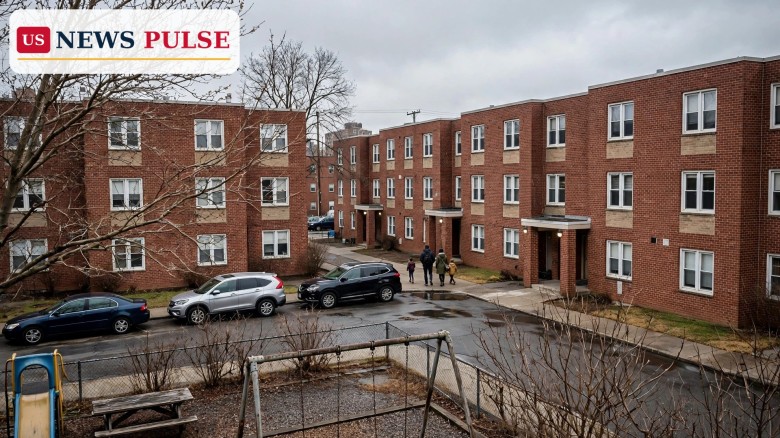
Twenty-two state attorneys general and the governor of Pennsylvania sued the Trump administration on Monday, November 23, 2026, challenging a new Department of Housing and Urban Development rule that strips federal housing assistance from mixed-status families. The coalition filed its lawsuit in the U.S. District Court for the District of Massachusetts, arguing the rule — effective December 14 — illegally ends nearly 30 years of policy that let U.S. citizens and eligible immigrants keep their homes even when they live with an ineligible relative.
Key Points
- Twenty-two attorneys general, plus the governor of Pennsylvania, filed suit on Monday, November 23, in federal court in Massachusetts.
- The HUD rule, issued on November 12 and effective December 14, ends the long-standing "proration" system and cuts off a whole household if any member is ineligible.
- HUD estimates about 20,000 mixed-status families, totalling 78,100 people, will lose housing assistance — including about 55,000 people who are fully eligible.
- HUD's own analysis says 65% of the eligible members of mixed-status families are under 18.
- The rule also forces every U.S. citizen in federal housing programmes to provide a Social Security number and consent to a SAVE database citizenship check.
What Happened
The lawsuit is led by the attorneys general of New York, California and Massachusetts. Joining them are the attorneys general of 18 other states and the District of Columbia, plus Pennsylvania Governor Josh Shapiro's administration. San Francisco is leading a separate coalition of local governments and housing authorities suing over the same rule.
The case challenges a HUD final rule that ends the system under which a family's subsidy was reduced — "prorated" — to cover only its eligible members. Under the new rule, a family can stay in HUD-assisted housing only if every member is a U.S. citizen or an eligible immigrant. A household with even one ineligible member loses its assistance entirely, even though no federal money was ever paid for that person.
The coalition asks the court to declare the rule unlawful and block HUD from enforcing it against the plaintiff states, their local governments and their housing authorities — three weeks before the rule is due to take effect.
Background and Context
For nearly 30 years, federal housing programmes have assisted low-income families even when not every household member was eligible. Under proration, HUD reduced the family's subsidy to cover only eligible members — keeping families housed together while ensuring no federal dollars subsidised ineligible people.
Congress codified that protection in 1997, stating that families receiving prorated assistance "shall not" lose their benefits just because an ineligible family member lives with them. The states argue that language settles the question: the new rule does exactly what Congress said HUD may not do.
The rule is part of a wider tightening of federal housing and immigration policy, and it lands as housing costs remain at record highs and homelessness services face cuts to Medicaid and food assistance.
HUD Mixed-Status Families Rule: What Changes on December 14
The practical change is stark. From December 14, a mixed-status family — one in which some members are U.S. citizens or eligible immigrants and others are undocumented or otherwise ineligible — will no longer receive a reduced subsidy. It will receive nothing, and its members will face eviction unless the household splits up or the ineligible member leaves.
The rule reaches far beyond mixed-status households. It also requires every U.S. citizen in federal housing programmes to provide a Social Security number and consent to a SAVE database citizenship check. If SAVE cannot confirm their citizenship, they must produce an original or certified birth certificate, a naturalisation certificate or a passport. In Washington alone, about 82,000 people who already proved their eligibility would have to go through the process again, and about 600 mixed-status families in the state face losing their homes.
HUD's own figures show the scale: around 20,000 families, totalling 78,100 people, will lose assistance, and the agency acknowledges the rule will lead to evictions and displacement. About 55,000 of those affected are U.S. citizens or eligible immigrants, many of them children and older people.
Reactions and Quotes
Washington Attorney General Nick Brown, whose office joined the suit, said the rule would push families into homelessness. "Because of this unlawful rule, hundreds of Washington families face homelessness," Brown said. "Our office will fight this administration's cruel attempt to upend federal housing policy so we can keep families in Washington stable and defend the rule of law."
The coalition's central argument is that HUD exceeded its authority and violated the Administrative Procedure Act with what it calls an arbitrary new restriction — illegally reversing nearly 30 years of policy and clear congressional intent, since federal law expressly allows prorated assistance and sets different documentation rules for citizens and eligible immigrants aged 62 and older.
Related coverage: HUD cutting off LA's homeless agency in a $150 million fraud settlement, U.S. homelessness falling to 698,425 in its largest drop in over a decade and Massachusetts suing ICE over courthouse arrests.
Why It Matters
The human cost falls overwhelmingly on people the rule does not even target: of the 78,100 people HUD says will lose assistance, about 55,000 are U.S. citizens or eligible immigrants, and 65% of the eligible members are children. The rule forces those families to choose between keeping their home and keeping their family together — a choice Congress tried to prevent in 1997.
The financial cost would land on state and local governments: HUD's own analysis puts sheltering the displaced at $20,000 to $50,000 per person each year — far more than the prorated subsidies the rule eliminates.
What Happens Next
The case now moves in the District of Massachusetts, where the coalition will seek to block the rule before it takes effect on December 14. If the court does not intervene, housing authorities across the country will have to begin enforcing the new eligibility standard, and the first eviction notices could follow within weeks.
The separate San Francisco-led case will proceed alongside it. For the families affected, the weeks before December 14 are the window in which the courts decide whether nearly 30 years of prorated assistance survives — or ends.
Frequently Asked Questions
What is a mixed-status family?
A household in which some members are U.S. citizens or eligible immigrants and others are undocumented or otherwise ineligible.
What does the HUD rule change?
It ends proration: instead of reducing a family's subsidy to cover only eligible members, HUD will cut off the whole household if any member is ineligible. It takes effect December 14, 2026.
How many people are affected?
HUD estimates about 20,000 families, totalling 78,100 people, will lose assistance — including about 55,000 U.S. citizens or eligible immigrants, most of them children.
Why are the states suing?
They argue the rule illegally reverses nearly 30 years of policy and clear congressional intent, exceeds HUD's authority and violates the Administrative Procedure Act.
What happens to U.S. citizens in federal housing?
They must provide a Social Security number, consent to a SAVE database citizenship check, and produce a birth certificate or passport if SAVE cannot confirm their status.
© 2026 US News Pulse. All rights reserved.
 Print
 Save