

 | Today's Date:



Massachusetts Sues ICE Over Courthouse Arrests as 38 Seized Without Warrants
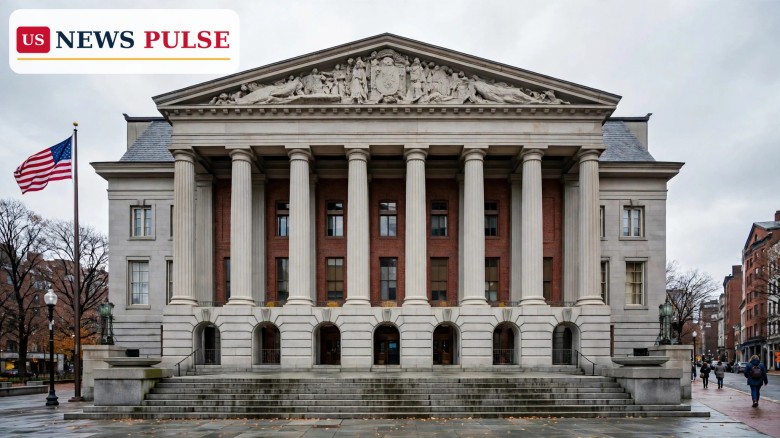
BOSTON — Massachusetts sued U.S. Immigration and Customs Enforcement on Monday, asking a federal court to block agents from arresting people inside or near state courthouses without a judicial warrant, after the state said at least 38 people were detained that way since its new courthouse-protection law took effect.
Attorney General Andrea Joy Campbell filed the lawsuit, Commonwealth of Massachusetts v. U.S. Immigration and Customs Enforcement, No. 1:26-cv-15219, in federal court in Boston on Monday, November 23, 2026. It challenges a May 2025 ICE directive letting agents make civil arrests in or near state courthouses without judicial warrants.
Key Points
- Attorney General Andrea Joy Campbell sued ICE in federal court in Boston on Monday, November 23, 2026, to block civil immigration arrests in or near state courthouses without a judicial warrant.
- It challenges ICE's May 2025 directive authorising such arrests, arguing it violates the Administrative Procedure Act and the Tenth Amendment.
- ICE has arrested more than 1,110 people at Massachusetts courthouses since President Trump took office — more than 600 in 2025 and more than 500 in the first 10 months of 2026.
- At least 38 people have been arrested at courthouses since the PROTECT Act took effect on November 3, all without judicial warrants.
- A California federal judge vacated the policy in June 2026, but ICE has continued the arrests, and California Attorney General Rob Bonta filed a similar lawsuit earlier in November.
What Happened
The state says ICE agents have arrested more than 1,110 people at Massachusetts courthouses since President Trump took office — more than 600 in 2025 and more than 500 in the first 10 months of 2026. The pace has not slowed since Massachusetts moved to ban the practice: at least 38 people have been arrested in the two and a half weeks since the PROTECT Act took effect on November 3, all without judicial warrants.
The suit points to concrete harm. On November 3, the day the law took effect, ICE arrested a defendant due to appear for a criminal trial at a Medford courthouse, preventing his appearance, and damaged security barriers there. The state also says the arrests are keeping victims and witnesses away: domestic-violence survivors fear seeking restraining orders, and one woman declined to report a rape, fearing arrest if she testified.
Background: Why Massachusetts Sues ICE Over Courthouse Arrests
The dispute turns on a directive ICE issued in May 2025 allowing agents to make civil immigration arrests in or near state courthouses without a judicial warrant. Massachusetts argues the policy reaches into the state's own courts, disrupting criminal cases and deterring the people the courts exist to serve, and says the arrests have continued even after a federal judge in California vacated the policy in June 2026.
Governor Maura Healey signed the PROTECT Act on August 5; it took effect on November 3 and bars civil immigration arrests in state courthouses without a judicial warrant. The lawsuit argues that ICE's continued arrests defy that law and exceed the agency's authority, and frames the case as a question of federalism: the state says Washington cannot dictate how Massachusetts runs its own courts, invoking the Tenth Amendment, which reserves powers not granted to the federal government to the states.
Reactions: What Massachusetts and ICE Say
The lawsuit argues the ICE policy violates the Administrative Procedure Act and the Tenth Amendment, by interfering with the state's sovereign control of its courts. It ties the legal claims to specific events: the Medford arrest that kept a defendant from his own trial, the damage to courthouse security barriers, and the chilling effect on victims and witnesses.
California has taken a similar path: a federal judge there vacated the ICE courthouse-arrest policy in June 2026, and Attorney General Rob Bonta filed his own lawsuit earlier in November. Together they amount to a coordinated challenge by two of the country's largest states.
The Department of Homeland Security did not immediately respond to a request for comment, and ICE has not publicly addressed the filing. The administration has previously defended courthouse arrests as a lawful enforcement tool, arguing that courthouses are places where people wanted for immigration violations can reliably be found. That defence is now set to be tested in a Massachusetts courtroom.
Why It Matters
It matters because the justice system depends on people showing up: defendants must appear for trial, victims must seek protection orders, and witnesses must testify. If people fear arrest the moment they walk through the courthouse door, the state argues, cases fall apart, victims stay silent and the courts cannot do their work. The Medford case is the clearest example: a defendant due for a criminal trial never made it there because ICE arrested him first.
The case is also about who controls the courts. Massachusetts says the federal government cannot use the state's own courthouses as arrest sites over the state's objection, and the Tenth Amendment argument puts that question squarely before a federal judge. The outcome could shape whether other states can pass laws like the PROTECT Act and expect them to be honoured, and with California already suing on the same issue, a ruling in Massachusetts would carry weight well beyond the state's borders.
What Happens Next
The case will now move through the federal court in Boston, where the state is expected to seek an order stopping the arrests while it is pending. The court will weigh the state's claim that the policy is unlawful against the federal government's interest in immigration enforcement.
If arrests continue while the case is pending, the state is likely to bring those figures back to the court. Other states will be watching closely — a Massachusetts win could encourage more states to pass courthouse-protection laws of their own, while a loss would leave the ICE directive standing. The Department of Homeland Security has not yet responded to the suit, and its first court filings will show how the administration intends to defend a policy that two state attorneys general are now challenging.
Frequently Asked Questions
What did Massachusetts sue ICE over?
The state sued to block ICE from making civil immigration arrests in or near state courthouses without a judicial warrant, challenging its May 2025 directive.
What is the PROTECT Act?
A Massachusetts law signed by Governor Maura Healey on August 5, 2026, which took effect on November 3 and bars civil immigration arrests in state courthouses without a judicial warrant.
How many people has ICE arrested at Massachusetts courthouses?
More than 1,110 since President Trump took office, including at least 38 in the two and a half weeks after the PROTECT Act took effect.
What happened at the Medford courthouse?
On November 3, ICE arrested a defendant due to appear for a criminal trial, preventing his appearance, and damaged security barriers at the courthouse.
Has a court already ruled on the ICE policy?
Yes, a California federal judge vacated the policy in June 2026, but ICE has continued the arrests, and California's attorney general filed a similar lawsuit earlier in November.
Read our report on ICE detaining Princeton student Eva Yi Xie at Reagan National Airport and masked agents dragging two people off a jet bridge at Sea-Tac.

The US News Pulse newsroom covers breaking news across the United States and the world, working from wire services, official statements and on-the-record sources. Every story is reviewed against our editorial standards before publication. Corrections and tips: info@usnewspulse.com
About our newsroomLeave a Comment