
Fourth Oil Tanker Explodes After Hitting Mine East of Strait of Hormuz, IRGC Says
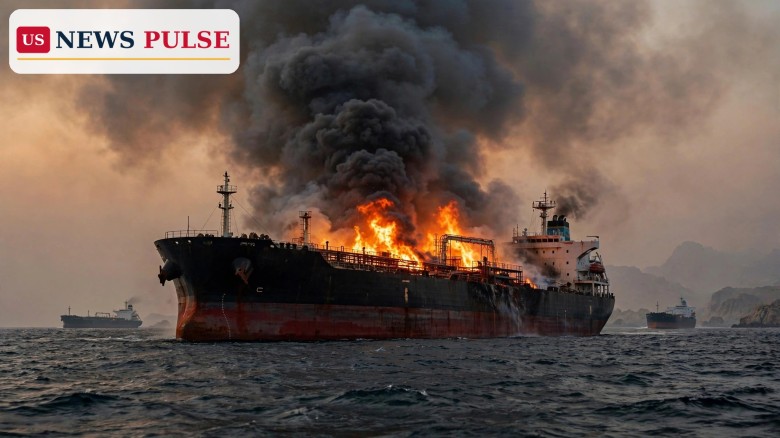
TEHRAN — A fourth oil tanker exploded and caught fire after striking a naval mine east of the Strait of Hormuz early on Tuesday, November 24, 2026, Iran’s Revolutionary Guard Corps Navy said, in the latest mine strike in the strait. The IRGC said the tanker was sailing an unauthorised route when it hit the mine, and warned that vessels using such routes face explosions and fires. Two tankers travelling with the stricken vessel turned back toward the Persian Gulf after a radio warning from the IRGC Navy. The navy did not name the tanker or give casualty or damage details.
Key Points
- The IRGC Navy said a fourth oil tanker exploded after hitting a naval mine early on Tuesday east of the Strait of Hormuz.
- Two tankers travelling with it turned back toward the Persian Gulf after a radio warning from the IRGC Navy.
- Separately, the IRGC said a container ship struck a sea mine north of Khasab, Oman, and was forced to stop.
- The navy gave no crew, casualty or damage details, and Reuters could not independently verify the report.
What Happened
The IRGC Navy announced the incident on Tuesday, saying the tanker exploded and caught fire after striking a naval mine early in the morning east of the Strait of Hormuz, the narrow waterway between Iran and Oman. The IRGC said the vessel was on an unauthorised route when the mine detonated. The IRNA-carried announcement gave no name, flag, cargo details or information about the crew’s fate.
In a separate announcement on the same day, the IRGC said a container ship struck a sea mine on an unauthorised route north of Khasab, Oman, south of the strait, and was forced to stop. No further details were given, and it was unclear whether the two incidents involved the same minefield. Reuters reported that it could not independently verify either claim, and there was no immediate comment from US officials.
Background: A Month of Mine Strikes in the Strait
The fourth tanker is the latest in a rapid succession of mine incidents that began in mid-November. On Monday, November 17, four ships were reported hit by mines in the strait, including the Panama-flagged LPG tanker Tara Gas, struck again the next day, forcing its crew to abandon ship. On November 19, two supertankers were reported to have caught fire after hitting mines, and a third tanker later caught fire as well. On Monday, November 23, the IRGC said three more tankers struck mines, one off the southern coast of the strait and two in its eastern part.
The pattern is part of a wider war that began in February 2026, when the United States and Israel launched a joint campaign against Iran. A June framework ended the main hostilities, but talks have since stalled over navigation through the strait. Washington has blockaded Iranian oil exports, and the IRGC has mined the routes it calls unauthorised. Attacks reported to the United Kingdom Maritime Trade Operations centre numbered more than 30 in October, the highest since the war began, and at least 22 in November as of the previous Sunday, per CNN reporting.
Fourth Oil Tanker Hormuz Mine Attack: A New Pattern in the Strait
What sets the latest incidents apart is their rhythm. Four ships were hit on November 17, two supertankers on November 19, three tankers on November 23 and now a fourth tanker and a container ship on November 24. Each announcement has followed the same template: an IRGC statement, an unauthorised-route claim, a warning to shipping and no independent confirmation. The strikes have also moved across the strait, from its southern coast to its eastern approaches and now to the waters north of Khasab, leaving ship operators with no obvious safe corridor.
Reactions
The IRGC Navy’s message was direct. Vessels using unauthorised routes, it said, face explosions and fires, and it warned the two accompanying tankers to turn back after the blast. The warning echoed the IRGC’s line to shipping firms: do not trust what it calls US officials’ lies, and treat the southern route as an iron and fiery wall of mines.
There was no immediate public response from the United States to Tuesday’s claims. The US Navy’s regional command, CENTCOM, had not commented on Monday’s three-tanker strikes either. An administration official told NBC News the US naval blockade of Iran would continue with full effect, a signal Washington will not ease the pressure Tehran blames for the mining. The US has escorted some commercial shipping, but the IRGC said the escort had failed to prevent Monday’s strikes. Iran’s army also claimed on Tuesday that its air defences had destroyed two more American drones over the Gulf region, a claim likewise unverified.
Why It Matters
The Strait of Hormuz is one of the world’s most important energy chokepoints, carrying about a fifth of global seaborne oil trade. A mine strike every day, even an unverified one, raises the cost and the risk of every transit. Insurers raise premiums, owners reroute sailings, and oil prices absorb a risk premium that reaches consumers far from the Gulf.
The strikes also matter because they test the American escort. If mines can keep hitting escorted shipping, the credibility of the escort itself is at stake, and with it the blockade strategy Washington has made the centrepiece of its pressure on Tehran. The mine campaign is a low-cost answer to a high-cost blockade. Each unverified explosion adds another spark to a confrontation in which Washington is now debating strikes on senior Iranian leaders to end the nine-month war.
What Happens Next
First, will the tanker be identified? The IRGC said footage of Monday’s explosions and fires would be released later, and similar imagery, or a statement from the vessel’s owner or flag state, would be the first independent check on Tuesday’s claims. Whether the United States responds is the second question. CENTCOM has stayed silent on the mine claims so far, but a fourth tanker in eight days increases the pressure for a public answer, and Washington’s next move will shape how shipping firms judge the strait.
Frequently Asked Questions
What happened to the fourth oil tanker?
The IRGC Navy said it exploded and caught fire after striking a naval mine early on Tuesday, November 24, east of the Strait of Hormuz. Two tankers travelling with it turned back.
Was anyone hurt?
It is not known. The IRGC gave no casualty or damage details, and no independent confirmation had emerged.
What happened to the container ship?
The IRGC said a container ship struck a sea mine north of Khasab, Oman, and was forced to stop. No further details were given.
Has the incident been independently verified?
No. Reuters could not verify the IRGC’s claims, and US officials had not commented.
How many tankers have been hit by mines?
Four ships on November 17, two supertankers and a third on November 19, three tankers on November 23, and the fourth tanker and a container ship on November 24.
© 2026 US News Pulse. All rights reserved.
 Print
 Save