
No Survivors in Mississippi Plane Crash: Six Found Dead Off Horn Island
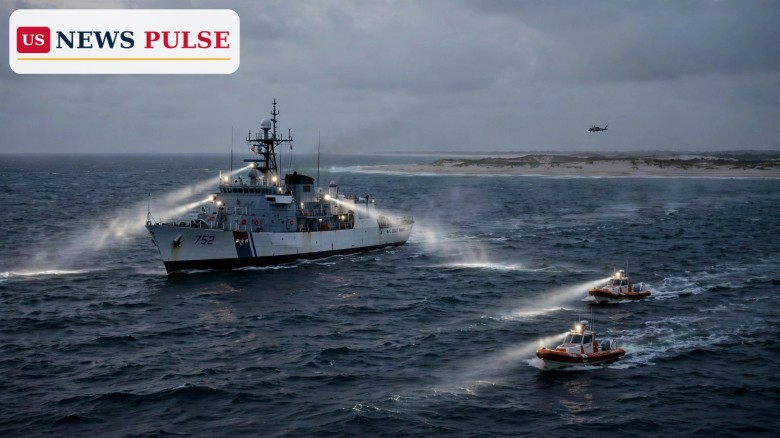
All six people aboard a small private plane that crashed into the Gulf of Mexico off Horn Island, Mississippi, have been found dead, the US Coast Guard said early on Wednesday, November 25, 2026, ending an overnight search that had held out hope of survivors. Divers from the Mississippi Department of Marine Resources located the remains of the four adults and two boys, aged 8 and 10, inside the fuselage of the Cessna Centurion 210, about two miles north-east of the remote barrier island. The discovery closed a search that began on Tuesday afternoon, when the aircraft vanished from radar in a steep dive after leaving New Orleans bound for Florida.
Key Points
- All six people aboard a Cessna Centurion 210 were found dead inside the fuselage off Horn Island, Mississippi, early on Wednesday, November 25, 2026.
- The victims were four adults — three men and one woman — and two boys aged 8 and 10.
- The plane left New Orleans Lakefront Airport at about 2 p.m. CT on Tuesday, bound for Page Field in Fort Myers, Florida, and contact was lost at about 3:45 p.m. CT.
- Flight-tracking data shows the aircraft plunging at up to 18,000 feet per minute in its final seconds.
- The National Transportation Safety Board will lead the investigation, with assistance from the Federal Aviation Administration.
What Happened
The privately owned 1972 Cessna 210L, tail number N29002, took off from New Orleans Lakefront Airport at about 2 p.m. Central Time on Tuesday, November 24, 2026, bound for Page Field in Fort Myers, Florida. The Federal Aviation Administration lost contact with it at about 3:45 p.m. CT over the Gulf of Mexico south of Pascagoula, Mississippi.
Flightradar24 data shows the plane cruising at about 8,800 feet just south of Pascagoula before it suddenly plunged towards the water, diving at 18,000 feet per minute — more than 200 miles per hour — in the final seconds before tracking ceased. The FAA reported a descent rate of 10,000 feet per minute. Search crews found the aircraft cabin, three life jackets, a life raft and a debris field about two miles north-east of Horn Island, but no people.
The search ran through the night, with the Coast Guard Cutter Cobia mobilised at about 8 p.m. alongside smaller boats, aircraft, Mississippi Marine Resources and the Jackson County sheriff's marine division. Early on Wednesday, divers located the remains of all six people inside the fuselage, ending the search after about four hours. There were no survivors.
Background and Context
Horn Island is a remote, undeveloped barrier island about 12 nautical miles from Biloxi, part of the Gulf Islands National Seashore, and reachable only by private boat. Its isolation shaped the search: crews worked from the water and the air, with no road access and no facilities on the island. The crash site lies in open Gulf waters north-east of the island, where depth and currents complicate recovery.
The flight was a routine private hop along the Gulf Coast, from New Orleans to Fort Myers. The Cessna 210 Centurion is a six-seat, single-engine aircraft long used for private and charter flying, and the 1972 model in this crash was more than 50 years old. Investigators will examine its maintenance history, condition, the pilot's experience and the weather.
The crash comes in a week of strain on American transport safety. On Tuesday, a ground stop halted flights into Chicago O'Hare as the Thanksgiving travel rush began, and earlier this month three people were killed in a plane crash in the Grand Canyon. The Mississippi crash is the deadliest of the three, and the only one involving children.
The Mississippi Plane Crash: What the Flight Data Shows
The steepness of the final descent is the central puzzle for investigators. An aircraft falling at 18,000 feet per minute is dropping at more than 200 miles per hour vertically — far beyond a normal emergency descent, and consistent with a loss of control, a structural failure or a sudden incapacitation in the cockpit. The gap between the Flightradar24 figure and the FAA's 10,000-feet-per-minute reading reflects different data sources, and the NTSB will reconcile them against the wreckage.
The aircraft was in level flight at 8,800 feet moments before the plunge, with no distress call reported. Investigators will look at whether weather played a role, whether the aircraft suffered a mechanical failure, and what the pilot did — or was unable to do — in the final seconds. The wreckage will be recovered for examination, and the NTSB will issue a preliminary report in the coming weeks.
Reactions and Quotes
During the overnight search, the Coast Guard held out hope that someone might be found alive. Public affairs officer Juan Ros said: “We have not found any people. We hope we can find them safe and sound.” The life jackets and life raft had raised the possibility that someone had escaped the aircraft, but no survivors were found in the water.
The recovery ended that hope in the early hours of Wednesday. The Coast Guard confirmed divers had located all six people inside the fuselage, and the search was stood down. The victims' names have not been released.
Why It Matters
Six deaths, including two children, make this one of the worst small-aircraft accidents in the Gulf region in recent years, and it will be felt far beyond Mississippi. The victims were travelling as a family group on an ordinary flight the day before Thanksgiving, when millions of Americans take to the roads and skies — and the timing gives the tragedy a particular weight.
The crash also matters for what it may reveal about the safety of ageing private aircraft. The Cessna 210 was built in 1972, and while older aircraft can be flown safely with proper maintenance, investigators will scrutinise its condition closely.
What Happens Next
The NTSB will lead the investigation, with assistance from the FAA. Its first steps are to recover the wreckage from the Gulf, document the crash site and examine the aircraft's structure, engine and instruments for signs of failure. A preliminary report is usually published within a few weeks, while a final report can take a year or more.
Officials are also expected to release the identities of the six victims once their families have been notified. The Coast Guard has ended its search, and the focus now moves from rescue to recovery and investigation.
Frequently Asked Questions
How many people died in the Mississippi plane crash?
Six people: four adults — three men and one woman — and two boys aged 8 and 10.
Where did the plane crash?
About two miles north-east of Horn Island, Mississippi, in the Gulf of Mexico, about 12 nautical miles from Biloxi.
What kind of plane was it?
A privately owned 1972 Cessna 210L Centurion, tail number N29002, flying from New Orleans to Fort Myers, Florida.
What caused the crash?
That is not yet known. Flight data shows a sudden plunge from 8,800 feet at up to 18,000 feet per minute.
Who is investigating?
The National Transportation Safety Board, with assistance from the Federal Aviation Administration.
© 2026 US News Pulse. All rights reserved.
 Print
 Save