

 | Today's Date:



Three Killed in Grand Canyon Plane Crash as Missing Piper Comanche Found - US News Pulse
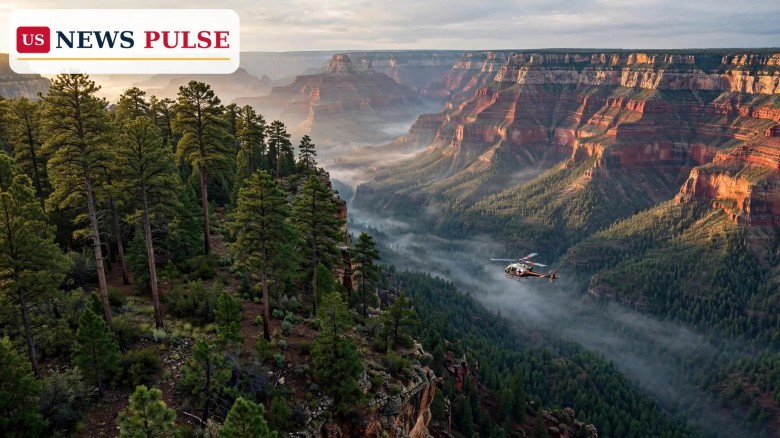
GRAND CANYON NATIONAL PARK, Ariz. — Three people were killed when a small plane that had been reported missing crashed in a remote stretch of the Grand Canyon's North Rim, park officials confirmed Monday, ending a search that stretched through the night across some of the most rugged terrain in the American Southwest. The Grand Canyon plane crash claimed all three people aboard the single-engine Piper PA-24 Comanche, and there were no survivors when search crews finally reached the wreckage on Monday morning.
The aircraft was found in the Basin area of the North Rim at about 10:15 a.m. on Monday, November 16, 2026, nearly 12 hours after the missing-aircraft report. Federal investigators have taken over the site, and the cause of the crash remains undetermined.
Key Points
- A Piper PA-24 Comanche carrying three people crashed in the Basin area of the Grand Canyon's North Rim, and all three aboard were killed.
- The plane was reported missing at about 11:30 p.m. on Sunday, November 15, 2026, and the wreckage was found at about 10:15 a.m. on Monday after a search of nearly 12 hours.
- The Federal Aviation Administration said the aircraft went down at about 7:15 p.m. on Sunday, November 15.
- The Arizona Department of Public Safety searched through the night using forward-looking infrared and night vision before ground crews located the wreckage and debris field.
- The National Transportation Safety Board has opened an investigation, with an investigator expected at the site on Tuesday, November 17.
What Happened
The flight ended in disaster on Sunday evening, though the alarm was not raised until hours later. The Federal Aviation Administration said the Piper Comanche went down at about 7:15 p.m. on Sunday, November 15, 2026, in the Basin area of the North Rim. The aircraft's last known location was near the same rugged pocket of the park, a remote section of high pine forest and broken canyon country far from the busy viewpoints of the South Rim.
Background: Flying Over the Grand Canyon
The Grand Canyon is one of the most flown-over landscapes in America, and also one of the most tightly regulated. Sightseeing flights circle the canyon daily, and small private aircraft cross the region regularly, but the airspace above the park is governed by special federal rules designed to protect both visitors on the ground and the natural quiet of the canyon. Commercial air tours must follow set routes and altitudes, and private pilots are expected to keep clear of the most sensitive areas.
The Piper PA-24 Comanche is a familiar sight in general aviation. Built by Piper Aircraft from the late 1950s through the early 1970s, the single-engine, four-seat aircraft has long been a workhorse for private pilots, valued for its speed and range. Thousands remain in service across the United States, and the type has a solid safety record when flown within its limits. But like any light aircraft, it is vulnerable to the conditions that make mountain and canyon flying so demanding: sudden weather changes, strong winds funnelling through canyon walls, and the loss of visual references after dark.
Grand Canyon Plane Crash: The Overnight Search
The search for the missing Comanche began in the dark and stayed there for most of its duration. The Arizona Department of Public Safety took to the air overnight, using forward-looking infrared cameras and night-vision equipment to scan the Basin area from above. Infrared sensors can pick up the heat signature of wreckage, engines, or survivors against the cold ground, and night vision lets aircrews see terrain that would otherwise be invisible. Even so, the crews were hunting for a small aircraft in a vast expanse of forest and rock, and the search stretched on through the night without result.
Reactions and Official Statements
The National Park Service confirmed the discovery of the wreckage on Monday and said the three people aboard had died, while withholding their names. The park service said the names are being withheld "out of respect for their families' privacy," a standard practice while relatives are notified and while the investigation is in its earliest stages. No further statement about the victims has been released.
The Federal Aviation Administration confirmed the time of the crash and the type of aircraft involved, and it has handed the investigation to the National Transportation Safety Board, as is standard in fatal aviation accidents. The FAA's role now is largely to supply radar data, communications records, and airspace information to the NTSB team.
Why It Matters
Every fatal crash of a small aircraft carries lessons for the thousands of private pilots who fly across the American West, and this one is no exception. The Grand Canyon region is a popular corridor for general aviation, and the combination of high terrain, changeable weather, and long stretches without a safe landing site makes it one of the more demanding places in the country to fly a light single-engine plane. When a flight ends like this one, pilots, instructors, and regulators all pay attention to what the investigation finds.
What Happens Next
An NTSB investigator is expected to arrive at the crash site on Tuesday, November 17, 2026, to begin the on-scene phase of the investigation. That work starts with documenting the wreckage and the debris field, mapping where each piece of the aircraft came to rest, and looking for signs of what happened in the final moments of the flight. Investigators will also recover the aircraft's instruments, engine components, and any electronic devices aboard that might hold flight data.
The final probable-cause report, which typically takes 12 to 24 months, will be the document that matters most. It will state what the NTSB believes caused the crash and may include safety recommendations aimed at preventing a similar accident. Until then, the cause remains officially undetermined, and speculation about what brought the Comanche down would be premature. The park service is expected to release the names of the three people who died once their families have been notified.
Frequently Asked Questions
How many people died in the Grand Canyon plane crash?
Three. All three people aboard the Piper PA-24 Comanche died in the crash on the North Rim.
Where exactly did the plane crash?
In the Basin area of the North Rim of Grand Canyon National Park, Arizona.
When did the crash happen?
About 7:15 p.m. on Sunday, November 15, 2026. The plane was reported missing at about 11:30 p.m., and the wreckage was found at about 10:15 a.m. on Monday, November 16.
What kind of plane was it?
A Piper PA-24 Comanche, a single-engine, four-seat aircraft. It was carrying three people.
What caused the crash?
Undetermined. The NTSB has opened an investigation; a preliminary report is expected within 30 days and a final report in 12 to 24 months.
Read more breaking news on US News Pulse: Russian missiles strike Kyiv's North and South bridges overnight and Four tankers damaged in the Strait of Hormuz as mines strike ships.

The US News Pulse newsroom covers breaking news across the United States and the world, working from wire services, official statements and on-the-record sources. Every story is reviewed against our editorial standards before publication. Corrections and tips: info@usnewspulse.com
About our newsroomLeave a Comment