
Houthi Attack on Riyadh Financial Centre Injures 11 as US Issues Middle East Alert
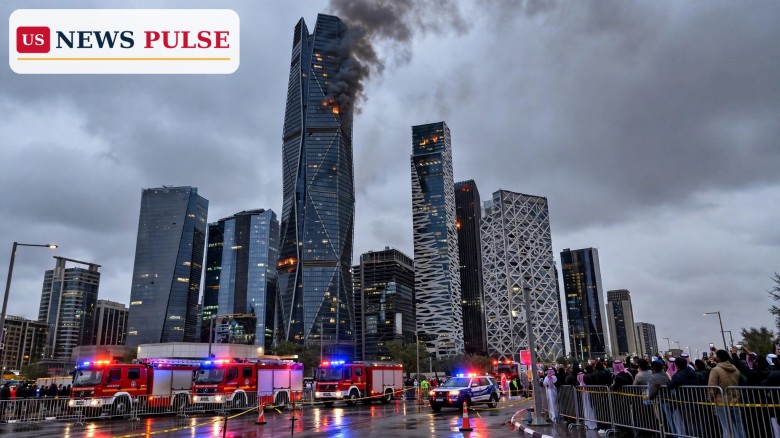
An attack struck one of the towers of Riyadh's Financial Centre on Tuesday, November 24, 2026, injuring 11 people, Saudi authorities said, in the latest Houthi attack on the Saudi capital during the nine-month US-Iran war. The Houthi attack on the Riyadh Financial Centre wounded two Saudi citizens, two Indian nationals, three Nepalese nationals and four Egyptian nationals, according to a Saudi Civil Defence statement blaming the Iran-backed Houthi militia. Hours later, the US State Department issued coordinated security alerts through its Middle East embassies, warning Americans of a rising threat of Houthi attacks and Iranian efforts to target US officials and facilities.
Key Points
- A strike hit a tower in Riyadh's Financial Centre on November 24, injuring 11 people of four nationalities; Saudi Civil Defence blamed the Houthi militia.
- The US State Department issued coordinated security alerts through its Middle East embassies the same day, urging Americans to exercise heightened vigilance.
- The alert warned of possible flight cancellations, airspace closures and travel disruption, saying hostilities could escalate rapidly.
- Secretary of State Marco Rubio spoke with Saudi Foreign Minister Prince Faisal, condemning attacks on Saudi civilian and energy infrastructure.
- The attack followed alleged Saudi-led airstrikes in Yemen's Al-Hudaydah governorate, days after a Houthi missile hit Riyadh's PIF Tower.
What Happened
The attack hit one of the towers of the King Abdullah Financial District, the cluster of glass skyscrapers that forms Riyadh's financial heart. Saudi Civil Defence said in a statement on X that emergency agencies responded immediately and that 11 people were hurt: two Saudi citizens, two Indian nationals, three Nepalese nationals and four Egyptian nationals. The statement called it a "terrorist attack by the terrorist Houthi militia". Saudi authorities did not say what weapon was used, and the Houthis had not publicly claimed the attack.
The US warning came the same day. The State Department issued coordinated alerts through its Middle East embassies, with the US Mission in the United Arab Emirates publishing its alert on November 23 at 21:16 UTC. Americans were urged to "exercise heightened vigilance due to the increased threat of armed attacks by Iranian-supported Houthis and Iranian efforts to target U.S. government officials and facilities in the region".
Background and Context
The strike is the latest in a sustained Houthi campaign against Saudi Arabia that has intensified through the autumn. Just five days earlier, on November 19, a Houthi missile struck Riyadh's PIF Tower, the capital's tallest skyscraper, shattering windows across seven floors. Earlier in November, Saudi air defences intercepted a Houthi cruise missile and a drone aimed at the Riyadh region.
The fighting sits inside a wider war. The United States has been at war with Iran since February 28, 2026, and the Houthis, backed by Tehran, have repeatedly targeted Saudi Arabia, which fights alongside the US-led coalition. The November 24 attack came amid heightened tensions after alleged Saudi-led coalition airstrikes in Yemen's Al-Hudaydah governorate. The US alert also cited Iranian attacks on US assets in Bahrain and Kuwait and Houthi attacks on Saudi civilian airports and infrastructure.
The Houthi Attack on the Riyadh Financial Centre and the New US Warning
What makes this attack different is where it landed. The Financial Centre is not a military site: it is the business heart of the Saudi capital, home to banks, investment firms and government offices, and a symbol of the kingdom's economic ambitions. A strike that injures 11 people there is a message aimed as much at confidence and commerce as at any military target. It is the second strike on a landmark Riyadh tower in less than a week.
The US alert treats the threat as regional, not local. It warns that the hostilities "have the potential to escalate rapidly", language that covers not only Saudi Arabia but the Gulf states where tens of thousands of Americans live and work. The warning comes as Washington weighs its next moves: Trump administration officials are debating whether to target senior Iranian leaders to end the nine-month conflict.
Reactions and Quotes
Saudi Civil Defence was blunt, calling the incident a "terrorist attack by the terrorist Houthi militia" and saying emergency agencies responded immediately. The statement gave no detail on the weapon or the condition of the injured.
The US alert was equally direct, urging Americans to "exercise heightened vigilance due to the increased threat of armed attacks by Iranian-supported Houthis and Iranian efforts to target U.S. government officials and facilities in the region".
Secretary of State Marco Rubio spoke on Tuesday with Saudi Foreign Minister Prince Faisal bin Farhan Al Saud, condemning the Iran-backed Houthi attacks on Saudi Arabia's civilian and energy infrastructure. The two stressed keeping navigation free through the Strait of Hormuz and Bab al-Mandeb.
Why It Matters
The attack matters for three reasons. First, it shows the Houthis can still reach the centre of the Saudi capital, despite months of Saudi air defences and coalition strikes, and are now hitting civilian landmarks in quick succession. Second, it puts foreign workers at direct risk: of the 11 injured, nine were foreign nationals. Third, it raises the stakes for Washington, which has warned Americans across the region and is debating a major escalation of its own campaign against Iran.
It also matters for the region's economy. The Financial Centre is the showcase of Saudi Arabia's drive to become a global financial hub, and repeated attacks on its towers undermine the sense of safety that project depends on. The State Department has warned Americans in the region before, most recently on November 6, but the new alert is broader, covering the whole Middle East.
What Happens Next
The Houthis may claim the attack, as they have claimed earlier strikes on Riyadh, and any claim is likely to include details of the weapon used. Saudi Arabia may answer with further coalition strikes in Yemen, most likely around Al-Hudaydah.
The bigger question is whether the war escalates further. The Trump administration has not decided whether to target senior Iranian leaders, and the Riyadh attack may harden the case of those in Washington who want a stronger response.
Frequently Asked Questions
What happened in Riyadh on November 24? An attack hit one of the towers of Riyadh's Financial Centre, injuring 11 people. Saudi Civil Defence blamed the Iran-backed Houthi militia.
Who was injured? Two Saudi citizens, two Indian nationals, three Nepalese nationals and four Egyptian nationals. No deaths were reported.
What did the US security alert say? The State Department issued coordinated alerts through its Middle East embassies urging Americans to exercise heightened vigilance, warning of possible flight cancellations, airspace closures and travel disruption.
Who is behind the attack? Saudi Civil Defence attributed it to the Houthi militia, backed by Iran. The Houthis had not publicly claimed it, and Saudi authorities did not say what weapon was used.
What happens next? Watch for a possible Houthi claim, a Saudi response in Yemen, updated US embassy alerts, and any decision in Washington on escalating the campaign against Iran.
© 2026 US News Pulse. All rights reserved.
 Print
 Save