
US Unveils New Section 301 Tariffs on 14 Partners as China Faces 20% Duty
The Trump administration on Wednesday unveiled new Section 301 tariffs on 14 major trading partners, rebuilding its global tariff programme after the Supreme Court struck down its earlier import taxes in February. China faces the steepest duties — a proposed 20 per cent excess-capacity tariff on top of roughly 25 per cent duties from President Donald Trump's first term — while Brazil was hit with a new 10 per cent levy on finished aircraft.
The US Trade Representative's office announced the duties after an eight-month Section 301 investigation, concluding each partner "creates, sustains, or contributes to structural excess capacity" through subsidies and industrial policy. A public comment period and hearing follow, so the duties may not take effect until January.
Key Points
- The 14 are China, Bangladesh, Cambodia, the European Union, India, Indonesia, Japan, South Korea, Malaysia, Singapore, Switzerland, Taiwan, Thailand and Vietnam; Mexico and Norway were left out for now.
- China faces a proposed 20 per cent excess-capacity tariff on top of roughly 25 per cent first-term duties — above Vietnam's rate of just under 20 per cent.
- The duties will not stack on the July forced-labour tariffs, and stay within deal caps of 15 per cent for the EU, Japan, South Korea and Taiwan, and 19 per cent for Malaysia.
- About $30 billion of Chinese imports are exempt under a bilateral "Board of Trade" process, and the 20 per cent China cap runs to January 10.
- Brazil faces a separate 10 per cent duty on finished aircraft — its fourth-largest export — plus a new rate on out-of-quota sugar, after a year of talks failed.
What Happened
The US Trade Representative announced the proposal on Wednesday, November 25, after an eight-month Section 301 probe into 16 economies, including Japan, the European Union and South Korea. A senior US official said the rates would appear in a Federal Register notice on Wednesday; officials briefed congressional committees late on Tuesday.
Washington concluded each partner "creates, sustains, or contributes to structural excess capacity" through unreasonable policies that restrict US commerce. The USTR defines it as production "divorced from the realities of demand and market principles".
China would face the highest rates: the proposed 20 per cent tariff sits on top of roughly 25 per cent first-term duties, above Vietnam's just under 20 per cent. The duties will not stack on the July tariffs imposed on 60 partners over forced-labour enforcement.
Background: The Court Ruling, the March Probe and the October Pause
The duties rebuild Trump's global tariffs, struck down in February 2026 in a 6-3 ruling, raising the prospect of roughly $166 billion in refunds. Section 301 offers a sturdier path: investigate first, publish findings, then impose duties.
The probe began in March 2026, alongside an anti-forced-labour investigation that led in July to duties of 10 per cent or 12.5 per cent on goods from 60 partners. In late October officials held off releasing the findings before the midterms; the pause has now ended, as US News Pulse reported on Tuesday.
Under the US-China truce, second-term tariffs on Chinese goods are capped at 20 per cent until January 10, 2027; China has extended its suspension of a 24 per cent tariff on US imports. The new duties respect deal caps of 15 per cent for the EU, Japan, South Korea and Taiwan, and 19 per cent for Malaysia.
Section 301 Tariffs: The Rates, the Caps and the Exemptions
Washington calls China the biggest source of excess capacity, flooding markets with steel, aluminium, electric vehicles, appliances and solar products. Beijing rejects the claim, citing competitive advantages. The probe also targets Chinese investment in Vietnam, Indonesia and Cambodia, used to supply the US market and dodge tariffs.
About $30 billion of Chinese imports are exempt under the bilateral "Board of Trade" process. Washington does not expect Beijing to retaliate, and the official said the duties should lead to more trade deals, possibly at a G20 summit in Miami in December.
For Brazil, Washington proposes changing the 25 per cent July tariffs, citing "substantial differences" after a year of talks. Finished aircraft, currently exempt, would face a 10 per cent duty — hitting Embraer hard, since aircraft are Brazil's fourth-largest export. A new out-of-quota sugar rate aims to stop transshipment via third countries.
Reactions
China has rejected the accusations and warned of retaliation. But the senior US official said: "We know that they don't like these actions, but we are seeking stability with the Chinese. China is seeking stability with us." He called Trump's meeting with Xi Jinping last week "really great", with rare earth progress.
Brazil has rejected all the allegations, from illegal deforestation to its Pix payments system. On Tuesday Brazil asked the World Trade Organization for a dispute panel; the US blocked it. The official said Washington remained open to talks: "I'm hopeful that we can strive to find a mutually satisfying agreement between Brazil and the United States."
A Reuters/Ipsos poll after the midterms showed 62 per cent of Americans would support repealing the tariffs; the administration has conceded its tariffs have lifted prices.
Why It Matters
First, it gives the tariff programme a durable legal foundation. Second, it hits consumers and businesses as duties stack. Third, it reshapes the Beijing negotiation: extend the January 10 truce and the 20 per cent cap holds; let it lapse and the rate jumps.
Brazil was the first country targeted under the new Section 301 strategy, and the aircraft duty reaches a flagship industry: Embraer is one of the world's largest makers of regional jets.
Finally, the list includes close allies — the EU, Japan, South Korea, Taiwan, Switzerland and Singapore — a message that excess capacity is a global problem.
What Happens Next
The proposal faces a public notice and comment period plus a hearing, which could push implementation into January. Exact rates will appear in a Federal Register notice; businesses can seek exemptions first.
Probes into Norway and Mexico remain open, with no timeline given. Ahead: the January 10 truce expiry, a possible G20 summit in Miami in December, and Brazil's blocked WTO request. Markets will watch the notice for rates, products and exemptions — and for retaliation.
Frequently Asked Questions
What is a Section 301 investigation?
Section 301 of the Trade Act of 1974 lets the US Trade Representative investigate unfair foreign trade practices and impose duties — the route replacing the global import taxes the Supreme Court struck down in February 2026.
How high are the tariffs on China?
A proposed 20 per cent excess-capacity tariff on top of roughly 25 per cent first-term duties — the highest of the 14 partners, above Vietnam's rate of just under 20 per cent.
Why is Brazil facing a separate aircraft duty?
A year of talks failed over illegal deforestation and the Pix payments system. Washington is adding a 10 per cent duty on finished aircraft — Brazil's fourth-largest export — plus a new out-of-quota sugar rate.
When will the tariffs take effect?
Not immediately. A public comment period and hearing could push implementation into January; exact rates will be published in a Federal Register notice.
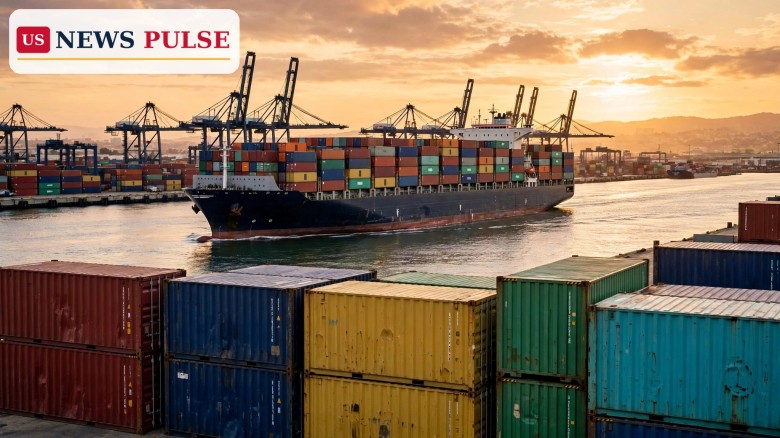
Image: A container ship at a US port. (US News Pulse)
© 2026 US News Pulse. All rights reserved.
 Print
 Save