

 | Today's Date:



Trump Set to Unveil New Section 301 Tariffs on China, EU and 14 Economies
The Trump administration is poised to unveil a sweeping new round of Section 301 tariffs on China, the European Union and 14 other major economies, according to three people with knowledge of the matter who spoke to Reuters on Tuesday. The findings of a months-long investigation into alleged excess industrial capacity could be released as soon as Tuesday or Wednesday, with new import duties expected on a wide range of goods. It would be the administration's biggest tariff action since the Supreme Court struck down its earlier global import taxes in February.
US Trade Representative Jamieson Greer is expected to propose duties stacking on top of tariffs already imposed in President Donald Trump's second term. Final rates, products and dates are not yet decided, but the shape is clear: China faces the steepest duties, while the European Union, Japan and South Korea are likely to face 15 percent or lower.
Key Points
- The Section 301 probe covers 16 economies, led by China and the European Union, plus India, Japan, South Korea, Mexico, Vietnam and nine others.
- Findings are expected as soon as Tuesday or Wednesday, November 24-25, with Bloomberg reporting the announcement could come as early as Tuesday.
- New duties would stack on top of existing second-term tariffs and partly replace the global import taxes the Supreme Court struck down in February.
- China is expected to face the steepest duties; the EU, Japan and South Korea are likely to face 15 percent or lower; India and Vietnam could face higher rates.
- A Reuters/Ipsos poll after the November midterms found 62 percent would support efforts to repeal the tariffs.
What Happened
Reuters reported on Tuesday, November 24, that the administration is poised to release findings from its investigation under Section 301 of the Trade Act of 1974, which lets the United States impose duties over unfair foreign trade practices. The Wall Street Journal had reported earlier that the results could be unveiled as soon as this week. The US Trade Representative's office and the White House did not immediately respond to Reuters' queries.
The duties would partly replace the global import taxes the Supreme Court struck down in February, forcing the administration to find a new legal footing for its tariff programme. The excess-capacity probe was launched in March, alongside a separate anti-forced-labour investigation covering 59 countries and the European Union. That second probe led in July to duties of 10 percent or 12.5 percent on goods from 60 trading partners. Steel, aluminium and automobiles are likely to be excluded, because they already face separate national-security tariffs.
Background: The March Probe and the Court Ruling
The inquiry began in March 2026, when the USTR opened a formal investigation into whether its largest trading partners' industrial policies were flooding global markets with goods made at artificially low cost. The administration argues state support has built more factory capacity than the world can absorb, pushing down prices and driving competitors out of business.
In February, the Supreme Court struck down the sweeping global import taxes imposed under emergency-powers law, wiping out the legal basis for much of the tariff programme. Section 301 offered a sturdier path: investigate first, publish findings, then impose duties. In late October, with the midterms days away, officials held off releasing the findings, as US News Pulse reported at the time. The midterms are over, and the pause appears to be ending.
Section 301 Tariffs: What the New Duties Could Cover
The administration has singled out China as the biggest source of excess capacity, saying it is flooding global markets with steel, aluminium, electric vehicles, appliances and solar products. Beijing rejects the accusations, saying its exports reflect competitive advantages. The probe also targets Chinese investment in Southeast Asia — Vietnam, Indonesia and Cambodia — where Chinese firms have built factories to supply the American market and avoid existing tariffs.
China's position is the most consequential piece. Under the US-China trade truce expiring January 10, 2027, second-term tariffs on Chinese goods are capped at 20 percent, on top of duties of about 25 percent imposed during Trump's first term. A 12.5 percent anti-forced-labour duty is already in place, leaving only 7.5 points of headroom. One person familiar with the matter told Reuters the 20 percent cap would likely hold as long as the truce is extended; if it expires, the excess-capacity rate would snap higher, giving Beijing a strong incentive to extend the deal.
Reactions
China has consistently rejected the excess-capacity accusations and warned it will adjust its retaliatory measures if Washington presses ahead. Neither the USTR nor the White House responded to Reuters' requests for comment, and no official has publicly confirmed the timing or the rates. The Reuters/Ipsos poll found 62 percent of respondents would support efforts to repeal the tariffs.
Why It Matters
First, it would put a durable legal foundation under a tariff programme the courts knocked down in February, replacing emergency-powers duties with duties grounded in a formal investigation — harder to challenge and harder for a future administration to unwind. Second, it would hit consumers and businesses at a delicate moment, with the duties stacking on top of existing tariffs and the administration conceding they have contributed to higher prices. Third, it would reshape the Beijing negotiation: extend the January 10 truce and the 20 percent cap holds; let it lapse and Chinese goods face a sharply higher rate. The two countries are also cutting tariffs on 30 billion dollars of non-strategic imports under the Board of Trade process; the new duties' effect on it is unclear.
What Happens Next
All eyes are now on the USTR. The findings are expected as soon as Tuesday or Wednesday, and publication will answer the open questions: exact rates, products covered, exemptions and effective dates. Markets will read it closely, and retaliation from Beijing or Brussels cannot be ruled out. Beyond this week, the January 10 truce decision will now be bound up with the new duties.
Frequently Asked Questions
What is a Section 301 investigation?
Section 301 of the Trade Act of 1974 lets the US Trade Representative investigate unfair foreign trade practices, publish findings and impose duties in response — the legal route the administration is using to replace the global import taxes the Supreme Court struck down in February 2026.
Which countries are covered?
Sixteen economies, led by China and the European Union, plus India, Japan, South Korea, Mexico, Vietnam and nine others.
How high could the new tariffs be?
Final rates are not yet decided. China is expected to face the steepest duties, the EU, Japan and South Korea are likely to face 15 percent or lower, and India and Vietnam could face higher rates — stacking on top of existing second-term tariffs.
Why is China singled out?
The administration says China is the biggest source of excess industrial capacity, flooding global markets with steel, aluminium, electric vehicles, appliances and solar products. China rejects the claim.
Will the tariffs raise prices for Americans?
The administration has acknowledged its tariffs have contributed to higher consumer prices, and a Reuters/Ipsos poll found 62 percent of Americans would support repealing them.
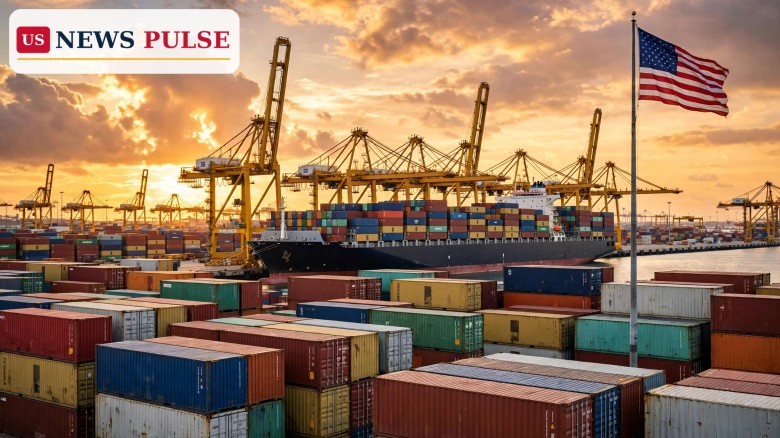
Image: A container ship at a US port. (US News Pulse)

The US News Pulse newsroom covers breaking news across the United States and the world, working from wire services, official statements and on-the-record sources. Every story is reviewed against our editorial standards before publication. Corrections and tips: info@usnewspulse.com
About our newsroomLeave a Comment