
Federal Judge's Permanent ICC Injunction Blocks Trump Sanctions on Speech
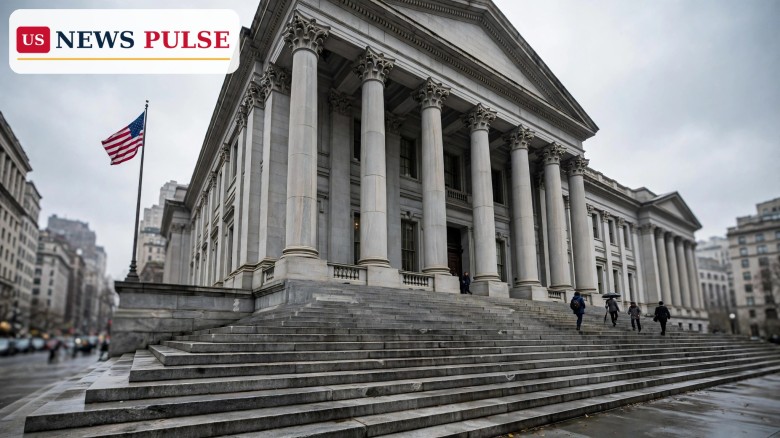
A federal judge in New York permanently blocked the Trump administration on Monday from punishing Americans who share evidence with the International Criminal Court, ruling that the sanctions regime's ban on "services" to the court violates the First Amendment. US District Judge Jesse M. Furman made permanent the preliminary injunction he granted on October 13 and extended it to every American, holding that the ban is a content-based restriction on speech that fails strict scrutiny. The ruling, in Democracy for the Arab World Now Inc. v. Trump, strips the administration of its power to threaten up to 20 years in prison and $1 million in fines against people who help the court.
Key Points
- Judge Jesse M. Furman made permanent his October 13 preliminary injunction on Monday, November 23, 2026, extending it to all Americans.
- The ruling bars enforcement of the "services" ban in Executive Order 14203 against anyone for speech-based services linked to the ICC.
- Furman held the ban is a content-based restriction on speech that fails strict scrutiny and violates the First Amendment.
- The sanctions stay in place; only the speech restrictions are blocked, and President Trump himself is excluded.
- The government can appeal, and the parties must file a proposed judgment by December 1, 2026.
What Happened
In Democracy for the Arab World Now Inc. v. Trump, No. 26-cv-5957, Judge Furman of the US District Court for the Southern District of New York ruled that the "services" prohibition in Executive Order 14203 was categorically unconstitutional as applied to services that take the form of speech. The ban, he wrote, "may not be enforced against anyone" for speech-based services.
The October 13 preliminary injunction had protected only the two groups that brought the suit, Democracy for the Arab World Now (DAWN) and the Taxpayer Alliance Against Genocide (TAAG). The groups asked the court to extend the protection to everyone and make it permanent. The government argued that the Supreme Court's 2025 decision in Trump v. CASA, limiting lower courts' power to issue universal injunctions, barred relief for anyone outside the lawsuit. On November 23, Furman rejected that argument.
It is the first ruling to protect all Americans from the sanctions' speech restrictions. DAWN and TAAG said they will immediately resume their ICC work with Special Rapporteur Francesca Albanese and the sanctioned Palestinian groups.
Background
Executive Order 14203, issued in February 2025, gave administration officials power to sanction foreigners for supporting the ICC's investigations into US and Israeli nationals for atrocity crimes. Under it, the administration sanctioned ICC prosecutors and half the court's judges, the Palestinian groups Al-Haq, al-Mezan and the Palestinian Center for Human Rights, and UN Special Rapporteur Francesca Albanese. On October 9, 2026, it issued institutional sanctions against the court itself.
The order also made it a federal offence to provide "services" to, or receive them from, a sanctioned individual or entity, punishable by up to 20 years in prison and $1 million in civil fines. Because "services" can cover anything conferring a benefit, Americans risked prosecution for giving evidence to the ICC or for joint advocacy with the Palestinian groups and Albanese. Many US groups halted their ICC advocacy and cut ties.
The suit was filed on July 15, 2026, two days after Secretary of State Marco Rubio threatened again to dismantle the ICC in a July 13 Wall Street Journal op-ed. Related coverage: Rubio attacks ICC in first speech since midterms, warns US would answer with force.
The ICC Injunction and the First Amendment
Furman's ruling turns on a basic First Amendment distinction. A law restricting speech because of its content must satisfy strict scrutiny, the hardest test in constitutional law, and the judge found the services ban could not pass it. Giving evidence to a court, exchanging information with sanctioned groups and joining advocacy for accountability are all expressive acts, and the government offered no justification strong enough to criminalise them.
The ruling is narrower than the headlines may suggest. It does not lift the sanctions on the ICC, its staff, Albanese or the Palestinian groups: asset freezes and bans on money, goods and non-expressive services remain in force. What falls is only the part of the regime that punished speech. President Trump himself is also excluded from the injunction.
Reactions
DAWN called the ruling a landmark. "This landmark ruling dismantles a core part of Trump's ICC draconian sanctions regime," said Omar Shakir, the group's executive director. "The court has affirmed that every American has the constitutional right to advocate for justice on Palestine without fear of reprisal."
Joseph Pace, the attorney for DAWN and TAAG, stressed the ruling's reach. "This decision is a major victory ... it universally bars the Trump Administration from using the sanctions to penalize anyone, anywhere in the country, for exercising their First Amendment rights," he said.
"We challenged Trump's Executive Order on the ICC because we refused to let his regime intimidate us into silence while it used our tax dollars to fund crimes against humanity," said Anna Marie Stenberg of TAAG.
The government can appeal to the Second Circuit. The administration has not yet said whether it will do so.
Why It Matters
The ruling matters first because of who it protects. After Trump v. CASA, lower courts have mostly shielded only the people who sued. Furman's decision is a rare exception: it treats the speech ban as unconstitutional for everyone, so no American must sue before speaking to the court or working with the sanctioned groups.
It matters second because of the chilling effect it lifts. For more than a year, the threat of prison and ruinous fines pushed US groups to stop work they had done for years. With the ban unenforceable for speech, they can resume cooperating with the court, with Albanese and with the Palestinian groups. Related coverage: Federal judge blocks Trump's second birthright citizenship order nationwide.
What Happens Next
The parties must file a proposed judgment by December 1, 2026, and the government can appeal to the Second Circuit, which could be asked to pause the injunction while the appeal is heard. Until a higher court says otherwise, the administration may not enforce the services prohibition against anyone for speech-based services. DAWN will hold a press conference in The Hague on December 1.
Frequently Asked Questions
What did Judge Furman rule?
Judge Furman made permanent his October 13 preliminary injunction and extended it to all Americans, holding that the "services" ban in Executive Order 14203 is unconstitutional as applied to speech and "may not be enforced against anyone" for speech-based services.
Does the ruling lift the ICC sanctions?
No. The sanctions, including asset freezes and bans on money, goods and non-expressive services, stay in place. Only the restrictions on speech and association are blocked.
Who brought the case?
Democracy for the Arab World Now (DAWN) and the Taxpayer Alliance Against Genocide (TAAG) filed the suit on July 15, 2026, in the Southern District of New York, case No. 26-cv-5957.
What happens next?
The government can appeal to the Second Circuit, the parties must file a proposed judgment by December 1, 2026, and DAWN will hold a press conference in The Hague that day.
© 2026 US News Pulse. All rights reserved.
 Print
 Save