


 | Today's Date:




Rubio Attacks ICC in First Speech Since Midterms, Warns US Would Answer With Force
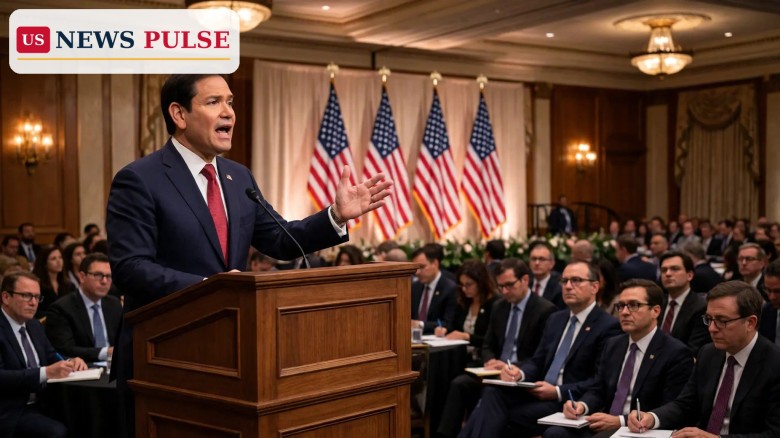
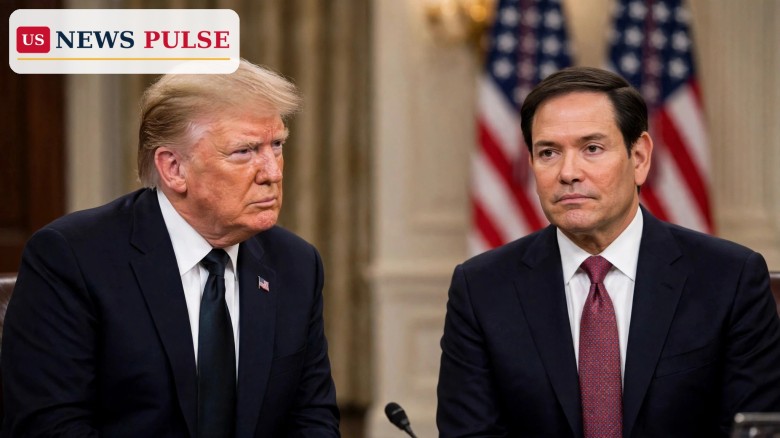
Secretary of State Marco Rubio delivered his sharpest attack yet on the International Criminal Court on Friday, telling a conservative legal audience in Washington the United States would answer with force if the court tried to enforce its rulings against Americans. The Rubio ICC speech, his first prepared remarks since Republicans were routed in the November 3 midterm elections, doubled as a defence of President Donald Trump’s foreign policy — and fuelled speculation about his future.
Speaking to the Federalist Society, Rubio said the US would not “submit to the sterile vision of radical judges or soulless global bureaucrats,” repeating his claim that the court would try to prosecute American officials or service members.
Key Points
- Rubio told the Federalist Society on Friday, November 13, 2026, that the US would not “submit to the sterile vision of radical judges or soulless global bureaucrats.”
- He warned that if the ICC tried to enforce its rulings against Americans, Washington would respond with force, quoting the Roman general Pompey: “Stop quoting laws to men with swords.”
- It was his first prepared remarks since Republicans lost both chambers in the November 3 midterms, fuelling speculation about a possible 2028 run, which Rubio has denied.
- Rubio defended the US-Israeli war against Iran as aimed at stopping Tehran ever building a nuclear weapon, and dismissed claims the administration broke international law.
- US sanctions designed to stifle the ICC take effect in April unless its supporters reach a deal.
What Happened
Rubio addressed the Federalist Society’s annual gathering in Washington on Friday — his first prepared remarks since the midterm elections, according to Reuters. The group is an occasional stop for presidential hopefuls, and his appearance days after his party’s defeat was watched for signs of his intentions.
Rubio, who also serves as national security adviser, used the platform to set out an intellectual case for the administration’s “America First” foreign policy. “Americans have never agreed to submit to the ICC’s authority, but that court and its allies in the global bureaucracy have appointed themselves judge and jury and executioner of the international order,” Rubio said. He also dismissed criticism that the administration broke international law by seizing Venezuela’s then-president and striking boats in the Caribbean and Eastern Pacific it says carried drugs.
Background: Why the US Is at War With the Court
The Trump administration has long been hostile to the Netherlands-based court, founded in 2002 to prosecute war crimes, crimes against humanity and genocide. The US is not a party to the court, and Washington has previously sanctioned its prosecutors and judges. The confrontation escalated last month, when the administration announced sweeping sanctions on the court itself.
The trigger was the court’s warrants for Israeli officials, including Prime Minister Benjamin Netanyahu, and its investigation into US soldiers in Afghanistan, which the ICC says is now “deprioritized.” The sanctions take effect in April unless the court’s supporters reach a deal with Washington.
The court has fought back. Earlier this month, ICC President Tomoko Akane told the United Nations the administration was trying to obstruct international justice. Nine of the court’s 18 judges are now under US sanctions, yet it retains strong backing from most member states, including all EU countries and all NATO members except the US and Turkey.
Rubio ICC Speech: A Warning to the Court and a Signal at Home
The timing gave the speech a second meaning. It was his first prepared remarks since Republicans lost both chambers on November 3. An address to the Federalist Society was always going to be read as a statement about his own future.
That reading is fuelled by speculation over whether he will leave his roles as national security adviser and top diplomat to run in 2028. Rubio has denied reports of an imminent presidential campaign, but his appearance at a group Republican hopefuls often visit kept speculation alive; an early 2028 poll has him among the leading Republican names, alongside JD Vance. He also said the US-Israeli war against Iran aimed to stop Tehran ever developing a nuclear weapon, calling Iran’s clerics expansionist, unlike North Korea’s Kim Jong Un.
Reactions and Quotes
Rubio’s Pompey quotation carried the sharpest edge of the speech. By warning the United States would answer enforcement with force — “Stop quoting laws to men with swords” — he went further than the administration’s previous language on sanctions. The remark was aimed as much at the court’s European supporters as at the court itself.
The court’s position, set out by its president at the UN, is that it will not be intimidated. Akane vowed the court would continue its work “with independence and impartiality.” The speech contained no sign of a climbdown: Rubio offered no path to a settlement beyond the April deadline.
Why It Matters
The speech matters because it turns a legal and diplomatic dispute into a direct confrontation. Until now, the American campaign has been conducted mainly through sanctions: first on individual prosecutors and judges, then on the court itself. Rubio’s warning puts the court’s European backers between their ally in Washington and the institution they support.
It also matters who delivered it: as secretary of state and national security adviser, Rubio is the administration’s chief voice on foreign policy.
What Happens Next
The question is what happens before April, when the sanctions take effect. Supporters of the court have until then to reach a deal with Washington, but there is no public sign of negotiations, and Rubio offered no hint of acceptable terms.
The second is whether the court or its member states answer Rubio’s warning; the ICC has so far responded with defiance. The third is Rubio himself: he denies a presidential campaign is imminent, but his first major speech since the midterms will be read as a statement of intent.
Frequently Asked Questions
What did Marco Rubio say about the ICC?
Rubio told the Federalist Society on November 13, 2026, that the US would not “submit to the sterile vision of radical judges or soulless global bureaucrats,” warning Washington would answer enforcement against Americans with force.
Why is the US sanctioning the International Criminal Court?
The administration says the court would try to prosecute US officials or service members, objecting to its warrants for Israeli officials, including Benjamin Netanyahu, and its probe of US soldiers in Afghanistan. The sanctions take effect in April unless a deal is reached.
Is the United States a member of the ICC?
No. The US is not a party to the court, founded in 2002 and based in The Hague. Most member states, including all EU countries and all NATO members except the US and Turkey, strongly support it.
Was this Rubio’s first speech since the midterm elections?
Yes. It was his first prepared remarks since Republicans lost both chambers in the November 3 midterms, and his first major appearance since speculation intensified about a 2028 run.
Related coverage: ICC President Akane accuses the Trump administration of obstructing justice; ICC judges close Afghanistan probe that could have investigated US troops; 2028 White House race: Vance, Rubio, Ossoff and Buttigieg lead early poll.
Leave a Comment