
US Army Fields First Dark Eagle Hypersonic Missile Battery After $12 Billion Build
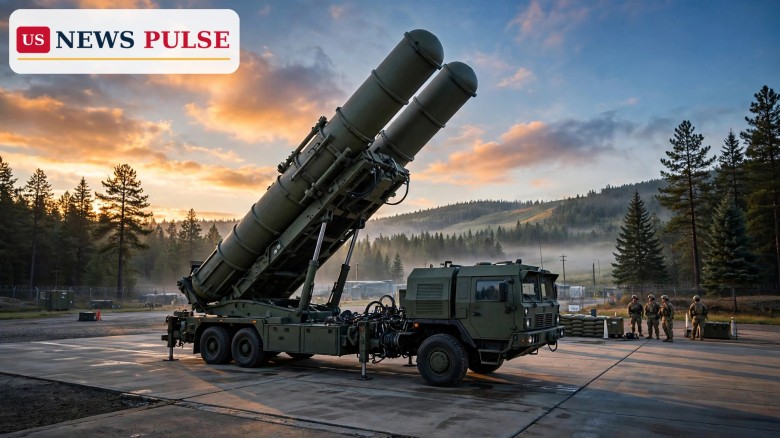
The United States Army has fielded its first Dark Eagle hypersonic missile battery, putting America's first operational hypersonic weapon into service after more than $12 billion in spending and years of missed deadlines. Lt. Gen. Frank Lozano, the Army's Program Executive Officer for Fires, confirmed the milestone in an interview with Breaking Defense on November 19, 2026, reported on November 25, saying: "It is fully fielded. It is ready to go." The Long Range Hypersonic Weapon programme, known as LRHW, was supposed to reach soldiers by the end of fiscal 2023 but slipped repeatedly as testing exposed problems. The announcement also marks the moment the United States joins China and Russia, which fielded hypersonic weapons first.
Key Points
- The US Army has officially fielded its first Long Range Hypersonic Weapon battery, nicknamed Dark Eagle — America's first operational hypersonic weapon.
- Lt. Gen. Frank Lozano, the Army's Program Executive Officer for Fires, told Breaking Defense on November 19, 2026: "It is fully fielded. It is ready to go," declining to say when or where it was fielded.
- One battery has four trailer-mounted transporter-erector-launchers, each with two missiles — eight ready rounds — plus a battery operations centre and support vehicles.
- The Lockheed Martin-built, ground-launched boost-glide weapon flies at Mach 5 or faster — reported as high as Mach 17 — with a range of about 1,725 miles (2,776 km).
- The programme has cost more than $12 billion since 2018 and missed its end-of-fiscal-2023 and September 2025 fielding targets. The Army is now working on second and third batteries.
What Happened
The confirmation came from the Army's top munitions general. Lozano, who oversees the service's fires programmes, told Breaking Defense on November 19 that the first Dark Eagle battery is now in the field and ready for use; the report was published on November 25, 2026. Lozano would not say when the battery was fielded or where it is stationed.
The operating unit is Bravo Battery, 1st Battalion, 17th Field Artillery Regiment, 3rd Multi-Domain Task Force at Joint Base Lewis-McChord in Washington state. Activated on December 12, 2025, it deployed the system to Australia in July 2025, its first overseas outing.
The announcement is a sharp change from the public picture only weeks earlier: Bloomberg reported in October 2026 that the battery still was not fully fielded, despite the September 2025 target having passed. Lozano's statement confirms the Army has moved from testing to an operational weapon.
Background and Context
Hypersonic weapons fly at Mach 5 or faster — five times the speed of sound — and Dark Eagle is a ground-launched boost-glide weapon. A rocket booster carries the glide vehicle high into the atmosphere, and the vehicle then glides to its target at extreme speed while manoeuvring, making it far harder for air defences to intercept than a traditional ballistic missile. It was designed to defeat the advanced air defences of China and Russia, which fielded hypersonic weapons first.
Work began in 2018, and the cost has passed $12 billion. The Army originally planned to field the first battery by the end of fiscal 2023, then slipped to a September 2025 target, and missed that too. A July 2026 Government Accountability Office report said the Army and Navy paused production to fix test problems.
The fielding fits a wider Pentagon push to close gaps in long-range strike weapons, as regional tensions stay high — including North Korea's recent missile tests — and the Pentagon presses industry to scale up production, as in its talks with GM and Ford on mass-producing military drones. Dark Eagle is the first of these systems to fly at hypersonic speed.
Dark Eagle Hypersonic Missile: Inside the Battery
A single Dark Eagle battery is built around four trailer-mounted transporter-erector-launchers, each carrying two missiles for eight ready rounds, plus a battery operations centre and support vehicles. The launchers are road-mobile, so the battery can move, set up, fire and relocate, keeping it alive against an enemy that can strike fixed positions.
The weapon itself was built by Lockheed Martin. It flies at Mach 5 or faster, reportedly as high as Mach 17, and its range is about 1,725 miles (2,776 km). That reach would let a battery in the western Pacific strike targets deep inside an adversary's defences, and the speed cuts the time an enemy has to react from hours to minutes.
Reactions and Quotes
Lozano's words were brief and unambiguous. "It is fully fielded. It is ready to go," he told Breaking Defense, confirming what the Army had not previously said in public. His refusal to say when or where it was fielded is standard: the Army does not advertise a strategic weapon's location.
The confirmation settles months of doubt. When Bloomberg reported in October 2026 that the battery was still not fully fielded, it raised the question of whether the programme would slip again. Lozano's interview answers that question, at least for the first battery.
Why It Matters
Dark Eagle closes a gap that has worried American military planners for years. China and Russia fielded hypersonic weapons first, and the United States has had no operational answer until now. A ground-launched system with a 1,725-mile range gives American commanders a fast, hard-to-stop strike option in the Indo-Pacific, where distances are vast and China's air defences are highly advanced.
It also tests whether the Pentagon can deliver a complex new weapon after years of delay. More than $12 billion has been spent since 2018, two fielding dates have been missed, and production was paused to fix test failures. Fielding the first battery does not erase that record, but it shows the programme has finally produced a weapon soldiers can use.
What Happens Next
The Army is working on second and third batteries, and their progress will be the next test of the programme. The Army has not announced when those batteries will be fielded, and the production pause described by the Government Accountability Office in July suggests the pace depends on whether the test problems have been fully fixed.
Watchers will also look for where Dark Eagle goes next. The battery's deployment to Australia in July 2025 showed the system can operate overseas, and its range makes it a natural fit for the Indo-Pacific.
Frequently Asked Questions
What is Dark Eagle?
Dark Eagle is the nickname for the US Army's Long Range Hypersonic Weapon (LRHW), a ground-launched boost-glide weapon built by Lockheed Martin, and the first operational hypersonic weapon the United States has fielded.
How fast and how far can it fly?
It flies at Mach 5 or faster, reportedly as high as Mach 17, with a range of about 1,725 miles (2,776 km).
How many missiles does one battery have?
Eight: four trailer-mounted transporter-erector-launchers, each carrying two missiles, plus a battery operations centre and support vehicles.
Which unit operates Dark Eagle?
Bravo Battery, 1st Battalion, 17th Field Artillery Regiment, 3rd Multi-Domain Task Force, Joint Base Lewis-McChord, Washington, activated December 12, 2025.
Why did it take so long to field?
It has cost more than $12 billion since 2018 and missed its end-of-fiscal-2023 and September 2025 targets; in July 2026 the Government Accountability Office said the Army and Navy paused production to fix test problems.
© 2026 US News Pulse. All rights reserved.
 Print
 Save