


 | Today's Date:





North Korea Fires Missiles Into Sea of Japan in New Sondok Weapons Test
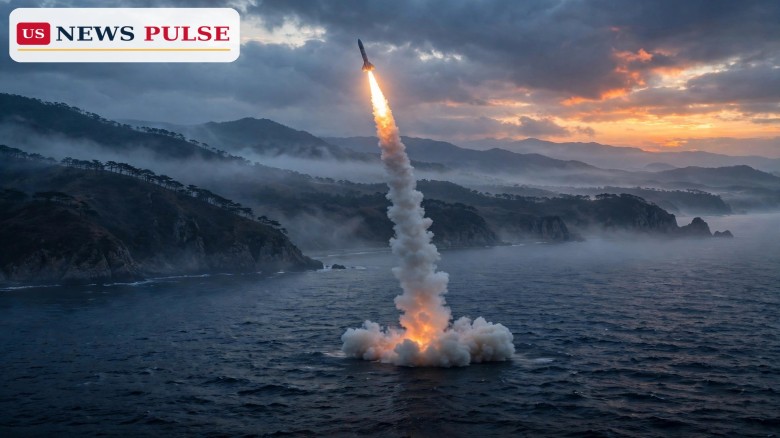
North Korea fired several missiles into the Sea of Japan from the Sondok area on the morning of Wednesday, November 4, 2026, extending a burst of weapons tests that has kept Seoul, Tokyo and Washington on alert. South Korea's Joint Chiefs of Staff said the launches were detected and tracked immediately, and that Seoul and Washington are now analysing exactly what was fired. No missile type, range or flight path had been publicly confirmed at the time of reporting.
The North Korea missile launch matters for its timing as well as its place. It follows a claim a day earlier that North Korea had test-fired strategic cruise missiles, and a weekend test of cluster-bomb warheads. The Sondok firing points to a broad, frequent testing programme.
Key Points
- Several missiles were fired from Sondok toward the East Sea, known as the Sea of Japan, on November 4, 2026.
- Seoul and Washington monitored the launches from the preparation stage and tracked them at once.
- Officials are analysing the missiles' exact specifications; no type or range was confirmed publicly.
- The launch may be the fourth missile test in the past month.
- Hours earlier, Kim Yo Jong warned of a stronger response to Washington's hostile policy and ruled out dialogue until it changes.
What Happened
South Korea's Joint Chiefs of Staff said North Korea fired several missiles from the Sondok area toward the East Sea on the morning of November 4, 2026. Seoul and the United States had monitored the launches from the preparation stage, detected and tracked them immediately after launch, and are conducting a detailed analysis of their exact specifications. That wording is familiar: Seoul confirms the event quickly, while the technical assessment — missile type, distance flown and performance — usually follows once radar, satellite and other tracking data have been compared. Sondok, on North Korea's east coast, has been used for launches before, and firing toward the East Sea follows a pattern in which missiles are sent toward waters east of the peninsula rather than over populated land. At the time of reporting there was no public confirmation of flight time, landing area or advance warnings, and no immediate reports of damage or disruption to shipping or aviation.
Background and Context
The Sondok launch sits inside a wider burst of North Korean weapons activity. A day earlier, Pyongyang claimed it had test-fired strategic cruise missiles. Over the preceding weekend, it tested cluster-bomb warheads. Other recent trials reported alongside the November 4 launch included attack drones, a precision-guided torpedo system and an intermediate-range hypersonic missile. Together they span air, sea and land, suggesting a programme focused on a range of capabilities at once, not a single weapon. The political backdrop is also tense. The tests come amid heightened tensions over a landmine explosion along the inter-Korean border. A joint Seoul-United Nations investigation concluded that the North had planted the mines more than a year earlier, wounding three South Korean soldiers. Pyongyang denies that finding. North Korea says its weapons are for self-defence and deterrence, pointing to United States exercises with South Korea.
North Korea Missile Launch: What Seoul and Washington Are Watching
For analysts, the first question is technical: what was fired, and what does it show? A cruise missile, a ballistic missile, a hypersonic system and a torpedo each raise different questions. Cruise missiles fly low and can be harder to detect; ballistic missiles can travel much further and faster; hypersonic weapons are designed to manoeuvre at high speed; torpedoes point to naval warfare. The analysis now under way will try to place the Sondok missiles in that picture. The second question is political: was this launch timed to send a message before a possible Trump-Kim meeting, to respond to the landmine dispute, or to test how Seoul and Washington react? North Korea rarely explains its timing, so analysts look at state-media statements, the weapon chosen, and what Pyongyang says in the days that follow. Kim Yo Jong's statement hours before the launch is one such clue.
Reactions and Quotes
South Korea's Joint Chiefs of Staff gave the clearest official account, saying the launches were monitored from the preparation stage, tracked immediately, and are now subject to detailed analysis. The statement did not name the missile type or give flight data, nor describe any immediate military response beyond monitoring and analysis. Hours before the launch, Kim Yo Jong, sister of leader Kim Jong Un, warned that Pyongyang would mount a stronger response to Washington's "invariable hostile policy" and ruled out dialogue until the United States abandoned that policy. She also repeated North Korea's denial that it was behind the Binance hack. Her words carry weight because she is one of Pyongyang's most senior and closely watched voices. President Donald Trump, by contrast, has recently said his relationship with Kim Jong Un is "very good" and that he "may" meet Kim during his Asian tour this month. No meeting has been confirmed.
Why It Matters
Each test can reveal a new capability or an improvement, shaping defence planning in South Korea, Japan and the United States. Tests also affect diplomacy: a launch that follows a warning against dialogue makes it harder, politically, to argue talks are imminent, even if Washington is open to a meeting. Past cycles have also seen tests followed by offers of talks. Finally, tests affect public confidence. A launch detected early, tracked fully and explained clearly is less destabilising than one that catches observers by surprise.
What Happens Next
The next step is the detailed analysis by South Korea and the United States, which should clarify the missile type and whether it is a new system or a repeat test. Those findings will shape official statements from Seoul, Washington and Tokyo. Diplomatically, attention will turn to whether Washington responds to Kim Yo Jong's warning, whether any channel for dialogue remains open, and whether President Trump's Asian tour this month produces a meeting with Kim Jong Un. If North Korea tests again in the coming days, it would confirm a sustained campaign; if there is a pause, analysts will ask whether it reflects a completed programme, a political decision, or simply a gap between trials. US News Pulse will update this story as assessments and statements are released.
Frequently Asked Questions
Where were the missiles fired from?
From the Sondok area toward the East Sea, known as the Sea of Japan, on November 4, 2026.
What type of missiles were fired?
That had not been publicly confirmed; Seoul and Washington are analysing the exact specifications.
Is this North Korea's first recent test?
No. It may be the fourth missile test in the past month.
What did Kim Yo Jong say before the launch?
She warned of a stronger response to Washington's hostile policy and ruled out dialogue until it changes.
Could President Trump still meet Kim Jong Un?
He has recently said his relationship with Kim is very good and that he may meet Kim during his Asian tour this month. No meeting is confirmed.
Read more: Trump says he is 'absolutely willing to accept' midterm results and Democrats win control of the US Senate in 2026 midterms.
Leave a Comment