
Two Italians Killed in Iranian Drone Attack on Kuwait Air-Defence Station
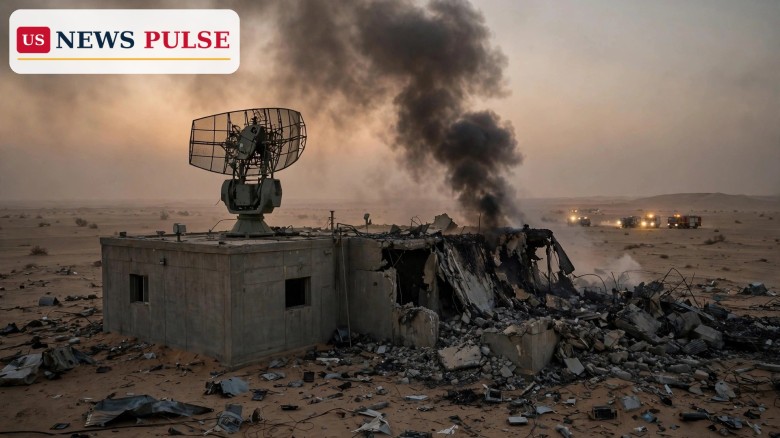
Two Italian technicians were killed on Thursday, November 26, 2026, when Iranian drones struck an air-defence surveillance station in Kuwait where they were working, Italy's Foreign Minister Antonio Tajani told the Senate in Rome. The men worked for Rheinmetall Italia, the Italian unit of the German defence group Rheinmetall. A powerful explosion followed the strike, and both men died of their injuries. Two other people were wounded, a Pakistani national and a Kuwaiti army captain. Kuwait's Defence Ministry confirmed the deaths and said its military had dealt with several drones inside Kuwaiti airspace.
Key Points
- Two Italian technicians working for Rheinmetall Italia were killed in an Iranian drone attack in Kuwait on Thursday, November 26, 2026.
- A Pakistani national and a Kuwaiti army captain were injured in the strike.
- Italy's Foreign Minister Antonio Tajani announced the deaths to the Senate in Rome.
- Kuwait's Defence Ministry confirmed the deaths and said several drones were detected and dealt with in its airspace.
- It was the second reported Iranian attack on Kuwait this month.
What Happened
The drones struck an air-defence surveillance station in Kuwait on Thursday, November 26, 2026. The two Italian technicians were at the facility when it was hit, and a powerful explosion followed. Both men died of their injuries, and two other people were wounded: a Pakistani national and a Kuwaiti army captain.
Kuwait's Defence Ministry first reported four people wounded by falling debris in what it called an Iranian attack on a "vital facility". It later confirmed that two of the four, the Italian technicians, had died of their injuries, and that the other two injured were a Kuwaiti and a Pakistani national. Kuwait's military said it detected several drones within its airspace and dealt with them, and that the attack caused material damage.
Foreign Minister Antonio Tajani announced the deaths in Rome, telling the Senate the two Italians had been killed in the Iranian drone attack.
Background: Iran's Strikes on Kuwait
Thursday's attack was the second reported Iranian attack on Kuwait this month. Earlier in November, Iran said it had targeted US drone and missile sites in Kuwait after the United States struck Qeshm Island in the Strait of Hormuz. That earlier attack caused no reported deaths; the November 26 strike is the first in this round to kill European civilians in Kuwait.
Kuwait is a close US ally in the Gulf, and its airspace and bases are part of the wider confrontation between the United States and Iran. Tehran presented the earlier attack on US sites in Kuwait as retaliation for the American strike on Qeshm Island, and strikes since then have hit air bases, radar stations and energy infrastructure across the Gulf.
Surveillance stations track incoming drones and missiles and feed targeting data to interceptor batteries, making them a priority target. The station hit on Thursday was a surveillance site, not a missile battery, but its loss still degrades Kuwait's air defences and shows Iran will strike a US ally's defensive systems directly.
The Kuwait Drone Attack That Killed Two Italians
The two men who died were technicians employed by Rheinmetall Italia, the Italian unit of the German defence group Rheinmetall. They were working at the station when the drones struck and were caught in the explosion that followed. Their names had not been released, and Rheinmetall declined to comment.
The attack also injured a Pakistani national and a Kuwaiti army captain, both of whom survived. Kuwait's Defence Ministry said the strike caused material damage, and its military said it had detected and dealt with several drones in Kuwaiti airspace.
Reactions
Tajani's announcement to the Senate was the first official confirmation that Italians had been killed. He told senators the two men were Rheinmetall Italia technicians at the station when it was targeted, and that a powerful explosion followed. He did not say when their bodies would be returned to Italy or what further steps Rome would take.
Kuwait's Defence Ministry confirmed the deaths, saying the two Italians had died of their injuries after the attack on the facility it called "vital". The confirmation moved the incident from an initial report of four wounded people to a confirmed killing of two foreign civilians, changing the diplomatic weight of the attack.
Rheinmetall, the German defence group whose Italian unit employed the two men, declined to comment. Iran's Foreign Ministry did not immediately respond to Reuters' request for comment.
Why It Matters
The deaths are the first reported European civilian deaths in Kuwait since the Iran war widened, and they change the conflict for Italy and for Europe. Until now, Iranian strikes on Gulf states had killed soldiers and local nationals; the killing of two Italian defence technicians puts a European country directly into the casualty list and gives Rome a direct stake in a war it has so far watched from the sidelines.
The strike also shows Iran will hit the defensive infrastructure of a US ally, not only American bases and ships. Striking a surveillance station aims to degrade the Gulf's ability to detect and intercept further attacks, and for Kuwait, a small state caught between the United States and Iran, a second attack in a month shows how exposed its territory has become.
What Happens Next
Italy must now decide how to respond. Rome is expected to confirm the men's identities and arrange for their bodies to be returned, and Tajani's statement is likely to be followed by a formal diplomatic response. Whether Italy raises the matter directly with Tehran, or through European partners, has not yet been announced.
Kuwait's military is expected to say how many drones entered its airspace and whether the station can be repaired or must be replaced. The wider question is whether the strike marks a further escalation, with more attacks on Gulf air defences, or a single deadly incident in a war already spread across the region.
Frequently Asked Questions
Who were the two Italians killed in Kuwait?
They were technicians for Rheinmetall Italia, the Italian unit of the German defence group Rheinmetall, at an air-defence surveillance station.
What happened in the attack?
Iranian drones struck the surveillance station on Thursday, November 26, 2026. A powerful explosion followed, killing the two Italians and injuring a Pakistani national and a Kuwaiti army captain.
Was anyone else hurt?
Yes: a Pakistani national and a Kuwaiti army captain. Kuwait's Defence Ministry first reported four people wounded by falling debris, then confirmed two had died.
Was this the first Iranian attack on Kuwait?
No, it was the second this month. Earlier in November, Iran said it targeted US drone and missile sites in Kuwait after the US struck Qeshm Island.
What has Italy said?
Foreign Minister Antonio Tajani told the Senate the two Italians had been killed in the Iranian drone attack. Rheinmetall declined to comment, and Iran's Foreign Ministry did not immediately respond.
Related coverage: Kuwait counters drone attacks as Bahrain gives the all-clear, the Port Shuaiba whistleblower who said the Pentagon ignored warnings before six soldiers died, and the US Army racing to build 17 bunkers across the Middle East as Iran strikes kill 23 troops.
© 2026 US News Pulse. All rights reserved.
 Print
 Save