
US Approves $622 Million F-16 Sustainment Sale for Ukraine, Allies Pay
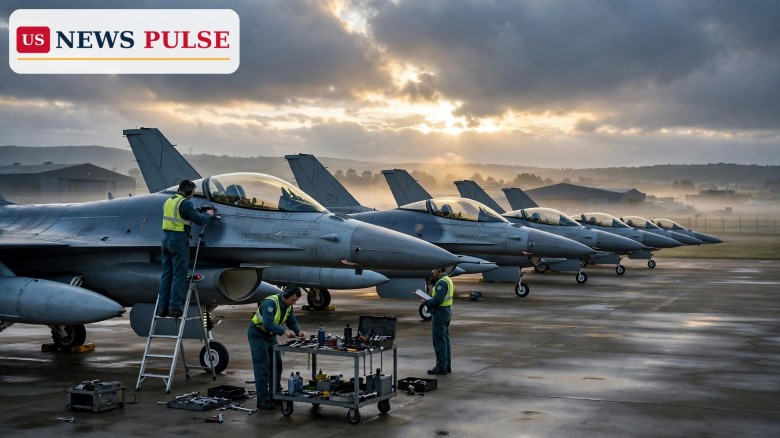
The United States has approved a $621.9 million sale of F-16 sustainment equipment to Ukraine, the State Department announced on Wednesday, in a deal paid for entirely by four European allies. The approval covers the parts and support services needed to keep Ukraine's fleet of F-16 fighter jets flying, as maintenance delays and a shortage of spare parts threaten to ground much of the fleet. Belgium, Denmark, the Netherlands and Norway will fund the purchase through a multinational programme known as JUMPSTART, the State Department said, stressing no United States funds are involved.
Key Points
- The State Department approved a possible $621.9 million Foreign Military Sale of F-16 sustainment equipment to Ukraine, announced Wednesday, November 25, 2026.
- Belgium, Denmark, the Netherlands and Norway will fund it entirely through JUMPSTART; no US funds are involved.
- The package covers Cartridge and Propellant Actuated Devices, laboratory equipment and transportation support.
- It aims to keep Ukraine's F-16s flying after early-October reports that maintenance delays and parts shortages had grounded more than half the fleet.
- The approval is a determination, not a contract, and no extra US personnel will deploy to Ukraine.
What Happened
The State Department said it had made a determination approving a possible Foreign Military Sale to Ukraine of F-16 aircraft sustainment and related equipment, at an estimated total cost of $621.9 million, in a formal statement reported by Ukrainian media on Thursday, November 26.
The funding is the most striking part of the deal. Ukraine will use money from Belgium, Denmark, the Netherlands and Norway through JUMPSTART, the Joint Ukraine Multinational Program for Services, Training and Articles on a Rapid Timeline, a pooled mechanism through which allies pay for American weapons bound for Kyiv. The State Department was explicit: the United States will not use its own funds to finance the deal.
Under the standard Foreign Military Sales process, the determination is not a contract. Congress is notified, and if it proceeds, Washington issues a letter of offer and acceptance before anything is contracted. The main contractors will be chosen by competitive procurement, not named in advance. No additional US personnel will deploy to Ukraine, and the sale will have no adverse impact on US defence readiness.
Background: Ukraine's F-16 Fleet and the Maintenance Crunch
Ukraine pressed its Western allies for F-16s for more than a year after Russia's full-scale invasion in February 2022. The first jets arrived in 2024, donated by European allies, and have become a workhorse of Ukraine's air defences, used above all to shoot down Russian attack drones.
President Volodymyr Zelenskyy has said Ukraine will receive more F-16s from Belgium by the end of the year, and has described their role against jet-powered Shahed drones, faster than earlier models and harder to intercept. To counter them, he said, the F-16s need 5,000 to 6,000 rounds of 20mm cannon ammunition a day.
That heavy use created the maintenance problem this sale addresses. The Wall Street Journal reported in early October that maintenance delays and parts shortages had grounded more than half of Ukraine's F-16 fleet. Ukrainian officials denied the crisis was as severe as reported, but admitted some components are no longer in production and harder to source. In May 2025, the US approved a smaller $310.5 million F-16 training and maintenance package; the new approval is roughly twice that size.
F-16 Sustainment Sale: What the $621.9 Million Package Covers
At the heart of the package are Cartridge Actuated Devices and Propellant Actuated Devices, small explosive-powered components used in ejection seats, canopy systems and other aircraft mechanisms. They are consumables: each use and inspection cycle draws down stocks, and without a steady supply, aircraft cannot safely fly.
The package also includes laboratory equipment for testing and repairing sensitive components, plus transportation support to move parts to where the jets are maintained. It will be added to a smaller earlier sale below the value threshold requiring a formal report to Congress, suggesting the sustainment pipeline has run quietly for some time.
Sustainment is unglamorous but decisive: jets are kept flying by a constant flow of spares, test equipment and trained technicians. When that flow breaks, availability falls fast, and a strong-looking fleet spends more time in hangars than in the air.
Reactions
The State Department framed the sale as a matter of Ukraine's self-defence. "The proposed sale will enhance Ukraine's ability to counter current and future threats by further equipping it to carry out self-defense and regional security missions with enhanced air defense capabilities," its statement said.
"The proposed sale supports the foreign policy and national security objectives of the United States by improving the security of a partner country. There will be no adverse impact on U.S. defense readiness from the implementation of this proposed sale," the statement added.
Ukrainian officials have not disputed that the fleet needs support, even as they pushed back against the bleakest version of the maintenance picture, conceding only that some components are out of production and difficult to obtain. The four funding allies have long backed Ukraine's air power: Denmark and the Netherlands were among the first to pledge F-16s, Norway has contributed aircraft and funding, and Belgium is due to deliver more jets by year's end.
Why It Matters
The F-16s are the most advanced Western fighter jets in Ukrainian service and have become central to air defence, intercepting cruise missiles and drones that older Soviet-era aircraft struggle to catch. Every jet grounded by a missing part is a gap in that defence.
The funding model matters almost as much as the hardware. The same JUMPSTART mechanism paid for the $2.1 billion Patriot missile sale approved in October, and it underpins the wider PURL programme through which allies buy American weapons for Ukraine. For Russia, the message is that Ukraine's Western-supplied air force is being maintained, not left to wither.
What Happens Next
The next step is congressional notification. Lawmakers will review the deal, and if it proceeds, the US government will issue a letter of offer and acceptance to Kyiv before contracting begins.
Attention will then turn to delivery and fleet availability: whether the maintenance delays reported in October begin to ease, and how many Ukrainian F-16s are flying missions in the months ahead. More Belgian jets due by year's end will add to the test, since each new aircraft increases demand for the same scarce parts.
Frequently Asked Questions
How much is the F-16 sustainment sale worth?
The estimated total cost is $621.9 million.
Who is paying for the sale?
Belgium, Denmark, the Netherlands and Norway, through JUMPSTART, with no US funds involved.
What does the package include?
Cartridge and Propellant Actuated Devices, laboratory equipment and transportation support.
Is the sale final?
No. The State Department approved a possible sale; Congress is notified first, and a letter of offer and acceptance must follow.
Why does Ukraine need it now?
Reports in early October said maintenance delays and parts shortages had grounded more than half the fleet.
Related coverage: US Approves $2.1 Billion Patriot Missile Sale to Ukraine | US to Seek More NATO Funding for Ukraine Weapons as PURL Faces $2 Billion Gap | Ukraine Strikes Savasleyka Airbase Deep in Russia, Damaging Five Warplanes
© 2026 US News Pulse. All rights reserved.
 Print
 Save