
Supreme Court to Hear First-Ever AR-15 Ban Challenge in Landmark Gun Case
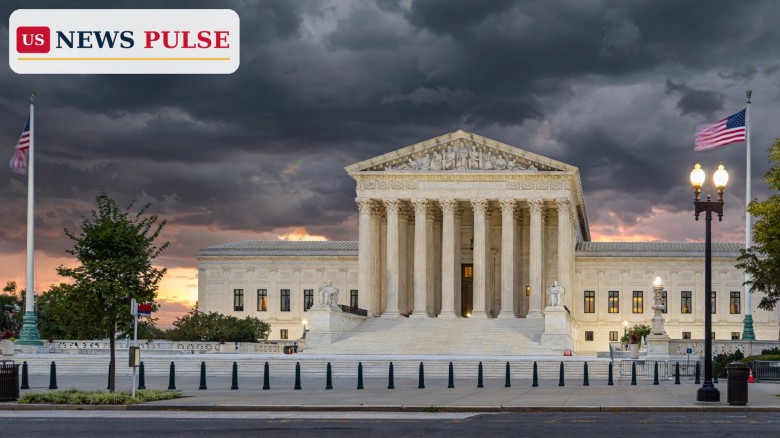
The United States Supreme Court will hear oral arguments on Wednesday, December 2, 2026, in the first Supreme Court AR-15 ban case ever, a landmark Second Amendment showdown that could decide whether millions of Americans have a constitutional right to own the country's most popular rifle. The justices will take up two consolidated cases, Khaya v. Cook County from Illinois and Grant v. Higgins from Connecticut, and answer a question the Court has avoided for decades: whether the Second and Fourteenth Amendments guarantee the right to possess AR-15 platform and similar semiautomatic rifles.
Key Points
- Arguments are set for December 2, 2026 at 10 a.m. ET in Khaya v. Cook County and Grant v. Higgins.
- The cases challenge Connecticut's statewide ban and Cook County's ban, which includes Chicago.
- Only 11 states ban AR-15-style rifles; about 26 million Americans own one.
- The Trump administration backs the challengers, citing "common use" 49 times in its brief.
- A ruling is expected by late June or early July 2027.
What Happened
The Court set the argument for Wednesday, December 2, 2026 at 10 a.m. ET, consolidating two cases from opposite ends of the country. Khaya v. Cook County, No. 25-238, challenges the ban in Cook County, Illinois, which includes Chicago. Grant v. Higgins, No. 25-566, challenges Connecticut's statewide ban. Both ask whether the Second and Fourteenth Amendments guarantee the right to possess AR-15 platform and similar semiautomatic rifles.
On November 23, the Court dismissed lead petitioner Cutberto Viramontes from the Illinois case, which now proceeds as Khaya v. Cook County. Cook County's November 5 suggestion that the case was moot failed. CNN reported the December 2 date on Friday, November 27, 2026; the grant itself was the news, as the Court has never before taken up a case challenging a ban on AR-15-style rifles.
Background: How the AR-15 Ban Cases Reached the Court
The AR-15 is, by the Court's own description, "the most popular rifle in the country." As many as 26 million Americans own one, about 30 percent of US gun owners, according to one survey. Yet only 11 states ban the rifles, and those bans have survived years of litigation. The 2nd Circuit upheld Connecticut's ban and the 7th Circuit upheld Cook County's, leaving the Supreme Court to resolve the dispute.
The legal framework comes from two of the Court's own decisions. In District of Columbia v. Heller in 2008, Justice Antonin Scalia wrote that the Second Amendment protects weapons "in common use" for lawful purposes, a phrase now at the centre of this fight. In New York State Rifle and Pistol Association v. Bruen in 2022, the Court said gun restrictions must fit the nation's history and tradition of firearms regulation, a test the states defending the bans now rely on.
Connecticut's ban dates to the aftermath of the 2012 Sandy Hook Elementary School shooting, in which the gunman used an AR-15-style rifle. Cook County's ban covers Chicago, long at the centre of the debate over gun violence. Both target semiautomatic rifles, one round per trigger pull, defended as measures against battlefield weapons. The Court has approached the question carefully: it recently let Maryland's sensitive-places gun law stand, and Virginia's highest court just restored gun rights for a felon, ruling that a felony conviction alone does not end them.
Supreme Court AR-15 Ban: The Arguments on Both Sides
The challengers' argument is built on a single phrase from Heller: "common use." They say a rifle owned by 26 million Americans, roughly a third of the country's gun owners, cannot be banned as unusual or especially dangerous, because it is in common use for lawful purposes. They used the phrase 56 times in their brief; the Trump administration used it 49 times in its September brief.
The states answer with the Bruen history test. They say AR-15-style rifles descend from the military M16, fire bullets that tumble on impact, and have low recoil that makes them easy to fire rapidly, a combination that makes them unusually dangerous. Connecticut and Cook County put the human cost at the centre of their case, noting that "100 percent of the children who were hit with this weapon at Sandy Hook died." They argue the bans respond to that lethality, and that the Constitution leaves room to draw a line at a weapon designed to kill quickly and at scale.
Reactions and Quotes
The Trump administration has taken the challengers' side, putting the federal government on record against state bans on the country's most popular rifle. Its September brief leaned on Heller's "common use" argument, pressing the Court to treat the AR-15 as an ordinary rifle owned by ordinary Americans. At least four conservative justices have signalled scepticism of the bans, putting the focus on Chief Justice John Roberts and Justice Amy Coney Barrett.
The Justice Department has pressed the same argument elsewhere, recently suing Glendale, California, over concealed-carry fees it said burdened the right to bear arms. The Justice Department sued Glendale over concealed-carry fees. What is at stake is plain: for the challengers, whether a constitutional right can be limited by banning the rifle most Americans choose; for Connecticut and Cook County, whether legislatures can keep a military-style weapon out of civilian hands.
Why It Matters
The ruling will set the national rule for the most contested weapon in American gun law. If the Court strikes the bans down, the 11 states that restrict AR-15-style rifles must rewrite their laws, and other gun restrictions will face stronger challenges. If it upholds them, the bans stand and other states will have a clear path to pass similar measures.
The case also tests the Court's own framework, since Heller's "common use" language and Bruen's history test point in different directions. A ruling on AR-15 bans would be the most consequential of its recent gun decisions, answering a question avoided for decades.
What Happens Next
Oral arguments are set for Wednesday, December 2, 2026 at 10 a.m. ET, with a ruling expected by late June or early July 2027. Until then, the bans in Connecticut and Cook County remain in force, and the 11 states with similar laws will be watching the argument closely. Whatever it decides, the ruling will start the next round of gun litigation, in statehouses and lower courts, for years to come.
Frequently Asked Questions
What is the Supreme Court deciding?
Whether the Second and Fourteenth Amendments guarantee the right to possess AR-15 platform and similar semiautomatic rifles.
When will the Court hear the case?
Wednesday, December 2, 2026 at 10 a.m. ET; a ruling is expected by late June or early July 2027.
Which bans are being challenged?
Connecticut's statewide ban and Cook County's ban, which includes Chicago, both upheld by the 2nd and 7th Circuits.
What does "common use" mean?
It is the phrase from Justice Scalia's 2008 Heller opinion protecting weapons "in common use" for lawful purposes.
How many Americans own an AR-15?
As many as 26 million, about 30 percent of US gun owners. Only 11 states ban the rifles.
© 2026 US News Pulse. All rights reserved.
 Print
 Save