

 | Today's Date:


Supreme Court Lets Maryland Sensitive Places Gun Law Stand in Second Amendment Test
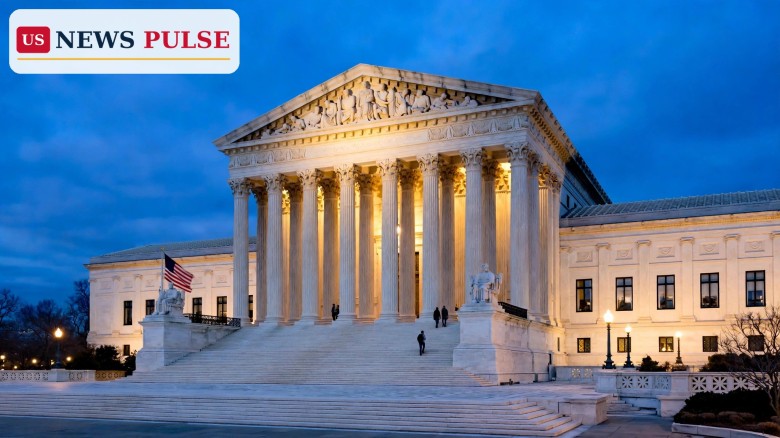
WASHINGTON — The US Supreme Court on Monday declined to decide whether Maryland's law banning guns in stadiums, bars, public parks and other so-called "sensitive places" violates the Second Amendment, leaving one of the country's broadest post-Bruen gun restrictions in force.
The justices turned away an appeal by gun-rights advocates, including the Maryland affiliate of the National Rifle Association, who wanted the state's carry bans struck down. The decision leaves intact a ruling by the Richmond-based 4th US Circuit Court of Appeals, which upheld all of Maryland's disputed bans.
Key Points
- The Supreme Court declined on Monday, November 16, 2026, to hear a challenge to Maryland's 2023 law banning guns in "sensitive places" such as stadiums, bars, parks, campuses, hospitals, power plants and amusement parks.
- The appeal came from gun-rights advocates after the 4th US Circuit Court of Appeals upheld every disputed location ban.
- Maryland's law was signed in 2023 by Democratic Governor Wes Moore after the Supreme Court's 2022 Bruen ruling expanded the right to carry a handgun in public.
- Challengers argued the bans failed the Bruen test, which requires gun measures to be "consistent with this nation's historical tradition of firearm regulation".
- The court will hear a separate challenge to state restrictions on assault-style rifles on December 2, 2026.
What Happened
Maryland's law, signed in 2023 by Democratic Governor Wes Moore, prohibits carrying firearms in a long list of locations the state designated as sensitive: stadiums, bars, public parks, college campuses, hospitals, power plants and amusement parks. The restrictions built on Maryland's longstanding bans on carrying guns in locations including public transit, casinos, schools and public protest sites.
Gun-rights groups, including the Maryland affiliate of the National Rifle Association, sued to challenge the law. They argued that a number of the state's location-based restrictions violated their Second Amendment rights as defined by the Supreme Court's 2022 decision in New York State Rifle & Pistol Association, Inc. v. Bruen.
A federal judge in 2023 upheld some of the location-based restrictions while blocking others, prompting separate appeals by the gun-rights groups challenging the law and by Maryland officials defending it. On appeal, the 4th US Circuit Court of Appeals approved all of Maryland's disputed location bans, and that ruling led to the appeal the Supreme Court has now turned away.
Background and Context
Maryland was one of several states to enact new restrictions on the carrying of firearms in locations deemed sensitive after the Supreme Court's landmark 2022 ruling in Bruen expanded gun rights. The Bruen decision declared for the first time that the Second Amendment protects an individual's right to carry a handgun in public for self-defense.
Under the legal test set out in Bruen, gun control measures must be "consistent with this nation's historical tradition of firearm regulation" — not simply advance an important government interest — to comply with the Second Amendment. The challengers argued that the state's restrictions failed that test, because no comparable historical tradition supports banning guns in so many everyday places.
Maryland Sensitive Places Gun Law: What the Court Left in Place
With the Supreme Court declining to intervene, Maryland's sensitive-places law now stands in full. Licensed gun owners in Maryland still may not carry firearms into stadiums, bars, parks, campuses, hospitals, power plants or amusement parks — on top of the state's older bans covering public transit, casinos, schools and protest sites.
The 4th Circuit's decision is now the final word on this challenge, and it gives other states with similar location-based restrictions a measure of legal breathing room. Maryland was not alone in responding to Bruen with sensitive-places laws, and the Supreme Court's refusal to take up the case means those laws will not face a national test from this dispute.
Reactions and Quotes
The challengers' core argument was that Maryland's bans could not survive the history-based test the Supreme Court itself set out in Bruen. In their view, the state had stretched the idea of a "sensitive place" far beyond anything the nation's history supports, turning ordinary public spaces — a park, a bar, a stadium — into zones where the constitutional right to carry a handgun simply does not apply.
Maryland's defenders took the opposite view: that governments have long barred guns from crowded and vulnerable settings, and that the state's list of sensitive places fits within that tradition. The 4th Circuit agreed with the state, and the Supreme Court's decision not to hear the case leaves that conclusion standing.
The constitutional text at the heart of the dispute is the Second Amendment, ratified in 1791, which states: "A well regulated militia, being necessary to the security of a free state, the right of the people to keep and bear arms, shall not be infringed." How far that right extends outside the home remains one of the most contested questions in American constitutional law.
Why It Matters
The decision matters because it settles, for now, how far states may go in keeping guns out of everyday public spaces after Bruen. Maryland's law is among the most extensive sensitive-places regimes in the country, and its survival signals that states retain real room to regulate where guns may be carried, even after the Supreme Court's expansion of the right to carry.
It also matters because the court declined to take the case without explanation, as it does with most appeals. A refusal to hear a case is not a ruling on the merits, and it does not stop gun-rights groups from bringing a similar challenge in another case.
What Happens Next
Maryland's sensitive-places bans remain in effect while gun-rights groups weigh their next move. The most likely path is a fresh challenge built on different facts, aimed at giving the justices a cleaner vehicle to decide the scope of sensitive places.
The court's attention now turns to December 2, when the justices will hear a challenge to state restrictions on assault-style rifles, giving them another chance to expand gun rights in a case involving a type of weapon often associated with mass shootings.
Frequently Asked Questions
What did the Supreme Court decide about Maryland's gun law?
The court declined on Monday, November 16, 2026, to hear a challenge to Maryland's law banning guns in "sensitive places". The law stays in force; this is not a ruling that it is constitutional.
Which places does Maryland's law cover?
Stadiums, bars, parks, campuses, hospitals, power plants and amusement parks, plus older bans on transit, casinos, schools and protest sites.
What is the Bruen test?
From the 2022 Bruen decision, the test requires gun measures to be "consistent with this nation's historical tradition of firearm regulation" to comply with the Second Amendment.
Who brought the challenge?
Gun-rights advocates, including the Maryland affiliate of the National Rifle Association, appealed after the 4th US Circuit Court of Appeals upheld all of the disputed bans.
What gun case is the Supreme Court hearing next?
On December 2, 2026, the court will hear a challenge to state restrictions on assault-style rifles.
Related coverage: our report on the Justice Department's lawsuit against Glendale over carry-permit fees and Massachusetts voters keeping the 2026 gun law. For more on Maryland, see Wes Moore winning a second term as governor.

The US News Pulse newsroom covers breaking news across the United States and the world, working from wire services, official statements and on-the-record sources. Every story is reviewed against our editorial standards before publication. Corrections and tips: info@usnewspulse.com
About our newsroomLeave a Comment