
Army Knew of Iowa Explosives Danger Since 2009, Records Show, Contradicting March Claim
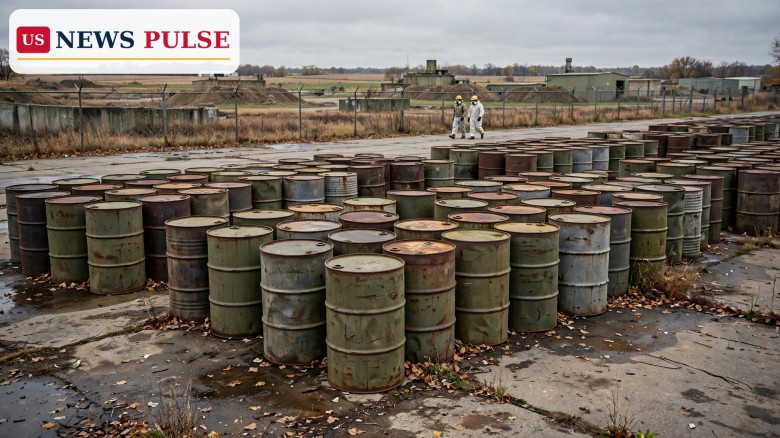
Records reviewed by The New York Times show the US Army knew the deteriorating lead azide stored at its Iowa ammunition plant was dangerous as far back as 2009, seventeen years before it detonated the stockpile this week. The finding, reported on Thursday, November 27, 2026, contradicts the Army's claim that the danger was only discovered in March 2026, when an inspection found crystallisation on the barrel lids and rims. The White House has opened an inquiry into why senior officials were not told sooner, and Iowa Governor Kim Reynolds said she was not informed of the planned detonation until last week.
Key Points
- Records reviewed by The New York Times show the Army knew the lead azide at the Iowa Army Ammunition Plant in Middletown was dangerous as far back as 2009.
- The barrels were moved from Texas to Iowa in 2009, already old and degraded, according to ATF Director Robert Cekada.
- Army officials had repeatedly said the danger was only discovered in March 2026, when an inspection found crystallisation on barrel lids.
- In September 2025 the plant's contractor asked a waste firm for quotes to neutralise more than 9,700 pounds of lead azide; the contract was never awarded.
- The White House has opened an inquiry into why senior officials were not told sooner.
What Happened
The Times reported on Thursday that documents show the Army knew of the risk far longer than it has admitted in public. The barrels were moved from a facility in Texas to the Iowa Army Ammunition Plant in Middletown in 2009, in the first year of the Obama administration. ATF Director Robert Cekada said on Wednesday, November 25, that the material was "already old, degraded lead azide explosives, and already a concern for the military" when it was moved.
That account sits uneasily with what Army officials have said for months. They have repeatedly stated that the danger was only discovered in March 2026, when an inspection confirmed crystallisation on the lids and rims of the barrels. The records also show the Army had chances to deal with the stockpile without an explosion: in September 2025, American Ordnance, the contractor that runs the plant, asked the waste firm MuniRem Environmental for quotes to chemically neutralise more than 9,700 pounds of lead azide. MuniRem bid in October 2025, but the contract was not awarded.
Background: The Long Road to Wednesday's Blast
The Iowa lead azide saga has dominated the news in Middletown and across Iowa for weeks. The Army first planned to detonate 68 barrels, nearly five tons, of the unstable explosive, then postponed it after a lawsuit and public outcry. The Eighth Circuit blocked the detonation while it weighed the case, and President Donald Trump ordered the Army to halt the blast until the court agreed. When the court cleared the way, the Army detonated the barrels on Wednesday, November 25, in a blast that Major General Eric P. Shirley called "tremendously successful".
The Environmental Protection Agency said on Thursday, November 26, that its monitors detected no airborne lead after the blast, based on 1,591 pre-blast samples and more than 1,000 since. If the Army knew the material was dangerous in 2009, why did it sit in storage for seventeen years, and why was the chemical treatment option explored in the autumn of 2025 never taken up?
Army Knew of Iowa Explosives Danger Since 2009: What the Records Show
The central finding is simple: the Army's own records show the danger was known in 2009. The barrels arrived in Iowa already old and degraded, according to the ATF director, and the Army's public story, that an inspection in March 2026 first revealed crystallisation on the lids and rims, now looks incomplete at best. A chemical treatment would have avoided the explosion altogether, but the contract was never awarded. That matters because the detonation was controversial: residents objected, a lawsuit was filed, a federal appeals court intervened, and the president ordered a halt. The Army's case for the blast was that the material had become too dangerous to move or treat, and that the risk had only just been discovered. The records now show the material had been a known concern since 2009.
Reactions
ATF Director Robert Cekada was direct about the condition of the material when it arrived in Iowa. He said on Wednesday that it was "already old, degraded lead azide explosives, and already a concern for the military" when the barrels were moved from Texas in 2009. Major General Eric P. Shirley, who oversaw the detonation, described the blast itself as "tremendously successful". The Army has not yet publicly addressed the discrepancy between the 2009 records and its March-discovery claim.
Iowa Governor Kim Reynolds said she was not informed of the planned detonation until last week. For the people of Middletown, the EPA's finding of no airborne lead is the one reassurance so far.
Why It Matters
This is not a dispute about a date. If the Army knew in 2009 that the lead azide was old, degraded and a concern, then seventeen years passed in which the stockpile could have been treated, removed or neutralised. Instead it sat until it became so unstable that the only option left was a controlled detonation that required a court battle, a presidential order and the evacuation of nearby residents. It matters for trust: the Army told the public, repeatedly, that the danger was discovered in March 2026, and the records reviewed by the Times show otherwise.
What Happens Next
The White House inquiry will be the immediate focus. It is examining why senior officials were not told sooner, and its findings will shape whether anyone is held responsible for the seventeen-year gap between the 2009 move and the 2026 blast. The EPA's work continues, with results for tap water, soil and dust still pending, and Congress may also take an interest, since a finding that the Army knew of the danger since 2009 is the kind of revelation that draws hearings.
Frequently Asked Questions
How long did the Army know about the Iowa explosives danger?
The Army knew the deteriorating lead azide was dangerous as far back as 2009, when the barrels were moved from Texas to Iowa.
What did the Army say before?
Army officials repeatedly said the danger was only discovered in March 2026, when an inspection found crystallisation on barrel lids and rims.
Was there an alternative to detonating the lead azide?
In September 2025 the plant's contractor asked MuniRem Environmental for quotes to neutralise more than 9,700 pounds of lead azide, but the contract was not awarded.
Did the blast release lead into the air?
The EPA said its monitors detected no airborne lead after the blast. Water, soil and dust results are still pending.
What is the White House doing about it?
The White House has opened an inquiry. Governor Kim Reynolds said she was not informed of the detonation until last week.
Related coverage: EPA Finds Zero Airborne Lead After Iowa Lead Azide Blast, Iowa Lead Azide Detonation Succeeds as Army Blasts 68 Barrels, and Army Cancelled MuniRem Chemical Fix for Toxic Iowa Lead Azide.
© 2026 US News Pulse. All rights reserved.
 Print
 Save