
Meta Whistleblower Likens Gag Order to Orwell's '1984' in Guardian Piece
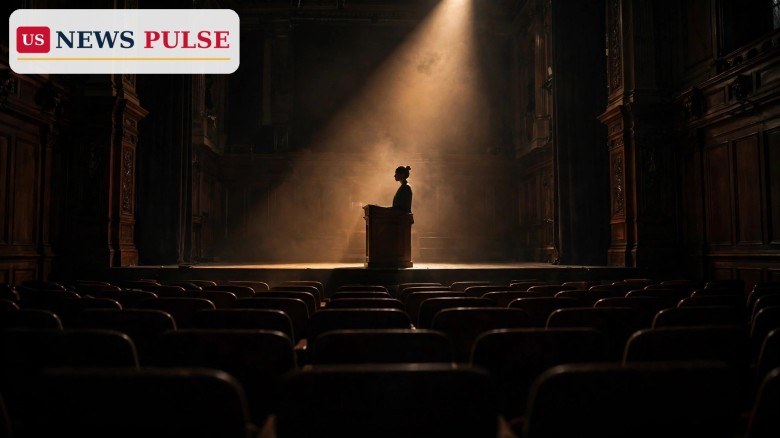
Sarah Wynn-Williams, the former Facebook executive who became one of Meta's most prominent whistleblowers, says the gag order barring her from speaking about the company feels like George Orwell's "1984". In a Guardian opinion piece published on Friday, November 27, 2026, she wrote that the order, which carries fines of $50,000 per breach, has turned her life into a case study of the novel's warnings about memory and control. The piece came a day after she delivered the 2026 Orwell Lecture in London, standing on stage at the Southbank Centre without once naming Meta or her book.
Key Points
- Sarah Wynn-Williams wrote in the Guardian on Friday that Meta's gag order feels like Orwell's "1984".
- The American Arbitration Association barred her in March 2025 from promoting her memoir "Careless People" or publicly criticising Meta, with $50,000 fines per breach.
- She delivered the 2026 Orwell Lecture, "The Modern Memory Hole", in London on Thursday, introduced by actress Cate Blanchett, without mentioning Meta or the book.
- Meta fired her in 2017; she says it was retaliation for reporting her boss Joel Kaplan for alleged sexual harassment.
- In June 2026 she sued Meta, arguing the company is "punishing" her for disclosing workplace conditions and corporate misconduct.
What Happened
The Guardian piece, published on Friday, November 27, 2026, is her most direct public comment yet on the order that has governed her speech for more than a year and a half. She reached for Orwell, writing: "Control what people are allowed to remember or what they are allowed to know, and you control what they are able to imagine." She added: "Orwell gave us the thoughtcrime: you don't have to act against the Party to be guilty. You just have to think the wrong thing."
A day earlier, on Thursday, November 26, she had delivered the 2026 Orwell Lecture, "The Modern Memory Hole", at London's Southbank Centre. Actress Cate Blanchett introduced her. Bound by the gag order, Wynn-Williams did not mention Meta or her book on stage. The lecture's title alone made the point she was barred from making in words.
Background: From Facebook Executive to Whistleblower
Wynn-Williams was Facebook's global public policy director from 2011 to 2017, a senior role at the centre of the company's dealings with governments. Meta fired her in 2017. She says the dismissal was retaliation for reporting her boss, Joel Kaplan, for sexual harassment, an account Meta has contested.
Her memoir, "Careless People: A Cautionary Tale of Power, Greed and Lost Idealism", was published in March 2025 and became a bestseller. In April 2025 she testified before the US Senate, where she said Meta executives "lied about what they were doing with the Chinese Communist Party to employees, shareholders, Congress and the American public". Meta disputes that claim. The testimony made her one of the highest-profile former insiders to accuse the company in public.
The Meta Whistleblower Gag Order: What the Arbitration Ruling Bars
Within days of the memoir's publication, Meta secured an emergency ruling from the American Arbitration Association. It barred Wynn-Williams from publicly promoting her memoir or publicly criticising Meta, with fines of $50,000 for each breach. It did not order the book withdrawn, but it effectively froze its author in place.
In June 2026 she sued Meta in a 57-page filing in the US District Court in Northern California. Her lawyers argued the company is "punishing" her for disclosing workplace conditions and corporate misconduct, and has used surveillance of her speech and associations to seek sanctions for nearly every public appearance, though she has never spoken about her book or Meta at any appearance. The case tests how far a private arbitration order can reach into a former employee's public life.
Reactions: A Lecture Delivered in Silence About Its Subject
The Orwell Lecture was the strangest part of the week: an evening devoted to memory and censorship in which the speaker could not name the company that had silenced her or the book she had written about it. Blanchett's introduction gave the event its cultural weight, but the substance of the night was the absence at its centre.
The Guardian piece said what the lecture could not. By quoting "1984" directly, Wynn-Williams framed the gag order not as a private employment dispute but as a question about who controls what the public is allowed to remember. Meta has disputed her account of its dealings with China and defended its use of arbitration. But the emergency ruling, the $50,000 fines and the surveillance of her appearances described in her lawsuit are now part of the public record.
Why It Matters
The case matters because gag orders of this kind are rarely tested in public. Most former employees bound by arbitration rulings simply go quiet. Wynn-Williams has done the opposite, using the one subject she is still free to discuss, Orwell, to describe being silenced, while her lawsuit asks a federal court to rule on the order itself.
It also matters for Big Tech accountability. Whistleblowers are one of the few ways the public learns what happens inside companies the size of Meta, and the tools used to restrain them set the terms for the next person who considers speaking out. Regulators and courts keep pressing the largest platforms: OpenAI has countersued Apple over trade secrets and supplier pressure, Los Angeles schools have blocked Google's AI Overviews, and New York has banned AI chatbot toys for five years.
What Happens Next
The June 2026 lawsuit in Northern California will decide whether the gag order survives a federal court challenge and whether Wynn-Williams can eventually speak freely about Meta and her memoir. Until then, every public appearance will be watched for breaches, and every appearance she does not make will be read as the order working as intended.
The Orwell Lecture and the Guardian piece suggest she has found a way to keep talking within the order's limits, by talking about Orwell instead of Meta. The question is whether the courts, or Meta itself, will loosen a restriction that has already become a story in its own right.
Frequently Asked Questions
Who is Sarah Wynn-Williams?
A former Facebook global public policy director (2011-2017) and author of "Careless People" (2025), who became one of Meta's most prominent whistleblowers after testifying to the US Senate in April 2025.
What is the gag order against her?
An emergency ruling from the American Arbitration Association in March 2025 bars her from promoting her memoir or criticising Meta, with fines of $50,000 per breach.
What did she say about Orwell's "1984"?
In a Guardian piece on Friday, November 27, 2026, she wrote that the gag order feels like "1984": "Control what people are allowed to remember or what they are allowed to know, and you control what they are able to imagine."
What is "Careless People"?
Her memoir, published in March 2025. Meta secured the gag order within days of its publication.
What is her lawsuit against Meta about?
Filed in June 2026 in Northern California, it argues Meta is "punishing" her for disclosing workplace conditions and corporate misconduct, and has sought sanctions for nearly every public appearance.
© 2026 US News Pulse. All rights reserved.
 Print
 Save