


 | Today's Date:




Israel Kills Hamas Commander Samir Abu Younis, Key Planner of October 7 Attack
Israel says it has killed Samir Abu Younis, the Hamas commander of the Rafah Brigade, in a drone strike in southern Gaza — and Hamas itself has confirmed that he was one of the most important commanders behind the planning of the October 7, 2023 attack on Israel.
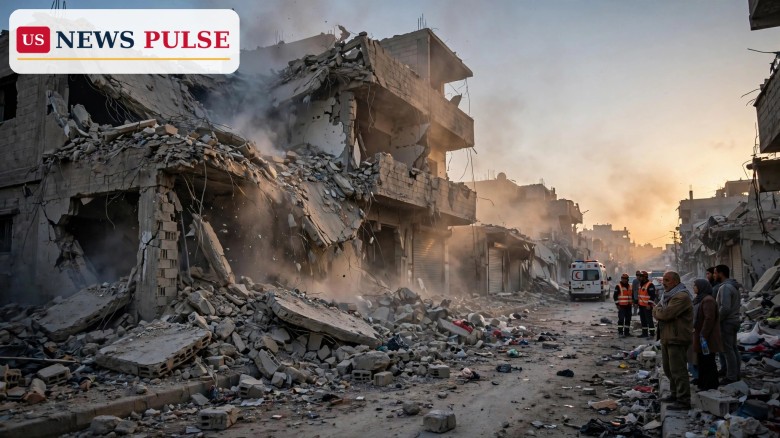
The strike hit a street in the Al-Mawasi area west of Khan Younis on Saturday, November 14, 2026. Israel's military and the Shin Bet security service announced the killing on Sunday, and Hamas's armed wing, the Al-Qassam Brigades, confirmed later the same day that the dead man was Abu Younis, 53. His death is the most senior Hamas killing since the October 2025 ceasefire halted major fighting.
Key Points
- Who was killed: Samir Abu Younis, 53, commander of Hamas's Rafah Brigade, killed in a drone strike in Al-Mawasi, west of Khan Younis, on Saturday, November 14, 2026.
- Why he mattered: Hamas's Al-Qassam Brigades said he was "among the most important commanders involved in the planning and supervision of the 7 October attack" of 2023.
- Who confirmed it: Israel's military and Shin Bet announced the strike on Sunday; Hamas confirmed his identity the same day, and Gaza civil defence said it had received his body.
- Others hurt: two people were wounded in the strike, according to Gaza civil defence spokesman Mahmoud Bassal.
- The wider context: the killing comes despite the October 2025 ceasefire, with both sides accusing each other of violations.
What Happened
According to Israel's military and Shin Bet, the strike targeted Abu Younis as he moved through Al-Mawasi, the coastal area west of Khan Younis. A security source told the AFP news agency shortly after midnight that Younis had died in a strike "targeting him moments ago in Al-Mawasi". Gaza civil defence spokesman Mahmoud Bassal said his agency had received Younis's body, and that two other people were wounded.
Hamas's Al-Qassam Brigades confirmed the death on Sunday. In its statement, the group described Abu Younis as one of the commanders most closely involved in planning and supervising the October 7 attack, in which Hamas-led fighters killed around 1,200 people in southern Israel and took more than 250 hostages. His funeral was to be held on Sunday afternoon in Khan Younis.
Samir Abu Younis: Who Was the Hamas Commander?
Samir Abu Younis joined Hamas's armed wing in 1991 and spent more than three decades rising through its ranks in Rafah, the southern city on the Egyptian border. He held several senior operational roles in Rafah before becoming commander of the Rafah Brigade, one of Hamas's five regional brigades and the unit responsible for the southernmost part of the Gaza Strip.
The Rafah Brigade mattered more than most. Rafah sits on the border with Egypt, and the tunnels, smuggling routes and crossing points around the city were central to how Hamas armed and supplied itself for years. Commanding the brigade meant controlling the territory where weapons, fighters and money moved in and out of Gaza — and, by the same token, it put Abu Younis at the centre of the October 7 planning. Hamas's own description of him is the clearest public acknowledgement yet of his role in it.
The Ceasefire Under Strain
The strike is the latest blow to a ceasefire that has looked fragile since it took effect in October 2025. The US-brokered deal halted major fighting, secured the release of hostages and prisoners, and set out a phased path toward a longer-term settlement. But the later phases have stalled: Hamas has not disarmed, Israel has not fully withdrawn, and the international stabilisation force is still being assembled.
Both sides accuse each other of violations: Israel says Hamas keeps rebuilding its military capacity, while Gaza officials say Israeli strikes keep killing civilians despite the truce. Seven people were killed in Gaza strikes earlier in November, and an Israeli strike hit the surgery ward of Nasser Hospital in Khan Younis, killing six people including a surgeon. Israel has also kept targeting individual Hamas figures it holds responsible for October 7: earlier in November, the IDF killed Hamas intelligence chief Jamal Abu Saeed in a Gaza City airstrike.
Reactions and Quotes
Hamas's statement was unusually direct about Abu Younis's importance. The Al-Qassam Brigades said he was "among the most important commanders involved in the planning and supervision of the 7 October attack" — language that amounts to a public confirmation of his role in the assault that started the war. The group did not announce a response or a successor.
Israel's military and Shin Bet presented the killing as a targeted operation against a senior figure in Hamas's military wing. Gaza civil defence spokesman Mahmoud Bassal confirmed the human cost on the ground, saying his agency had received Younis's body and that two people were wounded. There was no immediate public reaction from the United States, Egypt or Qatar, the mediators of the ceasefire deal.
Why It Matters
Abu Younis's death matters for three reasons. First, it removes a commander with thirty-five years of experience in Hamas's armed wing, including the institutional knowledge of Rafah's tunnel and smuggling networks. Second, it is a statement of intent: by killing a man Hamas itself describes as a key October 7 planner, Israel is signalling that the ceasefire does not mean immunity for the people it holds responsible for the attack. Third, it exposes the truce's central contradiction: a deal meant to freeze the conflict while negotiators worked on disarmament and withdrawal, yet senior commanders are still being killed.
What Happens Next
The immediate question is whether Hamas responds. The group has condemned past killings of its commanders but has not broken the ceasefire outright, and it has little to gain from a full return to war while the truce still delivers aid into Gaza. A rocket launch or a border incident is possible, but a major escalation would risk the deal entirely. The longer question is what the mediators do: the United States, Egypt and Qatar have so far chosen quiet diplomacy over public confrontation, and that is likely to continue unless the strikes grow in scale.
Frequently Asked Questions
Who was Samir Abu Younis?
A 53-year-old Hamas commander who led the Rafah Brigade and joined the group's armed wing in 1991. Hamas said he was one of the most important commanders involved in planning and supervising the October 7, 2023 attack.
How was he killed?
Israel's military and Shin Bet said he was killed in a drone strike on a street in Al-Mawasi, west of Khan Younis, on Saturday, November 14, 2026. Hamas confirmed his death on Sunday.
Were other people hurt?
Yes. Gaza civil defence spokesman Mahmoud Bassal said two people were wounded in the strike.
Does this break the ceasefire?
The October 2025 ceasefire is still formally in place, but both sides accuse each other of violations, and Israel has continued to strike Hamas figures it links to October 7.
What happens now?
Hamas has not announced a response, and the mediators have not commented publicly. The focus now is on whether the killing triggers retaliation or is absorbed as part of the fragile truce.
Leave a Comment