


 | Today's Date:

UN Climate Chief Urges COP31 to Move Fast as Fossil-Fuel Talks Stall in Antalya
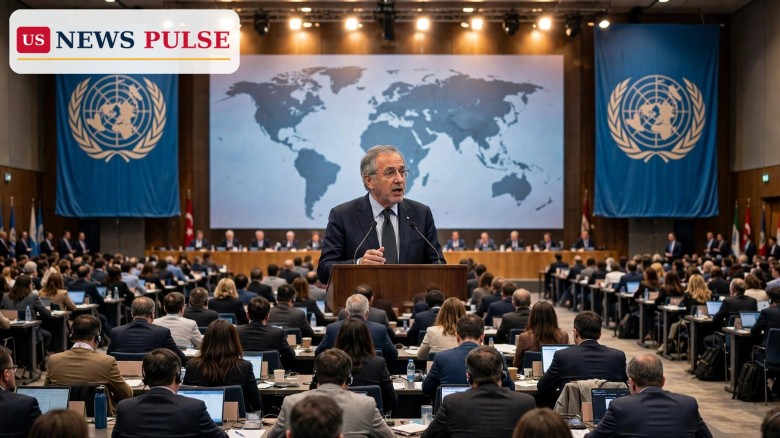
UN climate chief Simon Stiell has urged COP31 negotiators to move fast and "avoid tactical delays" as fossil-fuel talks stalled at the summit's midway point, warning that the second week in Antalya must settle the hardest questions or end with little to show.
Key Points
- Stiell told COP31 delegates on Saturday, November 14, 2026, to move swiftly to the hardest issues and "avoid tactical delays" as the summit entered its final week.
- Big fossil-fuel producers and consumers resist any deal with firm new targets or a clear shift away from oil, gas and coal.
- The COP31 Presidency published a "summary of reflections" on a proposed cover decision on Friday, November 13, a wish list rather than a deal, with a first draft due early next week.
- Host Turkiye is pushing a global electrification plan to the centre of any deal, saying faster electrification cuts emissions sooner.
- The United States skipped the talks for a second year under President Donald Trump, while a UN report last month found the world on course to exceed 1.5 degrees Celsius of warming.
What Happened
Speaking in Antalya, Turkey, on Saturday, November 14, Stiell told negotiators the moment for delay had passed. "Each country has a view. Every country has a voice. Getting agreement on every word, every sentence is tough but vital work," he said, urging delegates to tackle the hardest issues now rather than parking them until the final hours. The summit runs November 9 to November 20, 2026, and closes on Friday, November 20.
The warning targets a familiar pattern: the opening week produces speeches and side deals, while the real fight over the final text is pushed into the last days, when tired negotiators must choose between a weak compromise and no deal. By naming "tactical delays" directly, Stiell told delegations that slowing the process to protect their own positions would be seen for what it is. Also read: Guterres Calls COP31 Climate Talks a 'Moment of Truth' in Final Plea as UN Chief.
Background and Context
COP31 opened in Antalya on November 9 with nearly 200 nations at the table and the science already sounding an alarm. A UN report published last month found the world is on course to exceed the 1.5 degrees Celsius warming threshold set by the Paris Agreement. Every fraction of a degree beyond it means more heatwaves, floods and crop failures, and more pressure on the communities least able to adapt.
The summit also opened under a political shadow: the United States, the world's largest economy and second-biggest emitter, sent no official delegation for a second year under President Donald Trump. The absence has not stopped the talks, but it has weakened the leverage of countries pushing hardest for a strong fossil-fuel outcome. Related coverage: US Sends No Official Delegation to COP31 as Nearly 200 Nations Meet in Antalya.
COP31 Fossil-Fuel Talks: The Sticking Point
The fossil-fuel question has divided climate summits for years. One group of countries wants a clear, dated commitment to move away from oil, gas and coal, with targets that can be measured and tracked. Another group, led by big producers and heavy consumers, wants softer, open-ended language that protects their energy industries from binding commitments.
On Friday, November 13, the COP31 Presidency published a "summary of reflections" on a proposed cover decision, covering the fossil-fuel transition, forests and oceans, and temperatures overshooting 1.5 degrees Celsius. But it is a wish list, not a deal. Countries were to submit text proposals over the weekend, with a first draft expected early next week, according to Australia's COP31 President of Negotiations, Chris Bowen.
Reactions and Quotes
Stiell's message was blunt: "avoid tactical delays". He reminded delegates that agreement on "every word, every sentence is tough but vital work", the painstaking, line-by-line negotiation is the job itself, not an obstacle to it. The phrasing was aimed at delegations that run down the clock in the hope the final text will be weaker when time runs out.
UN Secretary-General Antonio Guterres, speaking before the summit opened, set the tone Stiell is carrying into the talks, calling COP31 a "moment of truth". "We can no longer wait, we can no longer have endless discussions in which everybody tries to push the responsibility to someone else. Everybody must do more, everybody must do more now," he said, also proposing a tax on fossil-fuel windfall profits to fund the countries suffering most.
Why It Matters
The stakes go beyond Antalya. The UN report showing the world on course to exceed 1.5 degrees Celsius means promises from earlier summits are not being kept fast enough, and the gap between pledges and what science demands is still growing. Every summit that ends without stronger commitments makes the next one harder. For the United States, the outcome matters even without a delegation at the table: the signals set in Antalya will shape investment, clean-technology trade and energy costs for years.
What Happens Next
Countries were to submit text proposals over the weekend, and the first draft of the cover decision is due early next week. That draft will show whether the fossil-fuel divide is narrowing or hardening, and whether Turkiye's electrification plan has reached the heart of the deal. Ministers arrive for the final days, and the Presidency must bridge the gaps before the summit closes on Friday, November 20. If Stiell's warning is heeded, the hardest issues will be tackled in the open, early in the week; if not, a last-minute scramble will decide the text in the small hours.
Frequently Asked Questions
What did Simon Stiell say at COP31?
He urged negotiators on Saturday, November 14, 2026, to move swiftly to the hardest issues and "avoid tactical delays" as COP31 entered its final week in Antalya.
What is the main disagreement at COP31?
Big fossil-fuel producers and consumers resist any deal with firm new targets or a clear shift away from oil, gas and coal.
What is the COP31 cover decision?
The summit's overarching agreement. The Presidency published a "summary of reflections" on it on November 13, with a first draft due early next week.
Why is the United States not at COP31?
The United States skipped the talks for a second year under President Donald Trump and sent no official delegation.
When does COP31 end?
It runs November 9 to November 20, 2026, and closes on Friday, November 20.
Leave a Comment