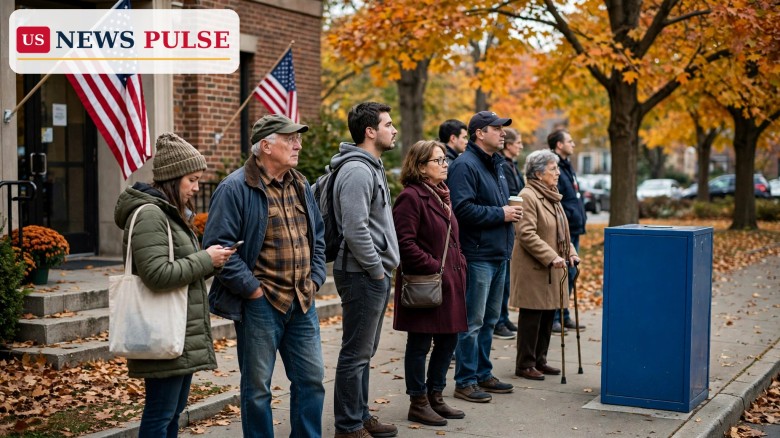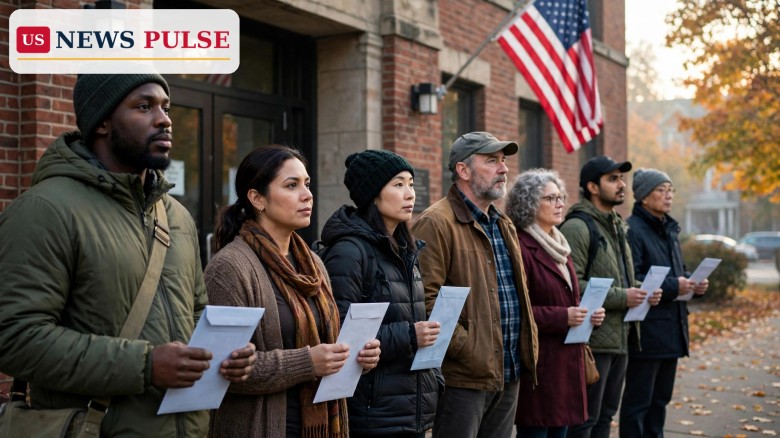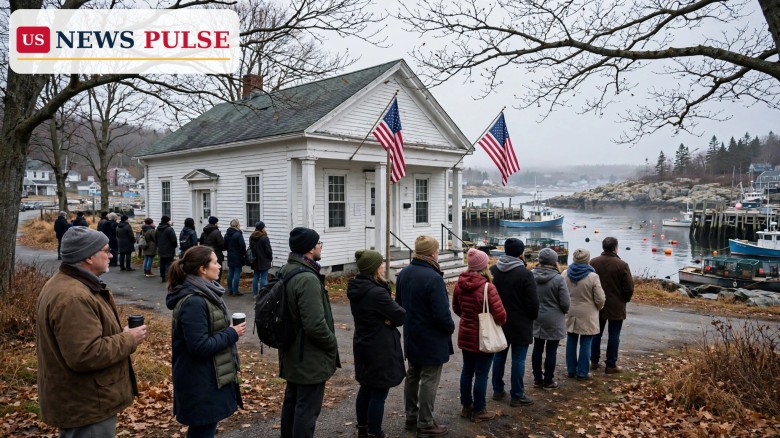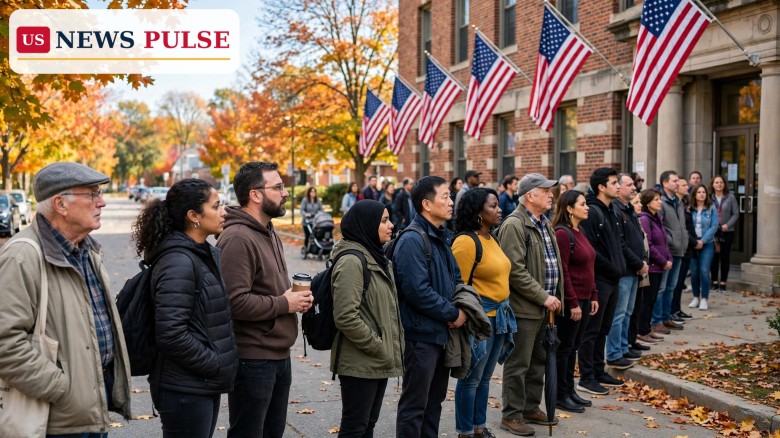
Record early voting has reshaped the final weekend of the 2026 midterm campaign, with nearly 48 million Americans already casting ballots before Election Day on Tuesday, November 3. The University of Florida's Election Lab recorded 47,922,669 early votes nationwide by midday on Friday, October 30, a total that passes the previous midterm record of 45.9 million early ballots cast ahead of Election Day in 2022. With days of early voting still to run in many states, the final early-vote total will climb higher still, and election watchers say the surge is concentrated exactly where control of Congress will be decided: the fiercely contested Senate battlegrounds.
The milestone matters because it arrives with the balance of power genuinely in play. The early-vote record was broken while both parties were still fighting over the Senate map, and the state-by-state pattern shows turnout surging in the places both campaigns have spent the most money and time. Texas, Georgia, North Carolina, South Carolina and Kansas have all reported striking increases, and the demographic shape of the early electorate — more Black and Hispanic voters, more women in Georgia, and a larger Democratic share of ballots in states that record party registration — has given Democrats an early numerical edge that Republicans insist Election Day itself can still erase.
The Election Lab's midday Friday tally put the national early vote at 47,922,669, and the figure was still rising as weekend voting continued. The count covers ballots cast early in person and by mail in the days and weeks before Election Day, and it overtook the entire 2022 early-vote total with several days of early voting still remaining in many states. Reporting of the figures by the Associated Press and Agence France-Presse put the scale of the jump in context: measured five days before Election Day, more than 10 million additional voters had taken part in early voting this year compared with the same point in 2022.
That national picture is only the latest step in a fast-moving week. Just days earlier, the early-vote count stood above 43 million, and US News Pulse reported that surge as Texas smashed its own records. The climb from 43 million to nearly 48 million in a matter of days shows how much voting is now compressed into the final stretch, and why campaigns have shifted their closing messages from persuasion to turnout: with so many ballots already banked, the remaining prize is the voter who has not yet voted at all.
The surge has been most dramatic in the Senate battlegrounds. Texas recorded more than six million early votes by Wednesday, and one analysis put the figure at more than 6.3 million, with in-person participation running around 50 percent ahead of the same stage in 2022. North Carolina reported a nearly 37 percent rise compared with the corresponding period four years ago. South Carolina had already surpassed its entire 2022 early-voting total by Monday, despite having five more days of early voting remaining. Kansas saw advance ballots running around two-thirds higher than in 2022, according to the secretary of state's office. Georgia's early in-person voting broke the state's midterm record on Thursday, and sharp percentage rises were also recorded in Maine, Michigan, North Carolina, Kansas and South Carolina.
Early voting has grown steadily as a share of the American vote, but the 2022 midterm set the modern benchmark: 45.9 million ballots cast before Election Day. That record reflected a pandemic-era expansion of mail and early in-person voting that never fully receded, as states kept longer early-voting windows and voters grew accustomed to casting ballots days or weeks ahead of time. The 2026 total has now passed that mark before Election Day itself, and the final early-vote count will be higher still once weekend and Monday ballots are added.
Midterm turnout overall has generally stayed in the 40 percent range since the 1980s, peaking at 49 percent in 2018 and falling to 38.5 percent in 2014. Those figures are a reminder that a record early vote does not automatically mean a record overall turnout. Some of the voters counted in the 47.9 million would, in an earlier era, simply have voted on Election Day instead. The question analysts are now asking is how much of the surge is genuinely new participation — first-time midterm voters, infrequent voters drawn in by close races — and how much is the same electorate voting on a different day.
The demographic detail gives the first clues. University of Florida political scientist Michael McDonald, who oversees the Election Lab, has highlighted increased participation among Black and Hispanic voters, particularly in heavily Hispanic communities along the Texas-Mexico border. Voto Latino reported that more than 5.2 million Hispanic voters had cast early ballots, roughly an 80 percent rise from 2022, with sharp growth concentrated in Texas, Georgia, Florida and other battlegrounds. In Georgia, where early in-person voting broke the state's midterm record on Thursday, women accounted for 56 percent of ballots cast by that day, compared with 44 percent for men.
In the states that record voters' party affiliation, the early electorate leans Democratic. Registered Democrats accounted for around 44 percent of early voters, against 31 percent for Republicans, with unaffiliated and minor-party voters making up the remaining 25 percent. In raw terms, one analysis of the available data put the figures at about 6.8 million Democrats versus 5.2 million Republicans. That gap is the headline Democrats have seized on in the final days, and it is real as far as it goes — but election experts are unanimous that it does not settle anything.
The caution rests on three facts. First, party registration does not reveal which candidates a voter supported; a registered Democrat can vote for a Republican, and millions of unaffiliated voters — a quarter of the early electorate in the tracked states — are unassigned by either party's count. Second, Republicans have tended to turn out in greater numbers on polling day in recent elections, which can narrow or erase an early-ballot lead once Election Day votes are counted. Third, higher advance-voting figures may reflect voters casting their ballots earlier rather than an overall rise in turnout, so the final turnout rate may end up closer to past midterms than the early-vote record suggests.
None of that makes the record meaningless. A large early vote changes how campaigns spend their final days, how parties target their get-out-the-vote operations, and how much Election Day itself can move the result. It also changes the practical work of election administration: with tens of millions of ballots already in hand, officials in battleground states face a counting task that begins long before Tuesday night, and the pace at which results are reported will depend on state rules for processing mail ballots and on how close the remaining Election Day vote turns out to be.
The analysts closest to the numbers have struck a careful note. McDonald's emphasis on rising Black and Hispanic participation, especially in heavily Hispanic communities along the Texas-Mexico border, points to a broadening electorate rather than a simple partisan story. Voto Latino's figures tell a similar story from the advocacy side: a Latino early vote up roughly 80 percent on 2022, concentrated in the states where Senate and House races are tightest, suggests that outreach to Hispanic voters is translating into ballots, not just enthusiasm.
Democratic strategists have read the same numbers as evidence of momentum in the battlegrounds, while Republican operatives have pointed to the other half of the pattern: their voters' long-standing habit of turning out on Election Day itself. Both readings can be true at once, and both campaigns have behaved accordingly in the final weekend, pouring resources into Election Day turnout operations rather than assuming the early vote has decided anything. The record, in other words, has raised the stakes of Tuesday without lowering its uncertainty.
Election officials, for their part, have urged voters to treat the figures as information, not prediction. The message from the experts quoted in coverage of the record is consistent: early-vote totals describe who has voted so far, not who will win. Tens of millions more Americans are expected to cast ballots on Tuesday, November 3, and in close Senate races a strong Election Day performance by either party can still swing the outcome.
The record early vote matters for three reasons. First, it shows that the 2026 midterms are engaging voters at a level no previous midterm has matched before Election Day, with battleground states leading the way. That engagement is itself a story: after a campaign dominated by arguments over the economy, the courts and the direction of the country, voters are turning out early in numbers that suggest the stakes feel high to them, whatever their politics.
Second, the composition of the early vote — its party balance, its demographic breadth, its geographic concentration — will shape how Tuesday night is reported and interpreted. If Election Day turnout is strong, the early Democratic edge could narrow sharply; if it is soft, the early vote could prove decisive in close races. Either way, the early-vote record means the first results reported on Tuesday night will reflect a large, already-counted pool of ballots, and analysts will be watching how that pool compares with the Election Day vote as it comes in.
Third, the record is a test of the system itself. Record early voting puts pressure on ballot processing, on the counting rules that vary from state to state, and on public confidence in a result that may take days to finalise in the closest races. How smoothly those ballots are counted — and how clearly officials explain the process — will matter as much as the total itself in the days after November 3.
Early voting continues into the final weekend in many states, and the last ballots will be cast on Tuesday, November 3. The Election Lab's tally will keep rising through the weekend, and the final early-vote total is likely to pass 48 million comfortably, possibly by a wide margin. Watch for updated state figures over the weekend, particularly from Texas, Georgia and North Carolina, where the pace of voting has been fastest.
On Election Day itself, the focus shifts to turnout among voters who have not yet cast a ballot, and to the counting rules that will determine how quickly results emerge. States that process mail ballots early will report large early-vote totals quickly; states that wait until Election Day will take longer, and close races may not be called on Tuesday night. After that, the final turnout rate — the share of eligible voters who voted at all — will answer the question the early-vote record leaves open: whether 2026 set a record for participation overall, or simply for voting early.
The University of Florida's Election Lab recorded 47,922,669 early votes nationwide by midday on Friday, October 30, 2026, passing the previous midterm record of 45.9 million set in 2022. The total has risen further since, with early voting continuing into the final weekend.
Texas passed six million early votes by Wednesday, with in-person turnout around 50 percent higher than at the same stage in 2022. North Carolina rose nearly 37 percent, South Carolina passed its entire 2022 early total by Monday, Kansas ran about two-thirds higher, and Georgia broke its midterm early in-person record on Thursday.
No. In states that track party registration, Democrats made up about 44 percent of early voters against 31 percent for Republicans, but party registration does not reveal vote choice, a quarter of early voters are unaffiliated or minor-party, and Republicans have tended to turn out more heavily on Election Day.
Not necessarily. Some voters may simply be casting ballots earlier than they once did, rather than adding to total turnout. The final turnout rate, known only after Election Day votes are counted, will show whether 2026 set an overall participation record.
Election Day is Tuesday, November 3, 2026. Early voting continues into the final weekend in many states, and the last ballots will be cast on Tuesday itself.
Related coverage: Early voting surge: 43 million ballots cast as Texas smashes records, CNN Senate polls: Democrats lead four battlegrounds, and DOJ election monitors: 1,000 federal observers to watch polls in all 50 states.
Leave a Comment



 | Today's Date: