The Justice Department asked a federal judge on Friday, October 30, 2026, to order Alaska election officials to preserve and segregate ballots ranking a second candidate named Dan Sullivan, in the most dramatic escalation yet of the legal fight over Alaska's Senate race — just four days before voters go to the polls on Tuesday, November 3. The Alaska ballot segregation request, filed days before the midterm election, asks the court to act before Monday, November 2, so that ballots ranking retired teacher Daniel J. Sullivan can be set apart for a possible investigation into voter confusion.
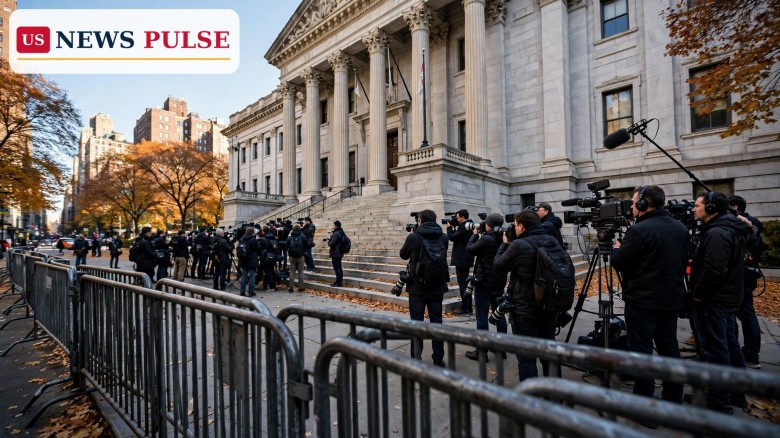
On the same day, Alaska's top federal prosecutor publicly confirmed what had previously only been reported: a criminal investigation is underway into how and why the retired teacher decided to run for the Senate for the first time this year. U.S. Attorney Michael Heyman told reporters in Anchorage that the investigation has been going on for months, but he would not say what crimes are being examined or who the targets are. It is highly unusual for Justice Department officials to publicly confirm a criminal investigation, let alone days before an election in which the race at issue could help decide control of the Senate.
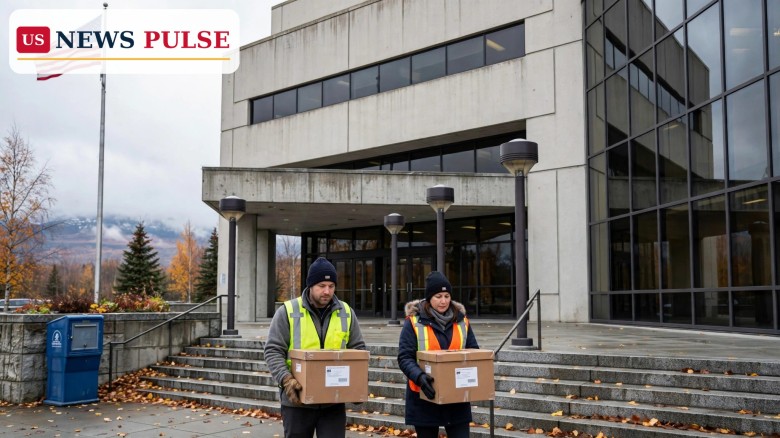
The ballot request is part of a civil lawsuit the Justice Department filed last week, in which the administration seeks to block Alaska from certifying the Senate result if Republican incumbent Senator Dan S. Sullivan loses by a margin that might be attributable to voter confusion. In Friday's filings, Assistant U.S. Attorney Bryan Wilson asked the court to direct state officials to preserve and segregate the ballots at issue. The filing's own words, as reported from the court papers, were: "Preserve and segregate all ballots ranking Daniel J. Sullivan for the purposes of investigating whether such ranking was the product of voter confusion, should such an investigation become necessary."
The filing argued urgency in plain terms: "These modest precautionary measures will be impossible after Election Day, so there is good cause for expedited consideration." That is why the department wants an order before Monday, November 2 — the day before the election — rather than after votes are counted and certified. Reports on the filings say Associate Attorney General Stanley Woodward and Heyman made three other filings in the civil case on Friday, and that the department also filed a list of proposed questions it wants the Peltola campaign and the Democratic Senatorial Campaign Committee to answer about their reported role in recruiting the second Sullivan.
The criminal side moved in parallel. Heyman told reporters at a press conference in Anchorage that there is an ongoing criminal investigation into how and why a retired schoolteacher named Dan Sullivan decided to run for the Senate for the first time this year, and he asked members of the public to come forward with tips. According to people familiar with the matter, the investigation has accelerated in recent days: the department issued dozens of new grand jury subpoenas and began focusing on new potential charges after a report this week described an alleged coordinated effort linked to Peltola's campaign and Democratic Senatorial Campaign Committee officials.
U.S. District Judge Sharon Gleason is overseeing the related civil suit. Peltola's campaign, the Democratic Senatorial Campaign Committee and Alaska election officials have asked Gleason to dismiss the suit before Election Day. On Monday, October 26, Gleason fast-tracked the case, setting the stage for a possible ruling on the dismissal motions before voting ends. An amended complaint filed by the department on Thursday, October 29, suggests that the Peltola campaign and the DSCC misled the court by saying they lacked knowledge about why the retiree entered the race. Peltola's team has dismissed those claims as "nonsense."
Alaska uses open primaries and ranked-choice voting in the general election, and that system is central to both sides' arguments. Four candidates are competing in the Senate election. On the ballot, the incumbent appears as Dan S. Sullivan, labelled a Republican and the incumbent, while the challenger appears as Daniel J. Sullivan Jr., with no party affiliation — the same designations used during the August open primary. Peltola, a former U.S. House member, is the only Democrat on the ballot.
The challenger won a legal fight earlier this year over his place on the ballot. On June 29, 2026, the Alaska Supreme Court upheld an order placing Dan J. Sullivan on the primary ballot, over the objections of state election officials who argued his presence would confuse voters. A state official has since said that some voters who were well informed about the two Sullivans have still erroneously filled out ballots and had to seek replacements, though it is unclear how many spoiled ballots relate to the confusion.
The dispute burst into the open this week with a New York Times investigation published on October 28, based on text messages, interviews with 12 people, and documents prepared for a potential lawsuit. That investigation alleged that Peltola's campaign, DSCC aides and operative Jerid Kurtz ran a "ballot composition project" to recruit the retired teacher Daniel J. Sullivan Jr. Reports say House Oversight Chairman James Comer has since requested voluntary interviews on November 5-6 with former Peltola campaign manager Elisa Rios and Kurtz. None of that has been adjudicated in court, and Alaska's courts have already ruled that a motive to confuse is not, by itself, a legal disqualifier for a candidacy.
The Alaska case does not stand alone. The department's push follows a setback elsewhere: the 9th U.S. Circuit Court of Appeals rejected its request that California set aside disputed midterm ballots sent to some 20,000 people the administration contends may not be U.S. citizens. Legal experts have questioned the Alaska suit; Florida State University law professor Michael Morley told one outlet the lawsuit is "completely meritless." Alaska Governor Mike Dunleavy has cast doubt on whether a Peltola victory would proceed normally, though an Alaska election-law expert said the governor does not control state certification.
The Alaska ballot segregation request is narrower than it may first sound — and that narrowness is itself part of the argument. The department is not, in this filing, asking the court to throw out ballots or to declare a winner. It is asking that ballots ranking Daniel J. Sullivan be preserved and set apart, so that investigators could later examine whether those rankings were the product of voter confusion, should such an investigation become necessary. The filing, as reported, did not spell out how segregating ballots would determine whether an individual voter was confused, or establish a specific procedure for reviewing the separated ballots.
That gap is where Alaska's lawyers have aimed their response. In court responses, state attorneys questioned the logistical feasibility of isolating the ballots, noting that voter ballots are commingled in ballot boxes on Election Day and that sorting them would violate state ballot-secrecy protections. State officials further argued that Alaska's established ranked-choice system already mitigates confusion by allowing voters to rank both candidates explicitly — a voter who means to support the incumbent can rank Dan S. Sullivan first and Daniel J. Sullivan Jr. nowhere, or rank both in a stated order, rather than being forced into a single, potentially mistaken choice.
The department's answer, in effect, is that preservation cannot wait. Once ballots are commingled, counted and certified, the argument runs, any later inquiry into confusion would have nothing to examine. The state's answer is that secrecy and practicality cannot be wished away: you cannot un-mix a ballot box without breaking the very protections that let voters mark a ballot freely. Judge Gleason must now weigh those competing claims, alongside the pending motions to dismiss the whole suit, with the clock running toward Tuesday's vote and a requested ruling by Monday.
Peltola denied any knowledge of a recruitment effort on Thursday, October 29, telling supporters in Juneau: "I knew nothing about any other candidates on the ballot except for me and the incumbent." Representatives for the Democratic Senatorial Campaign Committee and Daniel J. Sullivan Jr. have also consistently denied involvement in any electoral deception, and Peltola's team has dismissed the department's amended-complaint claims as "nonsense."
Heyman's public confirmation drew attention precisely because it broke with normal practice. Justice Department officials rarely discuss a criminal investigation or even confirm its existence while it is underway, and doing so days before an election — in a race the administration is also litigating civilly — has itself become part of the controversy. Supporters of the investigation argue that preserving ballots and pursuing subpoenas is a straightforward response to a reported scheme to manipulate the ballot. Critics argue that the lawsuit and the probe amount to a politically driven effort to pre-contest a possible Democratic win, and they point to Peltola's denial and to legal experts' doubts about the civil suit.
Other observers have focused less on the politics and more on the precedent: what it means for a federal prosecutor to confirm a criminal probe into a Senate candidacy four days before an election, and what it would mean for a federal court to order a state to segregate ballots on the basis of a ranking that, under ranked-choice voting, may reflect a deliberate second or third preference rather than confusion. Those questions will not be settled by Monday's requested ruling alone, even if Gleason grants or denies the segregation request.
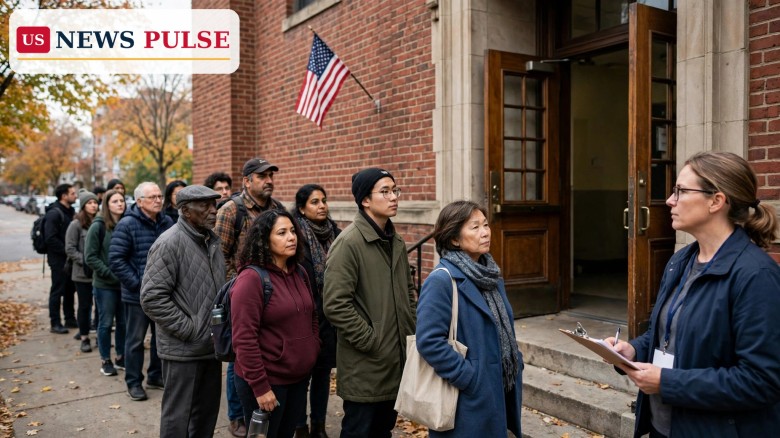
This matters beyond Alaska because the Senate itself may turn on it. The race is one of a handful that could help determine control of the chamber after November 3, and because ranked-choice tabulation and certification occur after Election Day, the outcome in Alaska could carry consequences well beyond the state. A court order to segregate ballots, a dismissal of the suit, or a later certification fight would each be read nationally as a signal about how far federal authorities can go, before votes are even counted, to shape how a state's results are preserved and challenged.
It also matters because it tests two principles that usually pull in opposite directions: the desire to investigate a credible allegation of ballot manipulation, and the need to protect ballot secrecy and to avoid federal intervention that could itself shake confidence in the result. If segregation is ordered and the incumbent wins comfortably, the preserved ballots may never matter. If the race is close, those ballots — and the question of what a ranking for Daniel J. Sullivan actually meant — could become the centre of a certification fight the civil suit already anticipates. And if the suit is dismissed, the criminal investigation will continue in the background, with subpoenas already issued and more questions, reportedly, still to be answered.
For voters, the practical point is simpler, and it is the one both sides claim to serve: a ballot should count as the voter intended it. The dispute is over whether setting some ballots apart helps prove that intention, or risks undermining the secrecy that makes free voting possible. That is the question Judge Gleason now has to answer, on an expedited timetable, in the final days of a midterm campaign in which a record 47.9 million Americans had already voted early by midday on October 30.
The immediate next step is Judge Gleason's. The department has asked for a ruling on the ballot-segregation request before Monday, November 2, and observers will also be watching for rulings on the dismissal motions before voting ends on Tuesday, November 3. If the segregation request is granted, Alaska election officials will have to work out, under extreme time pressure, how to preserve and separate ballots ranking Daniel J. Sullivan without breaching secrecy protections — the very practical problem the state's lawyers raised.
After Election Day, the criminal investigation continues regardless of the civil ruling. Heyman has said it has been underway for months, and the subpoena wave of the past week suggests it is accelerating rather than winding down. Reported voluntary interviews sought for November 5-6 would fall in the first days after the vote, when ranked-choice tabulation is still underway. Any charges, if they ever come, would be a separate matter from the civil suit's certification question — and, so far, no charges have been filed against anyone in this dispute.
Alaskans vote on Tuesday, November 3, in a ranked-choice general election. Whatever Gleason decides by Monday, voters will still rank their choices as the ballot presents them: Dan S. Sullivan, Republican incumbent; Daniel J. Sullivan Jr., unaffiliated; Mary Peltola, the only Democrat; and a fourth candidate. The legal fight over what those rankings mean will, in all likelihood, outlast the count.
What did the Justice Department ask for in Alaska on October 30, 2026?
It asked a federal judge to order Alaska election officials, before Monday, November 2, to preserve and segregate all ballots ranking Daniel J. Sullivan, so investigators could later examine whether those rankings were the product of voter confusion.
Is there a criminal investigation into the second Dan Sullivan candidacy?
Yes, according to U.S. Attorney Michael Heyman, who confirmed in Anchorage on October 30 that a criminal investigation has been underway for months. He would not say what crimes are being examined or who the targets are, and no charges have been filed.
Who are the two Dan Sullivans on the Alaska ballot?
Dan S. Sullivan is the Republican incumbent senator seeking re-election. Daniel J. Sullivan Jr. is a retired teacher with no party affiliation, appearing on the ballot for the first time this year. Peltola, the Democratic nominee, is the only Democrat on the ballot.
Why does Alaska say it cannot segregate the ballots?
State lawyers argue ballots are commingled in ballot boxes on Election Day, so sorting them would be logistically infeasible and would violate state ballot-secrecy protections. They also argue ranked-choice voting already lets voters rank both candidates explicitly.
When will a judge rule, and when do Alaskans vote?
The department sought a ruling before Monday, November 2, 2026. Alaskans vote in the ranked-choice general election on Tuesday, November 3, 2026, with ranked-choice tabulation and certification following after Election Day.
Related coverage on US News Pulse: the Justice Department's subpoena wave in the Alaska Senate race, Peltola's denial about the second Dan Sullivan, and the appeals court's rejection of the bid to set aside California ballots.
Sources: Political.org report on the October 30, 2026 Justice Department filing and Anchorage press conference; Azat TV report on the segregation request and state response; Magnabureau summary of the October 29 Peltola denial, the October 28 New York Times investigation and reported November 5-6 interview requests, October 31, 2026.
Leave a Comment



 | Today's Date: