The Michigan Senate feud between Democratic nominee Abdul El-Sayed and his former primary rival, Representative Haley Stevens, has ended the party's last-minute bid for unity in one of the midterm elections' closest races. El-Sayed's campaign has asked Stevens not to attend any of his upcoming campaign events, USA TODAY reported on Friday, October 30, 2026, putting an end to an 11th-hour attempt to present a united front just days before voters choose Michigan's next senator on Tuesday, November 3.
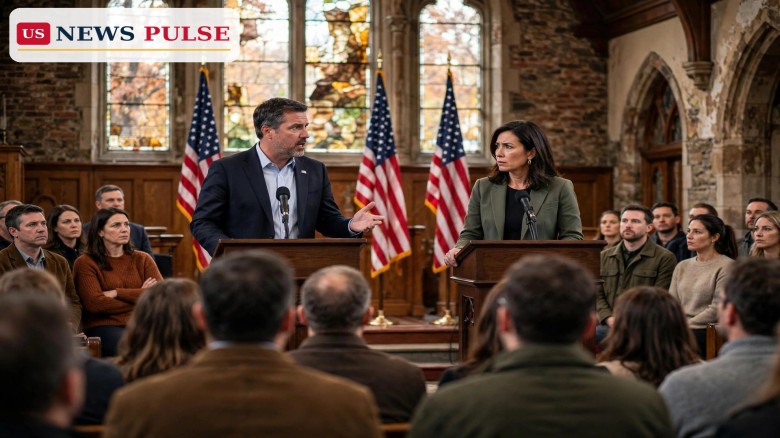
The request, first reported by Politico and confirmed to USA TODAY by a source speaking on condition of anonymity, came after Stevens issued an extensive statement on October 30 calling on El-Sayed to condemn as antisemitic an outside advertisement blaming United States aid to Israel for the cost of living, and to apologise for his own campaign rhetoric. The two had been expected to appear together for the first time in months at a November 1 church event in Detroit with Representative Jim Clyburn of South Carolina. Whether that appearance survives is now unclear, and the El-Sayed campaign's request suggests it will not — at least not with Stevens in attendance.
For months, Stevens and El-Sayed had not appeared together. That was set to change, briefly, this weekend. Stevens had announced on Thursday night, October 29, that she would join El-Sayed on the campaign trail, and the two were both expected at a November 1 church event with Clyburn, a senior Democratic figure who is close to Stevens. Representative Debbie Dingell, a Michigan Democrat who helped facilitate the joint appearance, defended the late show of unity on NBC News' Meet the Press NOW on October 30, saying: "I think everybody here is working for victory on Tuesday and being strong as a broader team."
The reconciliation lasted about a day. On Friday morning, October 30, Stevens released a lengthy statement setting conditions on her appearance. She called on El-Sayed to formally condemn an advertisement from Rebellion PAC, an outside progressive group, and to apologise for his own campaign rhetoric. The advertisement, set in a grocery store, features a young couple discussing whether they can afford groceries because their money goes toward supporting Israel, and ends with images of Israeli Prime Minister Benjamin Netanyahu and two of his allies as the narrator says "Mike Rogers is for they/them." Stevens also urged El-Sayed to take down one of his own campaign advertisements that included right-wing commentator Tucker Carlson.
"Abdul promises to get money out of politics," Stevens wrote. "He can begin by getting Israel out of his explanation for everything Michigan cannot afford." El-Sayed answered soon after, saying Stevens seemed "intent on relitigating a primary that ended three months ago" instead of focusing on defeating Republican Senate nominee Mike Rogers. Then, according to Politico's reporting confirmed to USA TODAY, his campaign asked Stevens to keep her distance from all remaining campaign events. A spokesperson for Stevens did not immediately respond to a request for comment, and a spokesperson for the El-Sayed campaign also did not immediately respond to questions about their plans for the November 1 event.
The Michigan contest is an open-seat race for the seat being vacated by retiring Democratic Senator Gary Peters, and it is one of 35 Senate races on the ballot on November 3, alongside all 435 House seats. El-Sayed, a physician and former Detroit health director, defeated Stevens in the Democratic primary in August 2026. During that primary, the American Israel Public Affairs Committee and its affiliated groups spent tens of millions of dollars to boost Stevens and defeat him, according to El-Sayed's own account of the race. He attributed his primary victory to his focus on affordability issues — the cost of groceries, housing, health care and child care — a theme that has carried into the general election against Rogers, a former congressman and the Republican nominee backed by President Donald Trump.
Questions about Stevens' support for the Democratic nominee have been building for several days. Her fiancé, Jason Turkish, told the Detroit News on October 28 that he plans to vote for Rogers, El-Sayed's Republican opponent. Stevens then told CNN that she plans to vote for El-Sayed; a day later, news broke that she would attend the church event. That sequence — a fiancé's public break, a nominee's reassurance, and then a joint appearance — captures how fragile the party's unity effort in Michigan has been.
The advertisement at the centre of the latest row was released by Rebellion PAC, a political action committee created by left-wing commentator Cenk Uygur, who first released a version of the advertisement to support his failed 2024 presidential campaign. El-Sayed's campaign said in a statement that the advertisement "is not affiliated in any way" with the campaign, adding: "No one speaks for Abdul but himself and his campaign." Stevens, however, argued that distancing was not enough. "A disclaimer is not a condemnation, and everyone in my community knows the difference," she said. In her statement, Stevens also noted that Uygur is the uncle of Hasan Piker, the controversial Twitch streamer and progressive surrogate with whom El-Sayed campaigned during the primary but from whom he has since sought to distance himself.
El-Sayed has also been working, during the general election, to solidify his support with Jewish Democrats who disagree with his criticism of Israel. During a recent general-election debate, he said Iran and Israel both pose a threat to the United States, with "one at risk of attacking us, one getting us into wars we have no business fighting." That balancing act — criticising Israeli government policy while courting Jewish voters — is one reason the Rebellion PAC advertisement has been so damaging: it forces a candidate who has tried to keep his own rhetoric distinct from outside groups to answer for an outside group's message in the final days of the campaign.
The Michigan Senate feud matters because of timing, arithmetic and symbolism, in that order. The timing is brutal: the row broke on Friday, October 30, with early voting already at record levels nationally and only days of campaigning left. A unity event that was supposed to signal that Democrats had buried the primary is now, instead, the story of the primary being reopened. The arithmetic is unforgiving: polling averages cited in recent reporting put El-Sayed ahead of Rogers by only about one point, and the Cook Political Report rates the race a toss-up. In a race that close, a divided Democratic base — or even the appearance of one — can be the difference between winning and losing a seat that could decide Senate control.
The symbolism cuts both ways. For Stevens, the advertisement touches a line she has drawn repeatedly: criticism of Israeli policy is legitimate political debate, but blaming American grocery prices on aid to Israel, in her view, crosses into antisemitism, and a nominee who wants her community's votes should say so plainly. For El-Sayed, the demand touches a different line: he has already said the advertisement is not his, and being pressed to condemn outside groups, apologise for his own rhetoric and remove his own advertisements days before an election looks, from his campaign's perspective, like relitigating a primary he won. Neither side is wrong about the stakes as they see them, which is why the dispute has proved so difficult to settle — and why a joint appearance arranged by senior Democrats collapsed within a day of being announced.
Stevens framed her demand as a matter of accountability. "Abdul promises to get money out of politics," she wrote. "He can begin by getting Israel out of his explanation for everything Michigan cannot afford." She added that "a disclaimer is not a condemnation, and everyone in my community knows the difference."
El-Sayed framed his response as a matter of priorities. He said Stevens seemed "intent on relitigating a primary that ended three months ago" instead of focusing on defeating Rogers. In a further statement, his campaign said: "Now the stakes are even higher – defeating Trump's handpicked candidate, taking back the Senate, and defending our democracy. That should be the priority for all of us right now." El-Sayed also attributed his primary victory to his focus on affordability issues, rather than to the outside spending that backed his opponent.
Other Democrats split over who was at fault. Michigan state Senator Mallory McMorrow, who dropped out of the Michigan Senate primary, said on CNN's "The Arena" on October 30: "I have no idea what the hell Haley Stevens is doing. This is a moment where we have to recognize the stakes." Dingell, by contrast, defended the joint appearance effort, saying on Meet the Press NOW: "I think everybody here is working for victory on Tuesday and being strong as a broader team." The contrast between those two reactions — one Democrat calling Stevens a distraction, another defending the unity effort she helped arrange — shows that the party itself has not settled on a single account of what happened, let alone a single way forward.
Michigan is one of a handful of states that will decide whether Democrats can take the Senate from a Republican majority that currently stands at 53-47. A Democratic victory in Michigan alone would not flip the chamber, but in a cycle in which Democrats need a net gain of seats and several races are rated toss-ups, every seat matters, and Michigan has been among the most closely watched. A public split between the nominee and his most prominent former rival, four days before the election, hands Rogers and his allies a ready-made argument: that Democrats in Michigan cannot unite even when the Senate is at stake. Rogers, who has campaigned with Vice President JD Vance and with Trump's backing, does not need to make that argument himself; the headlines make it for him.
The dispute also matters beyond Michigan because it rehearses a debate running through the Democratic Party nationally: how candidates talk about Israel, Gaza and the cost of living, and who gets to police the boundary between criticism of a foreign government and antisemitism. Stevens' demand that El-Sayed condemn the Rebellion PAC advertisement is, in effect, a demand that he accept her framing of that boundary. El-Sayed's refusal to go further than disaffiliation is, in effect, a refusal to accept it. How Michigan voters — including Jewish Democrats, Arab American voters in Dearborn and Detroit, and suburban swing voters — read that exchange in the final days could matter not just on Tuesday, but in how the party handles the same argument in future primaries.
The immediate question is the November 1 church event. As of the USA TODAY report, neither campaign had confirmed whether Stevens will attend, and the El-Sayed campaign's request that she stay away from all remaining events points toward her absence. If she does not attend, Clyburn's presence — if he still attends — becomes a different kind of signal: a senior national Democrat standing with the nominee without the local unity partner the event was designed to showcase. If she does attend despite the request, the event itself could become a new flashpoint.
Beyond Sunday, the race enters its final 48 hours. Trump is scheduled to hold in-person rallies in Iowa and Kansas on Sunday, and both parties are running telephone rallies across battleground states. In Michigan, El-Sayed and Rogers will make their closing arguments to an electorate in which millions have already voted early. The Stevens dispute will not decide the race on its own — affordability, health care and the national mood will weigh more heavily — but in a race decided by a point or two, the difference between a united Democratic front and a public feud in the final weekend is not a footnote. It is, potentially, the margin.
According to USA TODAY, citing a source and Politico's reporting, the campaign asked Stevens not to attend any of its upcoming events after she issued an October 30 statement demanding El-Sayed condemn a Rebellion PAC advertisement and apologise for his own rhetoric.
It is an outside advertisement, set in a grocery store, in which a young couple discuss whether they can afford groceries because their money goes toward supporting Israel. El-Sayed's campaign says it is not affiliated with his campaign in any way; Stevens has called it antisemitic and said a disclaimer is not a condemnation.
Yes, briefly. After months of not appearing together, both were expected at a November 1 church event in Detroit with Representative Jim Clyburn. Whether that appearance still happens, and whether Stevens attends, was unclear at the time of the USA TODAY report.
Recent polling averages cited in reporting put El-Sayed ahead of Mike Rogers by about one point, and the nonpartisan Cook Political Report rates the race a toss-up. The seat is open because Senator Gary Peters is retiring.
Michigan is one of several toss-up races that will decide whether Democrats can overcome the current 53-47 Republican Senate majority. A loss in Michigan would make a Democratic Senate majority significantly harder to achieve.
Related coverage: Michigan Senate race: Vance rallies for Rogers as El-Sayed leads new poll and CNN Senate polls: Democrats lead in Michigan, Texas, Maine and Kansas before midterms.
Sources: USA TODAY, October 30, 2026; Politico via USA TODAY; NBC News via reporting, October 30-31, 2026; Firstpost, October 31, 2026.
Leave a Comment



 | Today's Date: