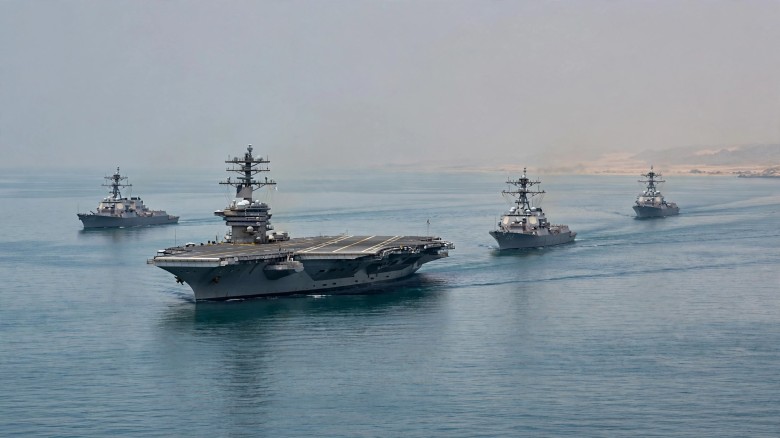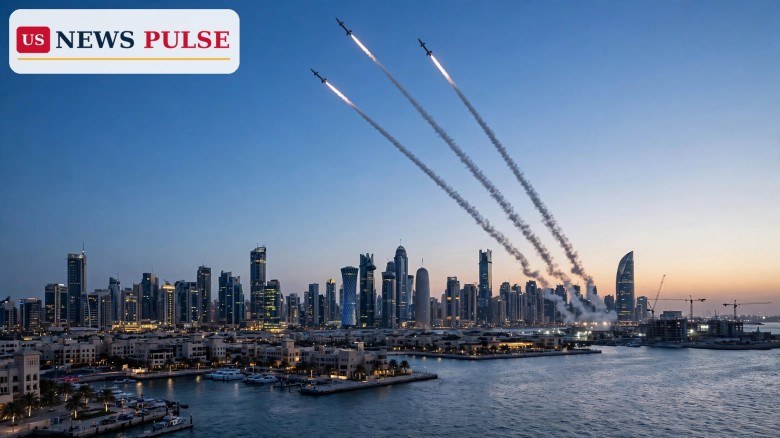
Saudi air defences intercepted and destroyed two missiles and three drones launched by Yemen's Houthi movement toward several regions of the kingdom on Friday and Saturday, October 30-31, 2026, the Saudi-led coalition said, in a sharp escalation of cross-border attacks that also saw ballistic missiles fired at Aden's international airport and presidential palace. The Saudi Houthi missile interceptions covered targets as far apart as the capital Riyadh and the holy cities of Makkah and Madinah, and came as the United States ordered its non-emergency government staff out of Saudi Arabia and sent a third aircraft carrier group toward the Middle East.
The coalition's account, carried by the Saudi Gazette, described a rolling series of interceptions across Friday and Saturday. A cruise missile heading toward the western region and a ballistic missile heading toward the southern region were both destroyed in the air, Al-Maliki said. Three drones, one each aimed at Riyadh, Makkah and Madinah, met the same fate. The coalition later added that a drone over the oil-rich Eastern Province and another launched toward the southern region were destroyed on Saturday morning, according to Reuters reporting of the coalition's statements.
The Friday sequence had begun earlier in the day. The coalition said it destroyed a drone over the Makkah region, then a drone over the Madinah region, home to Islam's second holiest city, and a drone near Riyadh, along with a ballistic missile fired toward the southern region. Saudi Civil Defence issued a warning about a potential threat in Khamis Mushait and urged citizens and residents to follow safety instructions during warning periods, including staying away from open areas and glass windows and avoiding balconies and rooftops.
At the same time, the war's Yemeni front flared. Yemen's armed forces said on Friday that the Houthi militia had launched ballistic missiles targeting Aden International Airport and the Maashiq Presidential Palace in Aden, the southern port city that serves as the seat of Yemen's internationally recognised government. A police official told AFP that two missiles had been fired at the palace complex. Witnesses told AFP they heard two explosions and saw ambulances entering the palace compound. A Yemeni government official, speaking anonymously because he was not authorised to speak publicly, said no casualties were reported. The government statements did not say whether the missiles struck their intended targets, and the Houthis did not immediately claim responsibility for the Aden attacks.
The Aden strikes came just one day after the city's airport resumed operations following a temporary suspension caused by a Houthi missile strike on Wednesday, October 28. That earlier attack injured two civilians and damaged the runway, forcing authorities to suspend flights while emergency repairs were carried out. The airport reopened on Thursday, only for Friday's reported attacks to follow. Yemeni officials said the airport had been repeatedly struck during October, and that Wednesday's attack had followed an evacuation warning issued by the Houthis.
The cross-border exchange is the latest chapter in a war that has run for more than a decade in Yemen and has intensified sharply since the wider regional conflict involving Iran, Israel and the United States escalated. The Saudi-led coalition backs Yemen's internationally recognised government, while the Houthis, who control the capital Sanaa and much of the north, are aligned with Iran. The Houthis have repeatedly launched drones and missiles toward Saudi military installations, airports and energy infrastructure, while the coalition has carried out air strikes against Houthi positions inside Yemen.
The scale of the recent fighting is stark. The Houthi military spokesman said on Friday that Saudi-led forces had carried out 93 air and missile strikes over the previous 24 hours in Sanaa and several Yemeni provinces, figures that could not be independently verified. The World Health Organisation reported that 1,677 people have been killed and 7,395 injured as a result of the military escalation in Yemen since last August up to October 25, a total of 9,072 casualties. The Greek seafarers' union PENEN, meanwhile, counted 28 attacks on vessels in the Gulf in the first 21 days of October alone, a record since the start of the Iran war, in reporting carried by Reuters.
The attacks on Saudi cities carry particular sensitivity because two of the reported targets are Islam's holiest cities. The Houthis have repeatedly denied targeting Makkah and Madinah, rejecting previous coalition accusations that they launched drones toward the cities. Aaj English reported that a missile strike on Riyadh's King Khalid Airport on October 10 killed 13 travellers and injured more than 300 people, a toll that, if confirmed, would mark one of the deadliest single strikes of the campaign and helps explain the heightened alarm around the latest interceptions.
The escalation also sits against a tense regional backdrop. The United States ordered non-emergency government employees and their families to leave Saudi Arabia, effective October 23, citing Iranian-supported Houthi attacks on civilian airports and critical infrastructure. Washington is also sending a third aircraft carrier strike group toward the Middle East, and Iran's supreme leader has warned of a response without geographic limits to any attack. Reports of a possible US-Iran draft framework involving uranium transfers and the reopening of the Strait of Hormuz remain unconfirmed by either side.
The pattern of the interceptions shows a defence network working across the whole kingdom rather than at a single point. The cruise missile aimed at the west, the ballistic missile aimed at the south, the drones aimed at the capital and the two holy cities, and the additional drones over the Eastern Province and the south were each reported destroyed before reaching their targets. The coalition has not published details of which systems were used or where debris fell, and no casualty figures have been attached to the intercepted weapons themselves.
That breadth matters because the Houthi arsenal mixes slower drones, which can be tracked over longer flights, with faster ballistic and cruise missiles that give defenders far less warning. The Thursday interceptions, two missiles toward Riyadh and one toward the Eastern Province, showed the same spread. Civil Defence warnings, such as the one issued for Khamis Mushait, suggest the authorities are treating the threat as continuing rather than as a single incident, and are asking the public to treat warning periods seriously.
The Aden attacks, by contrast, were not reported as interceptions at all. Yemeni government statements described missiles targeting the airport and the palace, witnesses described explosions, and officials said only that no casualties had been reported. The contrast between the Saudi interceptions and the Aden strikes underlines the uneven nature of air defence across the region: the kingdom's layered systems can destroy incoming weapons over its own territory, while the Yemeni government's facilities in Aden remain exposed.
Coalition spokesman Maj. Gen. Turki Al-Maliki announced the interceptions in a series of statements, describing the weapons as launched by what the coalition calls the terrorist Houthi militia. His statements listed each interception in turn: the cruise missile toward the western region, the ballistic missile toward the southern region, and the three drones toward Riyadh, Makkah and Madinah.
Houthi military spokesman Yahya Saree rejected the coalition's account outright. He called the Saudi statement a massive and egregious fabrication and said the group had not carried out any operation toward Saudi territory, a denial that extended specifically to the reported drone aimed at Madinah. The Houthis have consistently denied targeting Makkah and Madinah in previous rounds of accusations as well.
Yemeni government forces spokesman Majed al-Nazili said the Houthis continued to target the assets of the Yemeni people, in a statement accusing the militia of attacking national infrastructure. He said the attacks on airports exposed a contradiction between the Houthis' claims to seek an end to the blockade and their actions against the Yemeni population. Yemeni forces also said they had carried out 1,087 attacks on Houthi positions, claiming to have neutralised about 336 militia leaders and fighters and destroyed or disabled 112 military vehicles and other assets, figures that could not be independently verified.
The interceptions matter for three reasons. First, they show the Houthi campaign against Saudi Arabia continuing at intensity even as diplomacy around the wider Iran conflict is reported to be under way. Attacks aimed at Riyadh, Makkah and Madinah are designed to be noticed far beyond Yemen, and each interception is a reminder that the war in Yemen and the confrontation over Iran are now a single, linked crisis.
Second, the Aden strikes show the Yemeni government's own seat under direct threat. Aden is not a front line in the usual sense; it is the administrative capital of the internationally recognised government, and repeated missile attacks on its airport and palace strike at the government's ability to function. The airport's cycle of strike, closure, repair and reopening, followed within a day by fresh attacks, illustrates how fragile civilian infrastructure has become.
Third, the episode raises the stakes for the United States and its allies. Washington has already ordered its non-emergency personnel out of Saudi Arabia and is moving a third carrier group into the region. If Houthi attacks on Saudi cities continue, or if an intercepted weapon one day gets through, the pressure for a wider military response will grow, even as reported diplomatic efforts try to head off exactly that outcome.
Several developments will be watched closely in the coming days. The coalition's next statements will show whether the Friday-Saturday wave was a one-off barrage or the start of a sustained campaign, and whether any further drones or missiles are reported over Riyadh, the holy cities or the Eastern Province. Yemeni officials will be expected to clarify whether the Aden missiles hit the airport or the palace, and whether any damage or casualties emerge beyond the initial no-casualties report.
Diplomatically, the focus remains on whether the reported US-Iran contacts produce anything concrete, and whether Saudi Arabia's own position shifts. Riyadh has reportedly urged Washington to give diplomacy more time before any new strikes on Iran, and the kingdom's experience of being directly targeted gives that argument added weight. For now, though, the pattern of the past two days points to continued fighting on both sides of the border, with civilians in Saudi cities under Civil Defence warnings and Yemenis in Aden living with the sound of explosions.
What did Saudi air defences intercept on October 30-31, 2026? According to the Saudi-led coalition, two missiles, a cruise missile aimed at the western region and a ballistic missile aimed at the southern region, and three drones aimed at Riyadh, Makkah and Madinah, with further drones reported over the Eastern Province and the southern region on Saturday morning.
Did the Houthis admit to the attacks? No. Houthi military spokesman Yahya Saree denied that the group carried out any operation toward Saudi territory and called the coalition's account a fabrication. The Houthis also did not immediately claim responsibility for the Aden attacks.
What happened in Aden? Yemeni government forces said Houthi ballistic missiles targeted Aden International Airport and the Maashiq Presidential Palace on Friday. Witnesses reported two explosions and ambulances entering the palace compound, while a government official said no casualties were reported.
Why are Makkah and Madinah significant targets? Makkah and Madinah are Islam's two holiest cities, and the Houthis have repeatedly denied targeting them. Reports of drones aimed at either city therefore carry particular political and religious sensitivity, even when the weapons are intercepted.
How does this connect to the wider US-Iran tensions? The Houthis are aligned with Iran, and their attacks on Saudi Arabia come as the United States moves a third carrier group toward the region, has ordered non-emergency staff out of Saudi Arabia, and is reported to be in contact with Tehran over a possible framework to ease the crisis.
Related coverage: Iran Khamenei Warning: No Geographic Limits If US Strikes Resume, Trump Sends Third Aircraft Carrier Toward Iran, and Iran Strikes November 4: US Warns Gulf Allies as Doha Talks Race to Avert War.
Leave a Comment



 | Today's Date: