The UN boat strikes warning issued on Friday, October 30, 2026, marked the strongest international rebuke yet of the United States' campaign against alleged drug boats in the Caribbean and the eastern Pacific, with the United Nations' top human rights official saying the attacks violate international human rights law and must stop immediately.
UN High Commissioner for Human Rights Volker Türk said more than 60 people had reportedly been killed since early September in a continuing series of US strikes on boats allegedly linked to drug trafficking, in circumstances that, in his words, find no justification in international law. He called for prompt, independent and transparent investigations into every attack.
Türk issued a formal statement in Geneva on Friday, after weeks in which US forces have struck small vessels in the Caribbean Sea and the eastern Pacific Ocean. The statement was relayed at a regular UN briefing by his spokesperson, Ravina Shamdasani, who said the attacks were taking place outside the context of armed conflict or active hostilities.
"These attacks — and their mounting human cost — are unacceptable," Türk said. "The US must halt such attacks and take all measures necessary to prevent the extrajudicial killing of people aboard these boats, whatever the criminal conduct alleged against them."
He added: "Airstrikes on boats in the Caribbean and the Pacific, allegedly linked to drug trafficking, violate international human rights law and are unacceptable."
According to reporting by the Associated Press and the Tribune News Service, the latest strike announced before Türk's statement came on Wednesday, when Defence Secretary Pete Hegseth said US forces had hit a boat carrying drugs in the eastern Pacific, killing all four people aboard. That was the 14th strike since early September and the 15th boat destroyed, taking the reported death toll to at least 61.
Türk said that, based on the very sparse information made public by US authorities, none of the people on the targeted boats appeared to pose an imminent threat to the lives of others or otherwise justify the use of lethal force under international law.
The UN boat strikes warning follows a campaign that began in early September 2026, when the United States sharply increased its military presence in the Caribbean. US media reports cited by Xinhua put the deployment at an estimated 10,000 troops, eight warships, one nuclear-powered submarine and multiple fighter jets, operating alongside thousands of Marines and sailors already in the region.
The administration has presented the strikes as a tougher approach to drug trafficking networks bringing narcotics into the United States, and as part of a wider pressure campaign on Venezuela. President Donald Trump has defended the operations in public, while denying plans for strikes inside Venezuela itself when asked by reporters on Air Force One on Friday.
From the start, the campaign has drawn legal questions. The United States has argued that the operations are governed by international humanitarian law — the law of armed conflict — and are necessary anti-drug and counter-terrorism measures. Türk's office rejected that framing, saying the strikes are taking place outside armed conflict and must therefore be judged under the stricter rules of international human rights law, under which intentional lethal force is permitted only as a last resort against a person posing an imminent threat to life.
That distinction is at the heart of the dispute. In an armed conflict, the law allows targeting of enemy fighters under broader rules. Outside armed conflict, law enforcement rules apply: suspects should, wherever possible, be stopped, searched and arrested, not killed from the air. Türk said the United States should use proper law enforcement measures instead of lethal military force.
The UN boat strikes warning gained added weight on Friday when Secretary-General António Guterres publicly backed Türk's assessment. His deputy spokesperson, Farhan Haq, told a daily briefing that Guterres supports the view that the strikes violate international human rights law.
"None of the individuals on the targeted boats appear to pose an imminent threat to the lives of others or otherwise justify the use of lethal armed force against them under international law," Haq said, summarising the UN position.
It appeared to be the first direct rebuke of the boat-strike campaign from a UN body, and it came from both the human rights chief and the secretary-general's office on the same day. That coordination matters diplomatically: it makes it harder for the administration to dismiss the criticism as the view of a single official, and it gives other governments a clear UN reference point when they raise the issue.
Several countries in the region have already criticised the campaign, and the UN statement is likely to be cited by governments, lawyers and human rights groups pressing for the release of evidence about each strike — including video, intelligence assessments and the legal advice on which the operations were authorised.
The Trump administration has not accepted Türk's legal analysis. Officials have said the boats are part of drug-trafficking networks designated as terrorist organisations, and that the strikes are a lawful exercise of self-defence and counter-terrorism authority. Hegseth has announced strikes on social media, usually describing the vessel as carrying drugs and the people aboard as narcoterrorists, without publishing detailed evidence.
Critics, including Democratic lawmakers and human rights lawyers in the United States, say that description is not enough. They argue that even if a boat is carrying drugs, that alone does not make its crew a lawful military target, and that the administration has provided little or no evidence to support claims of an armed conflict with trafficking groups.
Türk echoed that point, noting that US authorities have provided very sparse public information about the strikes. He called for prompt, independent and transparent investigations — language that, in UN practice, means inquiries that are not run solely by the military that carried out the operations.
The debate also has a domestic legal dimension. Members of Congress have questioned whether the administration sought proper authorisation for a sustained lethal campaign, and whether the strikes comply with US law on the use of force outside declared wars. Those questions are likely to intensify now that the UN has stated its position so plainly.
The UN boat strikes warning matters because it reframes the campaign from a drug-enforcement success story into a question of international law. If the strikes are unlawful killings, as Türk argues, then each death is not just a statistic in a counter-narcotics campaign but a potential violation with legal and diplomatic consequences for the United States.
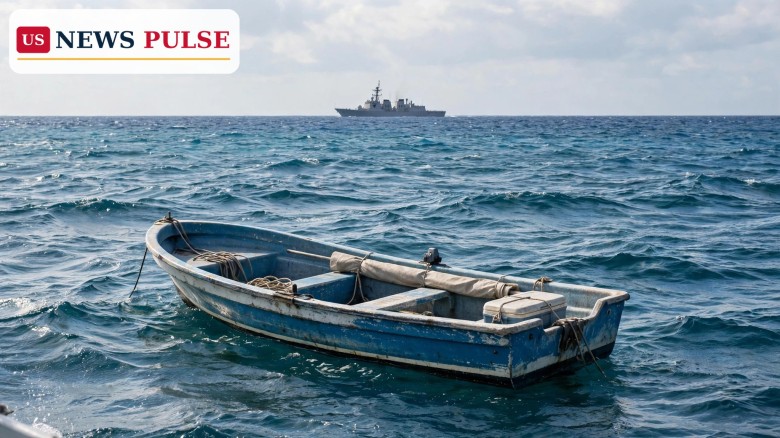
It also matters for the people most directly affected. The boats struck so far have been small, fast vessels in international waters, crewed by a handful of people. Their families have in several cases said they were fishermen or low-level couriers, not cartel leaders. Without independent investigations, those claims cannot be tested — which is precisely why Türk is demanding them.
Regionally, the warning adds to tensions in the Caribbean at a moment when the United States is also increasing pressure on Venezuela and on Iran, and when midterm voters are being asked to judge the administration's use of military force. A UN finding that a US campaign violates human rights law is a rare and serious charge, and it will be quoted by allies and adversaries alike.
The immediate question is whether the strikes continue. The administration has shown no sign of pausing the campaign, and Hegseth's announcements have continued through the week. Türk's statement does not, by itself, compel a halt, but it raises the diplomatic cost of each further strike and gives Congress a fresh reason to demand briefings and evidence.
Watch for three developments. First, whether the White House or the Pentagon issues a detailed legal response to Türk, rather than a brief dismissal. Second, whether any government in the region formally requests an international inquiry or raises the issue at the UN Security Council or Human Rights Council. Third, whether US courts or Congress open their own investigations into the authorisation and targeting of the strikes.
Until independent investigations are published, the central facts will remain disputed: how many boats have been struck, how many people have died, what evidence linked each vessel to drugs, and whether any crew member posed an imminent threat. Türk's statement puts the burden of answering those questions squarely on Washington.
What did the UN say about the US boat strikes? High Commissioner Volker Türk said on October 30, 2026, that the strikes violate international human rights law, are unacceptable, and must halt, with prompt, independent and transparent investigations.
How many people have been killed? Türk cited more than 60 deaths since early September. US media counts put the toll at at least 61 after the Wednesday eastern Pacific strike that killed four people.
Why does the UN say the strikes are unlawful? Because, in the UN's view, they take place outside armed conflict, so human rights law applies: lethal force is allowed only as a last resort against someone posing an imminent threat to life, and the UN says no such threat has been shown.
What does the US government say? The administration says the strikes are lawful anti-drug and counter-terrorism operations governed by the law of armed conflict, targeting vessels linked to designated trafficking networks.
Does the UN statement force the US to stop? No. It is not a binding order, but it is a formal legal assessment from the UN's top human rights official, backed by the secretary-general, and it increases diplomatic and political pressure.
Related coverage: US drug boat strike kills five in the eastern Pacific, Strait of Hormuz fishing boats attack: Iran blames US, missing crew found safe, and Hegseth fires Pentagon top planner as Trump weighs Iran strikes.
Leave a Comment



 | Today's Date: