There is growing interest in a limited Black Sea ceasefire that would protect grain and energy shipments by Russia and Ukraine, United States Secretary of State Marco Rubio said on Saturday, October 31, 2026, after a two-day meeting of foreign ministers from the Group of 20 in Atlanta, Georgia. The proposal would not end the war, Rubio stressed, but it could solve what he called a unique and dangerous aspect of it: the threat to food security and, in some cases, energy security caused by attacks on ships in the Black Sea.
Rubio said the United States is reviewing proposals by Turkey and India to get grain shipments moving, even as Washington continues to press for a broader, negotiated settlement of a war now in its fifth year. Canadian Foreign Minister Anita Anand told Reuters she had discussed a limited Black Sea ceasefire, and a moratorium on attacks on Ukraine's electrical infrastructure, with Ukraine's foreign minister and her Indian counterpart, and that Canada had been engaged in specific talks on the idea since the United Nations General Assembly in September.
Rubio spoke to reporters after the G20 foreign ministers' meeting in Atlanta, a gathering that ended without a joint statement or agreement on the many issues facing the world's largest economies. Russia's full-scale invasion of Ukraine took centre stage at the meeting, in part because of the participation of Russian Foreign Minister Sergei Lavrov, over the objections of European and Canadian leaders who argued that including him normalised Russia's aggression.
Rubio defended the invitation, saying it would be impossible to end the war diplomatically without talking with Russia, while admitting that such a deal was not on the immediate horizon. He said the United States spoke frequently with Ukrainian leaders, although Ukraine's foreign minister was not invited to the G20 meeting. Against that background, Rubio pointed to partial deals as a more immediate possibility. “There is growing interest — if not momentum — in partial deals such as halting attacks on ships carrying grain and, in some cases, energy, in the Black Sea,” he said.
“This is threatening the world for food security and some energy security as well,” Rubio told reporters. “We'd like to achieve it. It doesn't solve the war, but at least it solves a unique aspect of it.” He added that a negotiated settlement remained a top priority for United States officials, despite the failure to reach one so far. “There is a very nasty war going on, a very destructive war,” he said, adding that the war was already threatening to escalate to other countries given irregular sabotage efforts and drone strikes that wandered into NATO airspace.
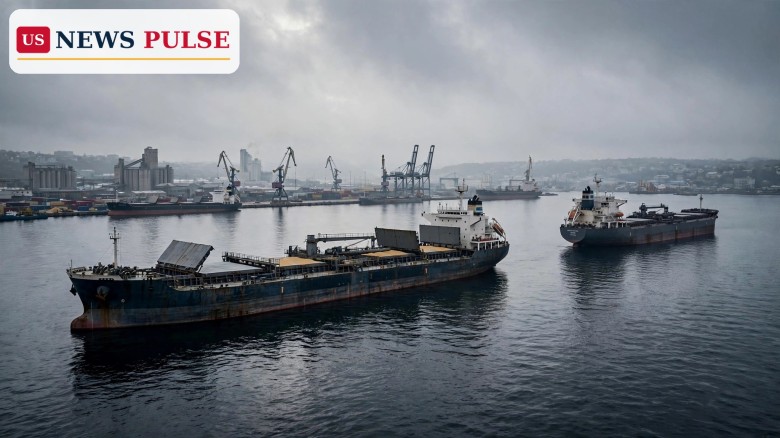
The Black Sea has been a critical artery for Ukrainian and Russian grain since Russia's full-scale invasion in February 2022, and attacks on shipping there have repeatedly threatened global food supplies, particularly for countries in the Middle East, Africa and Asia that depend on Black Sea exports. Earlier arrangements to protect grain shipments have proved fragile, collapsing under disputes over inspections, sanctions and security guarantees, and the absence of a durable deal has left shippers, insurers and importing countries exposed to sudden disruption.
The G20 meeting itself illustrated the divisions that make a broader settlement so difficult. The two-day gathering revealed big rifts over the wars in Ukraine and the Middle East, and ended without consensus, according to earlier reporting on the Atlanta meeting. Lavrov's presence was itself contested: European and Canadian leaders objected, while Rubio argued that diplomacy requires talking to Moscow. Anand said she would not have chosen to invite Lavrov, but used the occasion to confront him directly about the invasion.
Anand's account of that confrontation was unusually direct. “I stared him in the eye and called out Russia's further illegal invasion of Ukraine, the stealing of Ukrainian children, the targeting of Ukrainian ships in the Black Sea, all of which are reprehensible, all of which are contrary to international law and international humanitarian law,” she said, citing her remarks during a closed-door plenary session on Friday. She said she had spoken with Ukraine's Foreign Minister Andrii Sybiha, as well as her counterpart from India, about enacting a limited ceasefire in the Black Sea and putting a moratorium on attacks on Ukraine's electrical infrastructure.
A limited ceasefire, as described by Rubio and Anand, would focus on two linked problems: the safety of ships and sailors, and the security of food and energy supply chains. Anand said a number of interlocutors were pushing for some kind of ceasefire, with a huge focus on shoring up food supply chains and brokering an end to attacks on Ukraine's electrical grid and energy infrastructure before the coming winter. “We have to address these issues now as Ukraine approaches the winter,” she said, noting that Canada had been engaged in significant and specific talks about a Black Sea ceasefire since the United Nations General Assembly in September.
India and Egypt were two countries heavily affected, Anand said, and wanted to ensure that their own ships — and sailors — remained safe. Ukraine was fully engaged on the issue, she said, but Russia had not shown it was willing to move ahead. That assessment is the central obstacle to any deal: a ceasefire at sea requires, at minimum, a commitment from both sides not to attack the other's shipping, and a mechanism — whether through Turkey, the United Nations, or another intermediary — to verify compliance and resolve incidents before they escalate.
Lavrov, speaking to reporters on Friday, said Moscow's position on the Ukraine conflict was unchanged, and that Russia could not accept Ukraine as a “military threat to the lawful security interests of the Russian Federation,” according to Russian news agencies. That statement does not directly address a limited maritime deal, but it underlines how far apart the two sides remain on the war as a whole, and why Rubio and Anand are framing the Black Sea proposal as a partial, practical step rather than a path to peace in itself.
Rubio urged G20 participants on Friday to cooperate where possible, given the complex web of economic and geopolitical challenges facing nearly every country. “Because we all face these challenges, we must all work together to address them,” he said. “The future of our nations depends on our willingness to understand that while our interests may not always align, we should always seek to work together to advance them when and where they do align.”
Rubio also told reporters he spoke briefly with Lavrov on the sidelines of the meeting about the opportunity for President Donald Trump and Russian President Vladimir Putin to meet at the APEC meeting next month and at the G20 leaders' summit to be held at Trump's Doral golf resort in Miami in December. There was no firm commitment for Putin to attend the G20 summit, Rubio said, and he would not rule out the possibility that Trump would invite Ukrainian President Volodymyr Zelenskiy, especially “if something positive could happen as a result of him attending.”
A limited Black Sea ceasefire matters first for food security. Ukraine and Russia are major grain exporters, and disruption in the Black Sea has, in past phases of the war, pushed up global food prices and threatened supplies to countries that can least afford a shock. A deal that reliably protects grain ships would not solve those countries' wider economic problems, but it would remove one major source of volatility from world food markets at a moment when many importing countries are already under strain.
It matters second for energy security and for Ukraine's winter. Anand's linkage of a maritime ceasefire to a moratorium on attacks on Ukraine's electrical infrastructure reflects a hard lesson from previous winters: attacks on power plants and grids leave civilians without heat and light in freezing temperatures, and they compound the humanitarian cost of the war far beyond the front line. A deal that addressed both shipping and energy infrastructure, even partially, would therefore have a humanitarian value that goes beyond trade.
It matters third as a test of diplomacy. If the parties can agree on a narrow, verifiable arrangement at sea, that success could, in theory, build confidence for wider talks. If they cannot, it will confirm what the Atlanta meeting already suggested: that the gap between Russia and the rest of the G20 on Ukraine remains wide, and that even practical, limited deals are hostage to the broader war.
The immediate next steps are diplomatic rather than military. The United States is reviewing the Turkish and Indian proposals, Canada says it has been in specific talks since September, and Ukraine is, in Anand's words, fully engaged. The question is whether Russia will engage on a limited maritime arrangement, and whether an intermediary can be found to monitor it. The APEC meeting next month and the December G20 leaders' summit in Miami provide two possible venues for further discussion, but Rubio was clear that no firm commitment exists for a Trump-Putin meeting, and that a broader settlement is not on the immediate horizon.
For now, the Black Sea proposal remains what Rubio called it: growing interest, not yet momentum. The distinction matters. Interest can be expressed in a press conference; momentum requires a Russian answer, a verification mechanism, and ships that actually sail safely. Until those pieces are in place, grain importers, shippers and Ukrainian civilians heading into winter will be watching the next round of talks for a sign that interest is turning into agreement.
What is a limited Black Sea ceasefire? It would halt attacks on ships carrying grain and, in some cases, energy in the Black Sea, without ending the wider war between Russia and Ukraine.
Who proposed it? The United States is reviewing proposals by Turkey and India, and Canada has discussed the idea with Ukraine and India since the United Nations General Assembly in September.
Would it end the Ukraine war? No. Marco Rubio stressed that it “doesn't solve the war, but at least it solves a unique aspect of it” — the threat to food and energy security.
Has Russia agreed? No. Canada's Anita Anand said Russia had not shown willingness to move ahead, and Sergei Lavrov said Moscow's position on the conflict is unchanged.
What happens next? Further diplomatic talks are expected, possibly around the APEC meeting next month and the December G20 leaders' summit in Miami, but no Trump-Putin meeting has been firmly committed.
Related coverage: Rubio: Trump has not decided on Iran strikes, prefers diplomacy; UN boat strikes warning: US must halt Caribbean and Pacific attacks; Trump's Ohio tele-rally backs Ramaswamy and Husted.
Leave a Comment



 | Today's Date: