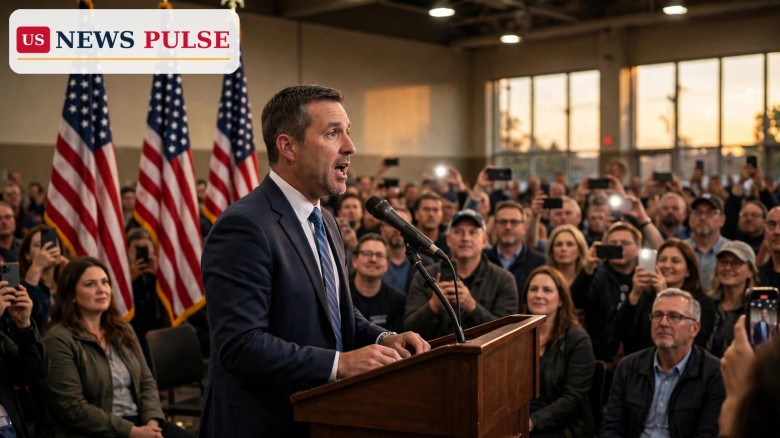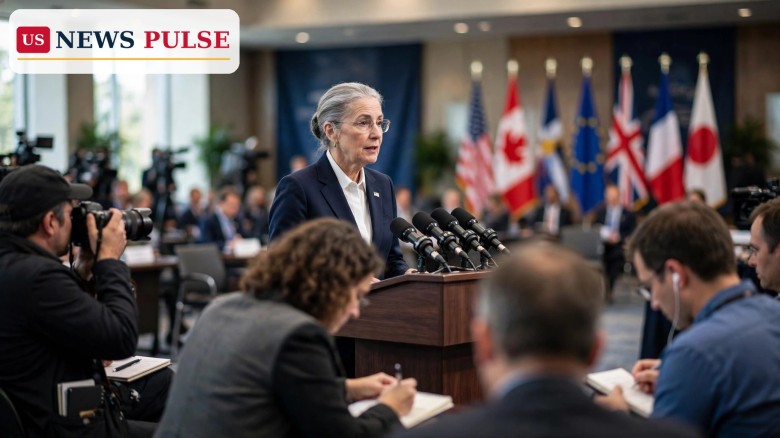
United States Secretary of State Marco Rubio said on Saturday that President Donald Trump has not yet decided whether to launch new strikes against Iran, and that the president would prefer a diplomatic solution to a war that has already run for eight months. The Rubio Iran strikes decision, announced at the G20 foreign ministers' meeting in Atlanta, Georgia, came as Iranian negotiators held fresh talks in Doha with Qatari mediators, in a last diplomatic push to avert a new round of fighting after the United States midterm elections on Tuesday, November 3.
Rubio, who is hosting the two-day G20 gathering in Atlanta, told reporters that Trump had made no announcement on further military action, that the administration did not take the question lightly, and that the United States remained open to a peaceful outcome. His remarks are the clearest public statement yet from a senior administration official that no strike order has been given, even as reports in recent days have warned allies to prepare for a short, intense round of American attacks as soon as Wednesday, November 4, the day after the midterms.
Rubio spoke at a news conference on the sidelines of the G20 foreign ministers' meeting, which he is chairing in Atlanta ahead of the leaders' summit in Miami in December. Asked how confident the administration was that any new strikes against Iran would be brief, Rubio answered directly. "We can achieve military objectives if we seek to," he said. "He hasn't made a decision. I have no announcement in that regard with you today, nor do we take any of it lightly."
Rubio went further on the president's preference. "I think the president's observation is that the United States remains the most highly capable military power on Earth; we can achieve military objectives if we seek to," he said. He added that Trump "prefers" to solve the Iran issue "diplomatically," saying he would have otherwise attacked the regime "weeks ago, months ago." He declined to characterise the progress of the talks or to set any timeframe for them, saying only: "If there is a diplomatic solution, we would be open to it."
Rubio also used the Atlanta platform to accuse Tehran of targeting commercial shipping. He said Iran was "actively and openly" targeting commercial vessels for attack, and pointed to the work of United States Central Command in protecting what he called the "lifeblood" of regional economies: the shipping lanes of the Strait of Hormuz, through which about a fifth of the world's oil normally passes.
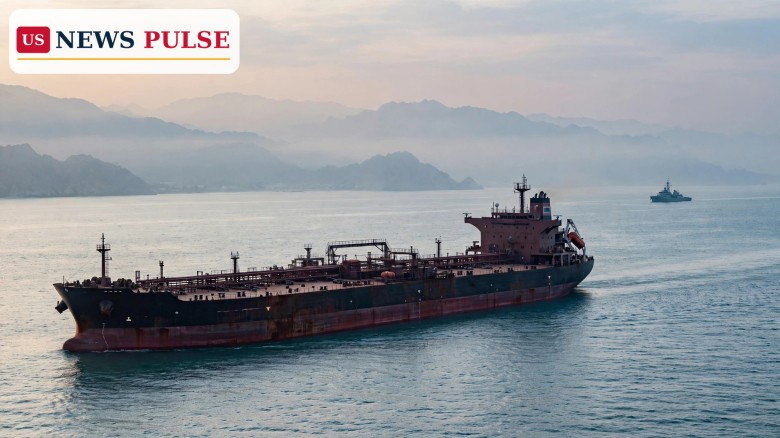
Shortly after Rubio's statement, Iran's navy said an oil tanker caught fire in the Strait of Hormuz after running into naval mines. According to Iranian state media, the navy said the tanker "was operating in a restricted area" and had ignored warnings. The statement did not identify the tanker or give details of damage, crew or casualties, and the claim could not be independently verified at the time of reporting.
That incident followed a series of disputed claims on Friday, when Iran's Revolutionary Guard said three, and later four, oil tankers had struck mines and caught fire in the strait while using routes Tehran considers unauthorised. The United States Central Command has disputed the mine claims, saying American forces have cleared the strait's internationally recognised primary transit routes. Oman, separately, said its navy evacuated 25 crew members from a Panama-flagged merchant ship, the RITI, after it was attacked and caught fire off the Musandam coast.
The United States and Israel launched military operations against Iran on February 28, 2026, opening a war that has now lasted more than eight months. Since then, fighting has repeatedly flared around the Strait of Hormuz, the narrow waterway between Iran and Oman that carries a large share of global oil and gas shipments, and diplomacy has run in parallel with military build-up.
Trump has held off on new strikes in recent weeks as the midterm campaign reached its final days, a pause that has fed intense speculation about what happens after Tuesday's vote. Reports this week said the administration had briefed Gulf allies to prepare for a short, intense round of strikes as soon as November 4, and that allies were lobbying hard to de-escalate. Other reports said Israeli Prime Minister Benjamin Netanyahu is pressing Trump for a joint operation immediately after the elections. None of those reports has been confirmed by the White House, which has said only that it keeps all options on the table.
The diplomatic track has been led by Qatar, with Pakistan also mediating. Qatari mediators spent Friday in Tehran, returned to Doha, and met Iranian negotiators there on Saturday. A source briefed on the negotiations told Reuters that the Qataris had brought Tehran a proposal a week ago for a seven-day plan, under which the United States and Iran would take daily steps to build trust ahead of broader peace talks. Iran has been proposing its own seven-day plan since September, so far rejected by Trump, according to the same reporting.
Trump himself struck a patient note in Oval Office remarks reported on Friday, saying of Iran: "There are talks. They want to talk. They keep talking," and adding that the United States was in no hurry, had spent relatively little money, and had time on its side. Vice President JD Vance has also written to Iran's security chief Mohsen Rezaei, a letter Iranian officials have been studying in high-level meetings, according to earlier reporting.
The significance of Rubio's Atlanta remarks lies in what they rule out, and what they leave open. By saying plainly that Trump "hasn't made a decision," Rubio pushed back against the impression, created by a week of strike-preparation reporting, that a post-election attack is already settled. By stressing American military capability in the same breath, he preserved the threat that gives the diplomacy its leverage.
Rubio's refusal to set a timeline matters too. He would not say whether the Doha talks have a deadline, whether direct talks with Iran are planned, or how long the current pause might last. "There are multiple talks. Talks have actually never stopped," he said, describing a diplomatic channel that has continued even while public warnings have grown louder.
European reaction at the G20 was cautious, with ministers warning in general terms about the risk of a wider regional war if fighting resumes. The G20 meeting itself has already been marked by division over Russia's presence, with the traditional group photograph cancelled after European officials refused to pose alongside Russian Foreign Minister Sergei Lavrov.
"We can achieve military objectives if we seek to. He hasn't made a decision. I have no announcement in that regard with you today, nor do we take any of it lightly." — Secretary of State Marco Rubio, G20 news conference, Atlanta, Saturday, October 31, 2026.
"I think what the president expresses to you is incredible confidence that if we needed to do something militarily, we would have the ability to do it and we would have everything we need to be successful, but we would prefer to do it peacefully." — Marco Rubio, on President Donald Trump's preference for diplomacy.
"There are multiple talks. Talks have actually never stopped." — Marco Rubio, on the continuing diplomatic contacts with Iran.
"Currently, there are no plans for meetings with American officials." — Iranian Foreign Minister Abbas Araghchi, Saturday, October 31, 2026, as reported from Tehran, even as Iranian negotiators met Qatari mediators in Doha.
The next few days are the most dangerous window in the Iran crisis since February. The midterm elections on Tuesday will decide control of Congress, and both Washington and Tehran are calculating how the result changes the other's appetite for risk. Reports that Trump could act "boldly" if he feels embarrassed by a bad result, and warnings from Tehran of a response without geographic limits, mean that a single incident in the Strait of Hormuz — a mine strike, a tanker fire, a seized vessel — could be read as a provocation by either side.
Rubio's statement is therefore important for two audiences. For allies in the Gulf and Europe, it signals that the diplomatic door is still open and that no strike is imminent. For Tehran, it carries a double message: the United States prefers talks, but it retains the capability and the stated willingness to act. For American voters, it frames the Iran question as unresolved on the eve of an election in which foreign wars, energy prices and the cost of living are all on the ballot.
The Hormuz shipping incidents matter on their own terms. Even unverified claims of mine strikes move oil markets, raise insurance costs for tankers, and force navies to choose between escorting vessels and clearing routes. The confirmed facts — Oman's rescue of 25 sailors from a burning Panama-flagged ship, and British maritime agency reports of vessels struck near Oman — are enough to show that the waterway remains dangerous, whatever the truth of each side's claims.
Three dates now frame the crisis. First, the midterm elections on Tuesday, November 3, after which Trump will no longer be campaigning and, according to several reports, may feel freer to act. Second, Wednesday, November 4, the date named in reports as the earliest moment for a new round of strikes. Third, the G20 leaders' summit in Miami on December 14-15, where Rubio's diplomacy will face its next public test.
In the meantime, the Doha channel continues. Qatari mediators are expected to shuttle between Tehran and Washington's intermediaries, and any seven-day confidence-building plan — whether the Qatari version or Iran's — would need to show early, verifiable steps: a pause in Hormuz incidents, a reopening of agreed shipping routes, and restraint in public rhetoric. If those steps do not appear, the risk is that the post-election window becomes the moment the war resumes rather than the moment it ends.
Watch also for the White House's own next statement. Rubio said he had "no announcement" on Saturday; a further statement from Trump himself, or a change in American naval posture in the Gulf, would be the clearest signal of which way the decision is leaning.
Has Trump decided to strike Iran? No, according to Secretary of State Marco Rubio on Saturday, October 31, 2026. Rubio said Trump "hasn't made a decision" and had "no announcement" on further military action.
Does Trump prefer diplomacy or war with Iran? Rubio said Trump "prefers" a diplomatic solution and would have attacked "weeks ago, months ago" if he did not, while stressing that the United States could achieve its military objectives if it chose to act.
What are the Doha talks? Indirect negotiations mediated by Qatar, with Iranian negotiators meeting Qatari mediators in Doha on Saturday after more than 12 hours of talks in Tehran on Friday. Iran says it currently has no plans for direct meetings with American officials.
What happened to tankers in the Strait of Hormuz? Iran's navy said a tanker caught fire after hitting naval mines in a restricted area on Saturday, and its Revolutionary Guard claimed three to four tankers hit mines on Friday. The claims are unverified, and United States Central Command disputes that mines remain on the strait's recognised primary routes. Oman confirmed rescuing 25 sailors from a burning Panama-flagged ship.
When could strikes happen? Reports have named Wednesday, November 4, the day after the midterm elections, as the earliest possible date for a new round of strikes. No strike has been ordered or announced, according to Rubio.
Related coverage: Iran-US talks: Araghchi calls US outreach a positive step as Doha delegation works, Iran Khamenei warning: no geographic limits if US strikes resume, and US says Strait of Hormuz routes cleared of mines as Oman rescues 25 sailors.
Leave a Comment



 | Today's Date: