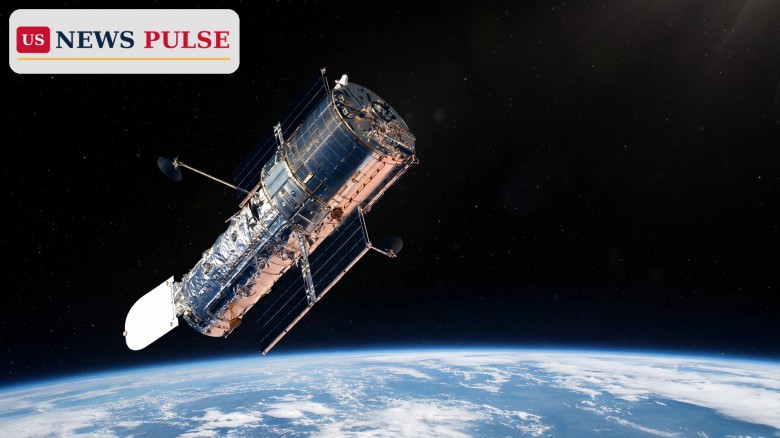
NASA has asked private companies to come up with a plan to save the Hubble Space Telescope, opening a formal search for a commercial mission that could lift the ageing observatory to a safer orbit, repair it, or bring it down in a controlled way before gravity does the job on its own. The NASA Hubble servicing request, issued on October 29, 2026, sets a hard clock on one of science's most famous instruments: any rescue mission must fly by 2032, or Hubble is expected to fall back to Earth uncontrolled in 2033 or 2034.
The appeal, published by NASA's Goddard Space Flight Center as a Request for Information on the federal SAM.gov portal, gives industry until 3 p.m. EST on Monday, November 30, 2026, to respond. It is the first time NASA has thrown the telescope's fate open to commercial servicing firms in this way, and it comes as Hubble's orbit slips steadily lower with no engine of its own to fight back.
NASA announced the request on October 30, 2026, a day after the formal notice went out. The agency is asking industry for three kinds of mission. The first would develop, test and operate a servicing vehicle that captures Hubble in low Earth orbit and boosts it to an altitude of at least 600 kilometres, about 373 miles, extending its science lifetime. The second would service the telescope to enhance its capabilities and increase its resilience and expected lifetime. The third would fly a mission to perform a controlled re-entry disposal, or another safe orbital disposal, at the end of Hubble's mission.
Any boost or servicing mission must not harm the telescope, the notice says, and the contractor would supply the launch vehicle, the servicing spacecraft and mission operations. Goddard would provide technical information, consultation with its Hubble experts and coordinated operations for rendezvous, capture, boost, servicing or re-entry. The request is explicitly an information-gathering step, not a request for proposals and not a government commitment to fund a mission. NASA says it may issue a formal solicitation later, but it has announced no selected option, no provider and no price.
That caution matters because Hubble is not a routine servicing target. It is a 13-metre cylinder weighing about 12,200 kilograms after its last servicing visit in 2009, with no propulsion system of its own. Like all spacecraft in low Earth orbit, its altitude is slowly decreasing because of atmospheric drag. NASA's public announcement puts the likely re-entry window at 2033 to 2034, and the agency says a mission would need to take place by 2032 to be effective.
The numbers behind that deadline are stark. NASA's July 2026 lifetime analysis, cited in the request, estimates a 10 percent probability of re-entry by September 2032 and a 50 percent probability by December 2033. The Space Telescope Science Institute, which runs Hubble's science programme for NASA, puts the median re-entry forecast at mid-2033, with less than a 10 percent chance of re-entry before 2030. Independent analysis by astronomer Jonathan McDowell of the Harvard-Smithsonian Center for Astrophysics, based on a plot of Hubble's altitude published in February 2026, suggests re-entry could come as early as 2028 in the most pessimistic case, as the descent has steepened while increased solar activity has expanded the upper atmosphere and increased drag.
Hubble was launched on April 24, 1990, in the payload bay of the Space Shuttle Discovery on mission STS-31, and deployed at an altitude of roughly 612 kilometres. Over more than 35 years it has fundamentally changed how humanity views the universe, from the deep-field images that revealed thousands of galaxies in a seemingly empty patch of sky to measurements that helped establish the accelerating expansion of the universe and studies of exoplanet atmospheres. It completed its 200,000th orbit around Earth on September 19, 2026, and demand for its observing time still exceeds supply by more than seven to one.
Hubble's orbit has been falling for decades. It now circles at a periapsis of about 470 kilometres and an apoapsis of about 475 kilometres, well below the 500-kilometre mark where atmospheric drag becomes self-reinforcing: the lower it sinks, the thicker the air it meets, and the faster it sinks further. Solar Cycle 25 has made the problem worse than early forecasts assumed, heating the upper atmosphere and swelling it to higher altitudes. The telescope's gyroscopes, which keep it pointed steadily, are being rationed, and it moved to single-gyro operations in 2024, yet its science instruments continue to deliver.
Astronauts last serviced Hubble in May 2009, when Space Shuttle Atlantis flew STS-125, the fifth and final Hubble servicing mission. That visit installed the Soft Capture and Rendezvous System, a 76-centimetre standardised docking ring on the telescope's aft bulkhead, designed to let a future vehicle latch on. It is that ring that makes a robotic capture mission an engineering question rather than a fantasy — although no mission has ever used it.
The idea of a commercial rescue is not new. In September 2022 NASA and SpaceX signed an unfunded Space Act Agreement to study whether a crewed Dragon capsule could rendezvous with Hubble and push it higher, at no cost to the government, under a proposal from the Polaris Program led by Jared Isaacman, then a private citizen. Companies including Astroscale and Momentus also answered the earlier call. NASA studied the concept and declined it in June 2024, citing concerns including the risk of ultraviolet mirror contamination from spacecraft outgassing — Hubble's ultraviolet sensitivity is its scientific edge — and the institutional knowledge lost since 2009, as many engineers from the servicing missions have retired.
Isaacman is now the NASA Administrator, confirmed by the Senate in December 2025, and he is the official who issued the new request. That history has drawn attention, and the request itself does not favour any company: it asks the whole industry what it can do, at what cost and on what schedule, before NASA commits to anything.
An uncontrolled re-entry is not just the loss of a telescope. Hubble was not designed for controlled atmospheric entry, and roughly 20 percent of its approximately 13 metric tons is expected to survive the plunge and reach the ground as debris, scattered along a footprint 350 to 800 kilometres long, according to reporting on a peer-reviewed study that estimates a 1-in-330 casualty probability for a 2033 re-entry. NASA's own public safety standard for such events is far lower, which is why the agency's request treats controlled disposal as a legitimate outcome in its own right, not merely a consolation prize if a rescue proves impossible.
The comparison with NASA's Swift Observatory, which closed in October 2026 after nearly 22 years, sharpens the point. Swift's final observation came on October 20, 2026, its shutdown was announced on October 23, and its orbit had decayed below 171 miles, with re-entry expected within weeks after a proposed orbit-boost rescue failed. Hubble is larger, heavier and far more scientifically productive than Swift, and its observing queue is still oversubscribed — which is why NASA is starting the commercial conversation six years before the deadline rather than months before it.
There is also a scientific gap at stake. The James Webb Space Telescope, launched in 2021, observes mainly in infrared light and was not built to replace Hubble's unique ultraviolet and visible-light capabilities. Losing Hubble without a successor in those wavelengths would close a window on the universe that astronomers have relied on since 1990, from the chemistry of exoplanet skies to the behaviour of stars and galaxies across cosmic time.
NASA Administrator Jared Isaacman framed the request as a duty to taxpayers and scientists alike. "Hubble still has important science ahead of it, and we should be looking at every reasonable opportunity to keep it delivering for as long as possible," Isaacman said in NASA's announcement. "If there are innovative and cost-effective ways to extend the life of an asset already on orbit, we owe it to the American taxpayer and the scientific community to explore them. Extending Hubble's life would mean more discoveries, more science, and more opportunities to expand our understanding of the universe."
Nicky Fox, associate administrator of NASA's Science Mission Directorate, stressed how quickly commercial servicing has matured. "Hubble is a national icon that has fundamentally changed how humanity views our universe for more than 35 years," Fox said. "Commercial industry has rapidly evolved in recent years to offer new capabilities for in-space satellite capture and servicing. Given the time we have until Hubble's anticipated re-entry, we are eager to explore the breadth of possibilities to boost Hubble to a higher orbit while we develop the flagship mission to follow."
The Space Telescope Science Institute's position, reflected in its planning figures, is more cautious than the most alarming independent forecasts: a median re-entry in mid-2033 and less than a 10 percent chance before 2030. That spread — 2028 in the earliest independent analysis, mid-2033 as the operator's median, 2033 to 2034 in NASA's public announcement — is itself part of the story, because it depends on how the Sun behaves. If solar activity quiets faster, Hubble gains time; if it does not, the telescope loses it.
Hubble matters for three reasons that go beyond nostalgia. First, it is still doing frontier science: its observing time is oversubscribed sevenfold, meaning astronomers are proposing far more work than the telescope can fit in, even in its fourth decade. Second, it covers wavelengths no other major observatory covers as well, so its loss would be a genuine capability gap, not a sentimental one. Third, its fate is a test case for the whole commercial servicing industry: if a private vehicle can safely capture, boost or retire a 12-tonne national icon, the same techniques could extend the lives of other satellites and clean up dangerous debris.
There is a financial argument too. Hubble is already in orbit, already working and already paid for. A servicing mission, even an expensive one, would buy years of science from an asset that cost billions to build and launch, rather than requiring a replacement telescope of similar ambition. Isaacman's framing — cost-effective ways to extend the life of an asset already on orbit — is aimed squarely at that calculation.
The risk side is equally concrete. A 13-tonne object falling uncontrolled, with a fifth of its mass expected to survive to the ground, is a public-safety problem as well as a scientific loss. NASA's decision to include controlled disposal among the three options signals that the agency would rather bring Hubble down on purpose, over an ocean, than gamble on where its surviving pieces land.
The immediate deadline is November 30, 2026, at 3 p.m. EST, when responses to the Request for Information are due. NASA will not pay for submissions, and the notice commits the government to nothing. What follows is evaluation: Goddard's engineers will weigh which concepts are technically credible, which can be ready by 2032, and what they would cost.
If a credible concept emerges, NASA could issue a formal request for proposals, select a provider and fund a mission — a multi-year procurement that would need to move quickly to meet the 2032 window. If no concept clears the bar, the agency's fallback is the third option in its own request: a controlled re-entry or disposal mission, planned while Hubble is still high enough and healthy enough to be guided. Either way, the telescope's remaining years are now numbered in single digits, and the November 30 responses will show whether industry believes it can add to them.
For astronomers, the practical advice is unchanged for now: Hubble keeps observing, its queue remains full, and the flagship mission intended to follow it is still in development. But every year of delay narrows the rescue window, because a servicing vehicle must rendezvous with a telescope that is sinking, not one standing still.
What has NASA actually asked for? A Request for Information, issued October 29, 2026, asking private companies to propose missions to boost Hubble to at least 600 kilometres, service it to improve its capabilities, or perform a controlled re-entry or disposal. Responses are due November 30, 2026.
When will Hubble fall to Earth without help? NASA says re-entry is likely in the 2033 to 2034 timeframe. Its July 2026 analysis gives a 10 percent chance by September 2032 and a 50 percent chance by December 2033, while the Space Telescope Science Institute puts the median at mid-2033. An independent analysis suggests 2028 is possible in the worst case.
Why can't Hubble just stay where it is? It has no propulsion system to maintain its orbit, so atmospheric drag slowly lowers it. The lower it goes, the stronger the drag becomes, and increased solar activity has accelerated the descent.
Has anyone tried to rescue Hubble before? Yes. In 2022 NASA and SpaceX studied a crewed Dragon reboost under the Polaris Program, and other firms responded too, but NASA declined the concept in June 2024 over contamination risks and lost servicing expertise. The new request opens the question to the whole industry.
Is a rescue mission guaranteed? No. The request is fact-finding only: NASA has selected no provider, announced no funding and made no commitment to buy a mission. A formal solicitation could follow, but no date has been set.
Related coverage: NASA Swift Observatory ends 22-year mission as spacecraft falls back to Earth, SpaceX-NASA Moon landing at risk as Starlink and AI take priority, reports say, and SpaceX Falcon 9 700th launch caps October with 27 new Starlink satellites.
Sources: NASA Science release, October 30, 2026; NASA Goddard Request for Information 80GSFC27RFIHSTS via SAM.gov, October 29, 2026; The Register, October 30, 2026; TechTimes, October 31, 2026; Ars Technica via reports, October 30-31, 2026. Where forecasts differ — earliest independent re-entry 2028 versus NASA's 2033-2034 window — this article reports both, with attribution. The featured image is an illustrative photograph of a space telescope in orbit.
Leave a Comment



 | Today's Date: