


 | Today's Date:

Trump Hush Money Conviction Challenged as Lawyers Ask Appeals Court to Toss It
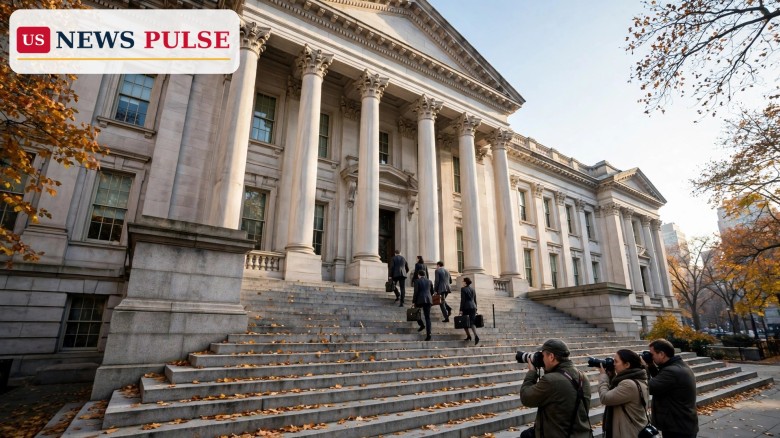
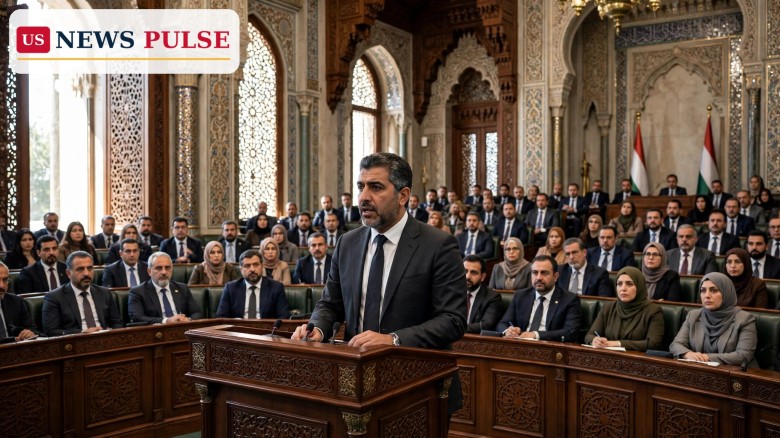
NEW YORK — President Donald Trump's lawyers stood before a New York appeals court on Thursday and asked the judges to throw out his hush money conviction, two years after the May 2024 verdict made him the first former — and now current — president in American history to carry a criminal conviction. Trump was not expected to attend. His new legal team called the prosecution politically motivated and built on a flawed legal theory, while prosecutors from Manhattan District Attorney Alvin Bragg's office defended the conviction as sound and the trial as fair.
Key Points
- President Donald Trump's lawyers asked a New York appeals court on Thursday, November 5, 2026, to overturn his conviction on 34 felony counts of falsifying business records.
- The conviction, handed down in May 2024, centres on a $130,000 payment to adult film performer Stormy Daniels, made by Trump's then-fixer Michael Cohen weeks before the 2016 election.
- Trump's new legal team at Sullivan & Cromwell argues the prosecution was politically motivated and that the legal theory and jury instructions were flawed.
- Manhattan District Attorney Alvin Bragg's office counters that the legal theory and the jury instructions were legitimate, and that White House-related evidence was fair game.
- Justice Juan Merchan sentenced Trump on January 10 to an unconditional discharge, leaving the conviction intact but sparing him any punishment.
What Happened
Thursday's session put the most consequential criminal case in American political history back before judges, more than two years after a Manhattan jury's verdict. Trump's lawyers argued that the conviction should not stand, attacking both the prosecution's legal theory and the instructions the jury received before it found him guilty on all 34 counts. It was the latest step in Trump's long effort to erase a conviction he has denounced repeatedly, including on social media as recently as September 2026, while insisting he did nothing wrong.
The appeals court did not rule from the bench, and no decision is expected immediately — New York appellate panels typically take weeks or months to issue written rulings. Both sides see the case as a test of how far a state prosecution can go in trying a president, and whether the trial's extraordinary circumstances justify undoing a jury's verdict.
Background: The Case That Made History
The case began with a payment in the final weeks of the 2016 campaign. Michael Cohen, then Trump's personal lawyer and fixer, paid $130,000 to Stormy Daniels, an adult film performer, to keep her from speaking publicly about an alleged sexual encounter with Trump, prosecutors said. Trump has denied the encounter and any wrongdoing. After the election, prosecutors said, the Trump Organization recorded reimbursements to Cohen as legal expenses — records the jury found were falsified to hide their true purpose.
The May 2024 verdict was the first time a former president had ever been found guilty of a crime, and it came mid-campaign; he went on to win the election that November. On January 10, Justice Juan Merchan imposed an unconditional discharge: the conviction stayed on the record, but Trump received no fine, no probation and no prison time. A related effort to move the case into federal court has also stalled: a federal judge rejected that bid a third time in August 2026. Our earlier coverage of the judge who rejected that move: Alvin Hellerstein dies at 92.
Trump Hush Money Conviction: The Arguments on Appeal
At the heart of Trump's appeal is the claim that the prosecution stretched the law to reach him. His lawyers at Sullivan & Cromwell contend the case was driven by politics rather than evidence, that the theory turning business-records charges into felonies was unsound, and that the jury instructions made conviction all but inevitable. If the appeals court agrees, the conviction could be thrown out entirely.
Prosecutors take the opposite view. Bragg's office maintains the legal theory was legitimate, the jury instructions proper, and evidence touching on Trump's time in the White House properly admitted. For the state, the case was always about the records — whether business documents were falsified to hide the payment — not the politics around the defendant.
Reactions
Outside assessments have been sceptical. Retired New York Judge George Grasso called the odds of success on appeal "highly unlikely", reflecting how rarely appellate courts overturn jury verdicts. Trump himself has been consistent, denying any wrongdoing and denouncing the conviction on social media as recently as September 2026. Thursday's wire reports carried no further on-the-record comments from either side by publication time.
Why It Matters
The appeal matters because the conviction is unlike any other in American history: no sitting president has ever carried a criminal conviction while in office, and whether it survives will shape how the case is remembered — as a landmark accountability moment or a prosecution that overreached. The ruling will also set a marker for how New York's appeals courts handle prosecuting a president and for the limits of state power over a federal officeholder.
There are practical stakes too: while the conviction stands, Trump remains a convicted felon under New York law, though the discharge means no fine, probation or prison time. If the appeals court throws it out, that label disappears — with it, one of the most unusual features of his second presidency. The case is also unfolding as Trump's influence over the federal courts faces fresh scrutiny: Alito and Thomas won't retire, sources say.
What Happens Next
The court will now deliberate and issue a written decision, a process that can take weeks or months. If Trump loses, he can seek review from New York's highest court, the Court of Appeals. Running alongside is the separate federal track: arguments on Trump's bid to move the case to federal court and seek dismissal on immunity grounds are set for November 16, after a federal judge rejected the move for a third time in August 2026.
Frequently Asked Questions
What is Trump's hush money conviction?
Trump was convicted in May 2024 on 34 felony counts of falsifying business records, over a $130,000 payment to Stormy Daniels made by his then-fixer Michael Cohen weeks before the 2016 election, a payment prosecutors said was meant to keep Daniels quiet.
What happened at the appeals court on November 5, 2026?
His lawyers asked a New York appeals court to throw out the conviction, arguing the prosecution was politically motivated and the legal theory and jury instructions were flawed. Trump did not attend.
Was Trump punished for the conviction?
No. Justice Juan Merchan sentenced him on January 10 to an unconditional discharge, which left the conviction intact but imposed no fine, probation or prison time.
What are Trump's chances on appeal?
Retired New York Judge George Grasso called them "highly unlikely", though the court has not yet ruled.
Leave a Comment