


 | Today's Date:





Second Wave of Bomb Threats Hits 12 European Flights as Jets Escort Planes to Land
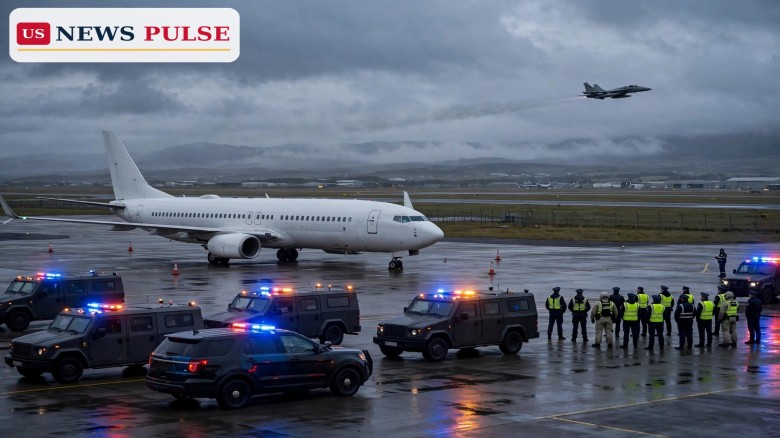
A second wave of bomb threats swept across European aviation on Thursday morning, forcing at least 12 flights to divert, land early or undergo emergency searches under fighter jet escort, as authorities across Europe scrambled to respond to a scare that once again ended with no explosives found. The disruption, the second in three days, hit airlines across the continent within hours: an Aer Lingus flight from Dublin to Rome was diverted to a French military airbase, three aircraft made emergency landings in Bulgaria, and threats emailed to airports in Spain delayed more flights still.
Key Points
- At least 12 flights were targeted on Thursday morning, per an AFP count, with around 25 affected in total, per The National.
- Aer Lingus flight EI402 from Dublin to Rome declared an in-flight emergency and diverted to Evreux airbase, about 100 km west of Paris, escorted by French military aircraft; all 151 passengers and six crew were moved to safety.
- Bulgaria reported three aircraft making emergency landings over bomb threats, all escorted by fighter jets, while four Prague-bound aircraft were searched and cleared.
- A Finnair flight from Helsinki to Rome was escorted by Italian fighter jets, a Wizz Air flight was re-routed to Vienna, and a LOT flight landed safely in Brussels after a security warning.
- No explosives were found on any aircraft and no one was hurt. No country has formally blamed anyone.
What Happened
The threats began arriving on Thursday morning, and they spread quickly. The most dramatic diversion involved Aer Lingus flight EI402, an Airbus A320 flying from Dublin to Rome. The crew declared an in-flight emergency and the aircraft diverted to Evreux airbase, a French military base about 100 km west of Paris, escorted by French military aircraft. All 151 passengers and six crew were moved to safety, and a bomb squad was sent to the aircraft.
In Bulgaria, three aircraft made emergency landings after bomb threats: flights from Copenhagen and Madrid landed in Sofia, while a London flight was diverted to Plovdiv. All three were escorted by Bulgarian fighter jets and searched. Four aircraft heading to Prague also received bomb threats and underwent pyrotechnic inspections. Nothing was found on any of them.
The wave kept spreading through the morning. A Finnair flight from Helsinki to Rome was escorted by Italian fighter jets and checked by bomb disposal experts. A Wizz Air flight from Milan to Warsaw was re-routed to Vienna. A LOT flight from Warsaw to Brussels landed safely after a security warning, with nothing suspicious found. In Spain, three emailed bomb threats in under 20 minutes affected Air Europa and Iberia flights at Madrid airport.
Background: Tuesday's First Wave
Thursday's scare came just two days after a similar wave hit European aviation on Tuesday, when at least seven flights and a cruise ship were targeted. Two Ryanair flights were searched at Rome Fiumicino, a LOT flight from London to Warsaw was diverted to Warsaw-Modlin, and Ryanair aircraft from Manchester and Dublin were searched after landing safely. Read our full report on Tuesday's wave of bomb threats across Europe.
After Tuesday's incidents, authorities said they had not established a connection. Thursday's larger second wave makes that question harder to avoid.
Bomb Threats Force Fighter Jet Escorts Across Europe
The sight of fighter jets escorting a passenger airliner has become the defining image of this week's disruption, but it is standard procedure for aviation authorities. When a bomb threat is received against an aircraft in flight, air traffic control and the airline treat it as real until proven otherwise. Military jets escort the aircraft to the nearest suitable airport, where passengers are evacuated and bomb disposal teams search it.
That procedure is deliberately thorough — and deliberately expensive. Every diversion means a cancelled onward flight, a stranded aircraft, crews out of position, and hundreds of passengers rebooked or put up in hotels. A single hoax can cost an airline hundreds of thousands of dollars, and a wave of them across a continent in a single morning multiplies the disruption and the bill. The threats appear to have arrived largely by email, a method that is cheap, fast and hard to trace — part of what makes the pattern so difficult to stop.
Reactions and Official Statements
The European Union said it was not yet clear whether the hoax alerts were connected. No country has attributed blame for this week's threats, and no group has claimed responsibility.
European officials have, however, blamed Russia and Iran for what they describe as hybrid attacks against Europe — sabotage, cyberattacks and other hostile acts short of open warfare. That context hangs over the bomb threats, but officials have not said the threats themselves are part of such a campaign. Airlines and airports confirmed the diversions and said passenger safety came first.
Why It Matters
A single bomb hoax is a nuisance. A second wave in three days, hitting at least 12 flights across six or more countries, looks like something else: a test of how much disruption a cheap, untraceable threat can cause, and how quickly Europe's aviation system can absorb it. Each wave forces the same full-scale response, at great cost to airlines, airports and passengers — even when nothing is found.
The threats also land in a week already marked by major security incidents in Europe, including a wave of cyberattacks on internet-connected refrigeration systems and the record Binance crypto theft that rattled markets. None of those incidents has been linked to the bomb threats, but together they underline how exposed everyday infrastructure has become to low-cost, high-disruption attacks. For passengers, the effect is delays, diversions and cancelled flights.
What Happens Next
National authorities in the affected countries are now investigating, and aviation security agencies will be reviewing how emailed threats are received, assessed and passed to airlines and air traffic control. Investigators will look for the digital trail — the email accounts, servers and payment records a mass hoax leaves behind. Airlines will be working through the backlog of repositioned aircraft, rebooked passengers and restored schedules. The key question is whether a third wave follows. If it does, the pressure on European governments to name who is behind it will grow much harder to resist.
Frequently Asked Questions
How many flights were affected in Thursday's wave?
At least 12 flights were targeted, per an AFP count, and around 25 were affected in total, per The National.
Was anyone hurt, and were any explosives found?
No. No explosives were found on any aircraft, and no injuries were reported.
Which flight was diverted to France?
Aer Lingus flight EI402, an Airbus A320 flying from Dublin to Rome, diverted to Evreux airbase about 100 km west of Paris, escorted by French military aircraft. All 151 passengers and six crew were moved to safety.
Is Thursday's wave connected to Tuesday's wave?
That has not been established. The European Union said it was not yet clear whether the hoax alerts were connected.
Who is behind the bomb threats?
No country has formally blamed anyone, and no group has claimed responsibility. European officials have blamed Russia and Iran for hybrid attacks generally, but not for these threats.
Leave a Comment