


 | Today's Date:





SpaceX Picks Qualcomm to Build Starlink Mobile's Nationwide 5G Network
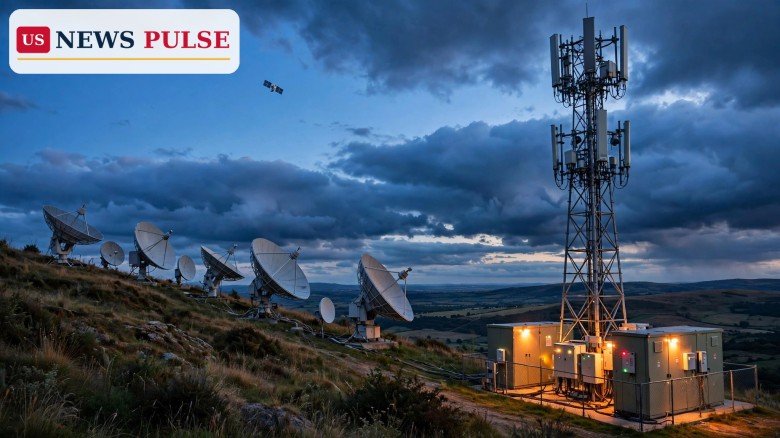
SpaceX has chosen Qualcomm to build the ground half of its most ambitious wireless bet yet. Under a multiyear agreement announced on Tuesday, November 4, 2026, Qualcomm will supply the terrestrial 5G infrastructure for Starlink Mobile, the satellite company's planned nationwide wireless network in the United States — a move that puts SpaceX into direct competition with AT&T, T-Mobile and Verizon.
The deal pairs the world's best-known satellite internet company with a giant of mobile chips. Qualcomm will provide the radio hardware and the lowest layer of the network software, while SpaceX keeps control of the higher-layer software. Deployment in the United States is expected to begin in 2027, with tens of thousands of conventional macro cell sites planned over the life of the agreement. Financial terms were not disclosed, and neither company has published a coverage map, a consumer price or a subscriber launch date.
Key Points
- Qualcomm will supply its Dragonwing QRU100 radio-unit and QDU100 distributed-unit platforms, plus Layer 1 radio-access-network software, for Starlink Mobile's terrestrial 5G network.
- The network will use 64T64R Massive MIMO base stations — 64 transmit and 64 receive paths — with energy-efficient baseband technology. Deployment in the US is expected to begin in 2027.
- Tens of thousands of conventional macro cell sites are planned over the multiyear agreement, turning Starlink Mobile into a hybrid of satellite and ground-based coverage.
- Starlink Mobile is billed as the world's largest satellite-to-mobile constellation, with 650 satellites in low Earth orbit.
- Qualcomm CEO Cristiano Amon confirmed on the fiscal Q4 2026 earnings call that SpaceX selected Qualcomm to power Starlink.
What Happened
Qualcomm Technologies and SpaceX announced the multiyear agreement on Tuesday, November 4, 2026. Under it, Qualcomm supplies the terrestrial 5G infrastructure for Starlink Mobile, the planned nationwide US network combining satellite-to-smartphone links with a conventional ground-based 5G network.
Qualcomm provides the Dragonwing QRU100 radio units, QDU100 distributed units and Layer 1 radio-access-network software — the hardware and lowest software layer that turn radio waves into a usable signal. SpaceX will write the higher-layer software itself, keeping control of how the network behaves and how it hands users between satellites and ground towers.
The network is designed around 64T64R Massive MIMO base stations, which use 64 transmit and 64 receive paths to serve many users at once. Qualcomm says the platform pairs that capacity with energy-efficient baseband technology, to keep a brand-new national network affordable to run.
Background: From Satellites to a Full Mobile Network
Starlink Mobile builds on SpaceX's satellite-to-smartphone service. The idea is simple: a phone connects directly to a satellite when no ground tower is in reach, and to the terrestrial network when one is. Starlink Mobile is described as the world's largest satellite-to-mobile constellation, with 650 satellites in low Earth orbit already supporting the service.
Satellites alone cannot match a ground network's capacity in crowded cities. A satellite link is a lifeline in remote areas; a dense grid of 5G base stations is what carries the heavy traffic of millions of users in towns and cities. By adding a terrestrial layer, SpaceX is moving from a coverage story to a capacity story — and from a complement to the big carriers to a competitor.
Starlink Mobile 5G: What Qualcomm Brings to the Network
The Dragonwing QRU100 radio unit is the part of the base station that talks to phones. The QDU100 distributed unit handles the digital processing that turns those radio signals into data. Together with the Layer 1 software, they form the foundation of the radio access network.
The choice of 64T64R Massive MIMO is a statement of intent. Massive MIMO antennas use dozens of radio paths to beam capacity precisely where users are. It is the technology the big carriers use in their busiest areas, and deploying it from the start suggests SpaceX wants its terrestrial network to compete on speed and capacity, not just on coverage.
Reactions and Statements
Qualcomm chief executive Cristiano Amon confirmed the deal on the company's fiscal fourth-quarter 2026 earnings call, telling investors that SpaceX had selected Qualcomm to power Starlink. The confirmation on an earnings call underlines how significant the agreement is for Qualcomm's infrastructure business.
Analyst Joe Madden of Mobile Experts estimated SpaceX could spend at least $100 billion on its combined satellite and terrestrial network, including spectrum purchases. That figure has not been confirmed by SpaceX, and no contract value has been published, so it should be read as an analyst's estimate of the total cost of building a fourth national network — not as a price for the Qualcomm deal itself. Neither company has said when customers can sign up, what it will cost, or which areas will be covered first.
Why It Matters
The United States has three national mobile carriers — AT&T, T-Mobile and Verizon. A fourth, built by the operator of the largest satellite internet constellation, would be the biggest shake-up in the American wireless market in years. Even the prospect of it puts pressure on the incumbents on price, coverage and service.
For consumers, the most immediate promise is coverage. A network blending satellite and terrestrial 5G could reach places the big three never found profitable to build — rural communities, highways and remote work sites. For Qualcomm, the deal is a vote of confidence in its infrastructure business as chip stocks tumble.
What Happens Next
The first milestone is the 2027 deployment start. SpaceX must secure sites, permits and backhaul for tens of thousands of cell towers — a logistical effort on the scale of building a carrier from scratch. Spectrum is the other open question: the company has not said which airwaves the terrestrial network will use, and any spectrum purchases would be closely watched by regulators and rivals. A coverage map, pricing and a subscriber launch date remain the missing pieces, and they will be the real test of whether Starlink Mobile can move from an ambitious announcement to a service Americans can actually buy.
Frequently Asked Questions
What is Starlink Mobile?
Starlink Mobile is SpaceX's planned wireless service combining satellite-to-smartphone connectivity with a terrestrial 5G network. Its constellation, with 650 satellites in low Earth orbit, is billed as the world's largest satellite-to-mobile constellation.
What will Qualcomm supply for the network?
Qualcomm will provide Dragonwing QRU100 radio units, QDU100 distributed units and Layer 1 radio-access-network software. SpaceX will write the higher-layer software itself.
When will Starlink Mobile launch?
Deployment in the US is expected to begin in 2027. No consumer launch date, coverage map or price has been published yet.
How much will the network cost to build?
Terms were not disclosed. Analyst Joe Madden of Mobile Experts estimated at least $100 billion for the combined satellite and terrestrial network, including spectrum, but SpaceX has not confirmed that figure.
Will Starlink Mobile replace AT&T, T-Mobile and Verizon?
Not immediately. SpaceX is building a fourth national network from scratch, with tens of thousands of cell sites planned over several years. Its satellite link already reaches places ground networks do not, and the new 5G layer adds the capacity to compete in towns and cities too.
More in technology: how AI reached Georgia election data and the week's sharp sell-off in chip stocks.
Leave a Comment