


 | Today's Date:



Senate Passes $70 Billion ICE and Border Patrol Budget Plan in 50-48 Vote
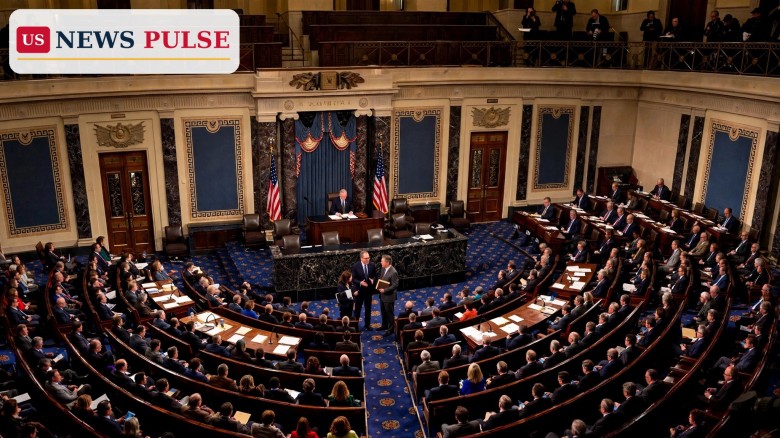
The Senate ICE budget plan cleared its first major hurdle in the early hours of Thursday morning, when senators voted 50-48 to adopt a $70 billion budget resolution funding Immigration and Customs Enforcement and the Border Patrol for three years. The overnight vote, which ended just after 3:30 a.m., opens a new Republican effort to reopen the Department of Homeland Security, shut down since mid-February, and sets up a fresh confrontation with Democrats over federal immigration enforcement.
Key Points
- The Senate adopted the final budget resolution 50-48 just after 3:30 a.m. on Thursday, November 5, 2026, after an overnight vote-a-rama that began on Wednesday evening.
- The $70 billion resolution would fund ICE and the Border Patrol for three years, through the rest of President Donald Trump's term.
- Republicans are using budget reconciliation, which needs only a simple majority and bypasses the 60-vote filibuster. The party holds 53 Senate seats.
- Republican Senators Lisa Murkowski of Alaska and Rand Paul of Kentucky joined all Democrats in voting against it.
- The House must still approve the framework, and the Senate parliamentarian must clear it, before a final bill can pass. Speaker Mike Johnson has not said when the House will act.
What Happened
The Senate worked through the night, grinding through a vote-a-rama, the marathon series of amendment votes that marks the final stage of a budget resolution. The session stretched past midnight before the final vote was called, and the resolution passed 50-48 shortly after 3:30 a.m.
The resolution was unveiled by Senate Budget Committee Chairman Lindsey Graham, and it instructs the Homeland Security and Judiciary committees to write the funding bill. Senate Majority Leader John Thune said: "We have a multistep process ahead of us, but at the end Republicans will have helped ensure that America's borders are secure and prevented Democrats from defunding these important agencies." Senator John Kennedy briefly held up the vote series, pressing for parts of the SAVE America Act citizenship-voting bill to be included, then withdrew his objection.
Background: A Department Shut Down Since February
The Department of Homeland Security has been shut down since mid-February, and the impasse over its funding has become one of the defining fights of the year in Washington. The department covers immigration enforcement, border security, the Coast Guard, the Secret Service and much of the federal disaster-response system.
The Senate has already voted, on a bipartisan basis, to reopen the rest of the department. That broader measure has stalled, however, because House Republicans refuse to take it up until ICE and Border Patrol funding advances separately. The new resolution is designed to break that logjam by moving the two agencies through reconciliation, which needs only a simple majority.
Democrats demand restraints on enforcement, including better identification for federal officers and more use of judicial warrants, after federal agents shot Renee Good and Alex Pretti in Minneapolis in January — deaths that turned a funding dispute into a debate about how immigration law is enforced on American streets.
Senate ICE Budget: How the $70 Billion Would Work
The resolution would provide about $70 billion for ICE and the Border Patrol over three years, carrying the two agencies through the remainder of President Trump's term. That is a long funding runway by Washington standards, designed to lock in enforcement funding beyond the next round of annual spending fights.
For supporters, the three-year horizon is the point: it gives the agencies certainty to hire, plan and operate instead of facing a fresh funding fight every year. For critics, the same feature is the problem, putting tens of billions beyond the reach of the normal yearly debate when Democrats say the agencies need more oversight, not less.
The vote showed how tight the Republican margin is. With 53 seats, the party could afford only three defections and lost two, leaving the 50-48 tally, with two senators not voting, no room for error. The resolution is only a framework, not a spending law: the committees must write the bill, the parliamentarian must clear it, and the House must approve it.
Reactions: Republicans Hail the Vote, Democrats Demand Restraints
Republican leaders presented the overnight vote as a straightforward question of border security, and Thune's statement made the case plainly: the resolution would keep America's borders secure and stop Democrats from defunding the agencies.
Democrats see the same vote very differently. Their demands have focused on conditions, not just dollars: clearer identification for federal officers and a greater role for judicial warrants before arrests and searches. Murkowski, from Alaska, has often been a swing vote, while Paul, from Kentucky, has long opposed large spending measures on fiscal grounds. Speaker Johnson has not said when the House will take up the framework, and its timetable will decide whether the Senate's overnight work turns into law.
Why It Matters
The vote matters first because of what it funds. ICE and the Border Patrol sit at the centre of the administration's immigration agenda, and a three-year, $70 billion commitment would give it a funding base that survives the annual appropriations cycle.
It matters second because of the department around them. Homeland Security has been without funding since mid-February, and the Senate's bipartisan vote to reopen the rest of the department is still waiting on the House. If the funding advances, it could unlock the wider reopening; if it stalls, the shutdown drags on, with the Coast Guard, the Secret Service and disaster response caught in the middle.
What Happens Next
The immediate next step belongs to the Senate's Homeland Security and Judiciary committees, which must draft the funding bill under the instructions in the resolution. That drafting will test whether the broad framework survives contact with the details: how the money is divided, what conditions are attached, and what the parliamentarian allows.
The House is the other open question. Speaker Johnson has not set a timetable, and the framework must clear the House before a final bill can pass. Democrats will keep pressing for restraints as the bill takes shape, with the January shootings in Minneapolis at the centre of that argument.
Frequently Asked Questions
What did the Senate vote on?
The Senate adopted a budget resolution by 50-48 just after 3:30 a.m. on Thursday, November 5, 2026. It would fund ICE and the Border Patrol with about $70 billion over three years.
Why is the department shut down?
It has been without funding since mid-February amid a dispute over immigration enforcement. The Senate has voted to reopen the rest of the department, but House Republicans have refused to take that up until ICE and Border Patrol funding advances.
Which senators voted against the resolution?
Republican Senators Lisa Murkowski of Alaska and Rand Paul of Kentucky joined all Democrats in voting against it. The final tally was 50-48, with two senators not voting.
What are Democrats demanding?
Restraints on immigration enforcement, including better identification for federal officers and more use of judicial warrants, after federal agents shot Renee Good and Alex Pretti in Minneapolis in January.
Read More on US News Pulse
Leave a Comment