


 | Today's Date:



IS-Linked Militants Kill at Least 33 in DR Congo Raid as Ebola Patients Flee Clinic
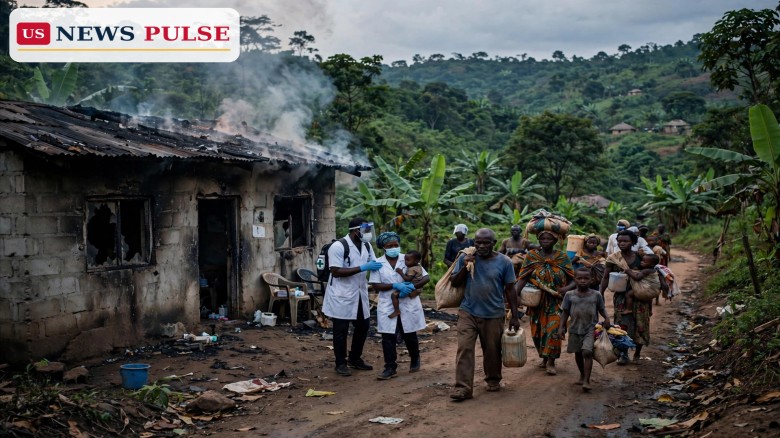
Fighters from the Allied Democratic Forces (ADF), an Islamist militant group recognised by Islamic State as an affiliate, killed at least 33 civilians in a night raid on a village in eastern Democratic Republic of Congo. About 180 patients — including people infected with or exposed to Ebola — fled a nearby hospital as flames spread. The DR Congo raid struck Cantine-Aloya, in North Kivu province about 50 kilometres west of Beni, at around 11 p.m. local time on Thursday, November 5, 2026.
Key Points
- ADF fighters raided Cantine-Aloya in North Kivu late on Thursday, November 5, 2026, killing at least 33 civilians; the New York Times reported at least 44 dead.
- The attackers burned a health post and several houses, and about 180 patients fled the nearby Kelekele Hospital Centre.
- Among them were one confirmed Ebola case, five suspected cases and three high-risk contacts, the hospital's medical director said.
- The United Nations said Ebola response teams had to halt work in the area and warned the flight of contacts could spread the virus.
- North Kivu holds about half of all new infections in DR Congo's Ebola outbreak, now past 10,700 confirmed cases and 5,200 deaths.
What Happened
The attackers reached Cantine-Aloya late on Thursday night and opened fire on residents before setting buildings alight, according to Beni territorial administrator Colonel Charles Omeonga and a local civil society leader. At least 33 civilians were killed, the officials said, while the New York Times reported at least 44 dead. The toll could still rise as more of the village is searched.
A health post was burned, along with several houses, and families fled into the surrounding bush. The attack also hit the nearby Kelekele Hospital Centre, where about 180 patients left in the chaos. Medical director Christian Kakule Vulembera said those who fled included one confirmed Ebola case, five suspected cases and three high-risk contacts under observation. Their flight broke the containment that had kept the virus inside the facility.
Background and Context
The Allied Democratic Forces began as a Ugandan rebel movement in the 1990s and later set up bases in the forests of eastern DR Congo, where it has attacked villages, churches and health facilities for years. The group pledged allegiance to Islamic State in 2019 and is recognised as its Central Africa affiliate, although analysts say its fighters are largely Congolese and Ugandan and act with considerable independence.
North Kivu, where Cantine-Aloya lies, has suffered some of the worst violence in the region, with armed groups fighting over land, minerals and territory while the Congolese army and United Nations peacekeepers struggle to protect scattered rural communities. The Ebola outbreak now sweeping DR Congo is caused by the Bundibugyo strain, a rare variant with no approved vaccine or proven treatment. Africa CDC and United Nations figures put it at more than 10,700 confirmed cases and 5,200 deaths, the deadliest in the country's history.
DR Congo Raid Puts the Ebola Response at Risk
The raid has done immediate damage to the Ebola response in one of the outbreak's worst-hit areas. The UN Office for the Coordination of Humanitarian Affairs said response teams were forced to halt work around Cantine-Aloya, and warned that the flight of patients and contacts could carry the virus into new communities before tracing teams can find them.
Nine people known to be infected, suspected of being infected or exposed to the virus are now unaccounted for, along with around 170 other patients whose health status is unknown. Each day they remain missing makes tracing their contacts harder, and Ebola can spread quickly through families and caregivers before symptoms are recognised. Health workers in eastern Congo have faced this danger before: a nurse was killed in Bafwasende during the current outbreak, and clinics have been attacked, looted or abandoned as fighting moves through their areas.
Reactions
Colonel Omeonga confirmed the death toll and the burning of the health post, while the local civil society leader gave the same account of the raid and its victims. The hospital's medical director, Christian Kakule Vulembera, described the flight of the 180 patients and identified the confirmed and suspected Ebola cases among them. The United Nations humanitarian office said Ebola teams had stopped work in the area and warned that the escape of contacts could spread the virus.
Why It Matters
The Cantine-Aloya raid shows how two crises in eastern Congo are feeding each other. The Ebola outbreak is already the deadliest in the country's history, and it is spreading fastest in the same province where armed groups attack villages and clinics with impunity. Every raid on a health facility does double damage: it kills civilians and it breaks the chain of care and monitoring that is the only defence against the virus.
The stakes reach beyond North Kivu. Ebola cases linked to this outbreak have already appeared in neighbouring countries, and health officials have warned that undetected spread is the greatest risk. A group of infected and exposed patients scattered by an attack is exactly the scenario that turns a contained local outbreak into a regional emergency.
What Happens Next
The immediate priority is finding the missing Ebola patients and contacts. Health teams will need to return to Cantine-Aloya and the surrounding area, trace the people who fled the hospital and isolate anyone showing symptoms — work that can only resume once security allows. Officials are also expected to update the death toll as the village is fully searched.
Longer term, the attack will add pressure on the Congolese government and the United Nations to protect health facilities in the outbreak zone. Without security for clinics and their staff, the Ebola response in North Kivu will keep breaking down at the moments it is needed most.
Frequently Asked Questions
How many people were killed in the Cantine-Aloya raid?
At least 33 civilians were killed, according to Beni territorial administrator Colonel Charles Omeonga and a local civil society leader. The New York Times reported at least 44 dead.
Who carried out the attack?
Fighters from the Allied Democratic Forces (ADF), an Islamist militant group recognised by Islamic State as an affiliate, raided the village late on Thursday, November 5, 2026.
Why did Ebola patients flee the hospital?
About 180 patients fled the Kelekele Hospital Centre as the attackers set fire to a health post and houses nearby. Among them were one confirmed Ebola case, five suspected cases and three high-risk contacts.
How big is the Ebola outbreak in DR Congo?
The outbreak, caused by the Bundibugyo strain, has passed 10,700 confirmed cases and 5,200 deaths, according to Africa CDC and United Nations figures. North Kivu holds about half of all new infections.
What happens now for the missing patients?
Health teams must find the missing patients and their contacts and isolate anyone with symptoms. The UN warned the flight of contacts could spread the virus, and response work in the area has been halted until it is safe to resume.
Related coverage: Congo Ebola Outbreak Passes 10,000 Cases as Deaths Near 4,900 and British Doctor With Ebola Evacuated From DR Congo to London for Treatment. Sources: SRN News, EconoTimes, CGTN News, New York Times, November 7, 2026.
Leave a Comment