


 | Today's Date:


Trump Moves to Scrap Roadless Rule, Opening 44.7 Million Acres to Logging
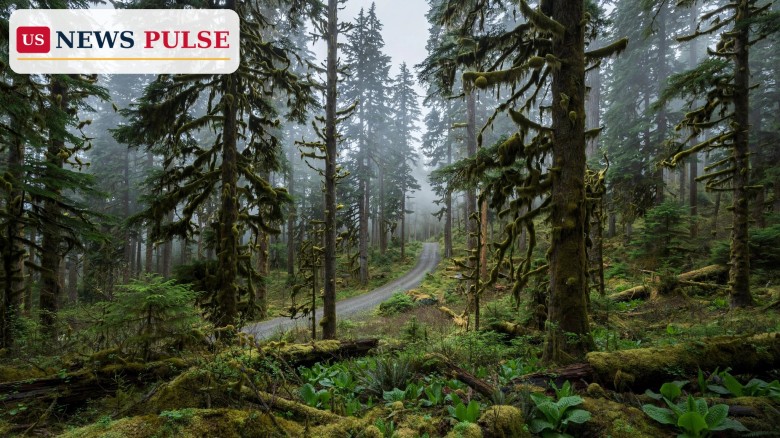
The Trump administration is moving to scrap a landmark conservation rule, a step that would open about 44.7 million acres of national forest to new roads and commercial logging. The target is the 2001 Roadless Area Conservation Rule, and nowhere is the fight sharper than in Alaska’s Tongass National Forest, America’s largest national forest, where more than 9 million roadless acres hold a third of all the carbon stored in the country’s intact national forests. The USDA proposed the rescission in August, and NPR reported on November 8 that it is expected to be finalised next year.
Key Points
- The USDA proposed rescinding the 2001 Roadless Rule in August 2026; the Forest Service is expected to finalise it in 2027.
- The rule bars new roads and commercial logging across about 44.7 million acres of roadless areas nationwide.
- In Alaska’s Tongass, more than 9 million acres — around half the forest — have no roads; the forest holds a third of the carbon in intact US national forests.
- The USDA says it would help firefighters and remove outdated barriers; many in Alaska believe the real aim is more logging.
- The Forest Service says fewer than 200,000 acres of Tongass roadless land could be logged, and no sales occurred there during the last exemption.
What Happened
NPR reported on November 8 that the Trump administration is working to rescind the rule, which for decades has banned new roads and logging across millions of acres of national forest land. The Agriculture Department proposed the change in August, and the Forest Service is expected to complete it next year. Once the rule is gone, the agency could approve new roads and timber sales in areas off limits for 25 years.
The change would apply nationwide, but Alaska would feel it most. The Tongass, a 17-million-acre temperate rainforest in Southeast Alaska, holds the largest single block of roadless land in the system. The first Trump administration exempted only the Tongass in 2020, and the Forest Service says no timber sales took place in its roadless areas while that exemption stood.
Background: The 2001 Roadless Rule
The Roadless Rule was adopted in the final days of the Clinton administration in January 2001, after one of the largest public comment processes in federal rulemaking history. It protects inventoried roadless areas — tracts of national forest land, generally 5,000 acres or larger, with no classified roads — from new road construction and commercial timber harvest. Supporters call it the strongest safeguard ever placed on America’s remaining wild forests, shielding clean water, wildlife habitat and backcountry recreation. Opponents in parts of the timber industry have long argued it locks up resources and blocks access for firefighting. The rule has survived court challenges and political attacks, and it was reinstated in full under President Joe Biden after the first Trump administration carved out the Tongass.
The Roadless Rule Rollback: What Changes on the Ground
Rescinding the rule would not cut a single tree by itself, but it would remove the legal barrier that has kept roads and logging out of 44.7 million acres. In the Tongass, the effect could still be modest: the Forest Service says fewer than 200,000 acres of roadless land could be suitable for logging — steep, remote ground where a road can cost more than the timber is worth.
Tessa Axelson, executive director of the Alaska Forest Association, which speaks for the state’s timber companies, supports the rollback but is candid about its limits. “It is not significant volume that is going to fix the challenges the industry has,” she told NPR. Axelson also cites the economics: building roads is expensive, and much Alaskan timber must be shipped by boat to be milled elsewhere.
Even so, conservationists warn the change would open the door to roadbuilding nationwide, and that once a road is cut into a roadless valley, the wild character of the place is gone for good.
Reactions: Tribes, Timber and Conservationists
For the Tlingit people of Southeast Alaska, the forest is not scenery but sustenance — a source of berries, deer, medicines and materials for traditional art. Judith Ramos, a Tlingit anthropologist from Yakutat on the board of the Southeast Alaska Conservation Council, told NPR: “Without this, we’re going to lose our traditional medicines, our traditional art styles, our traditional foods.” Ramos described visiting Prince of Wales Island, a heavily logged area, and finding the regrown stands quiet and almost empty of animals and birds. The council warns the rollback would damage Tlingit traditions, ecotourism and the climate benefits of keeping the forest intact.
The timber industry’s response is more measured than the politics suggest. Axelson backs the move, but warned that four-year policy swings create chaos for forest communities. Susan Alexander, a retired Forest Service economist who worked in the Tongass, told NPR the last rollback did not ramp up logging — but the agency spent heavily preparing timber sales that were later cancelled. The USDA has not put a named official forward to defend the move; its case rests on firefighter access and cutting red tape.
Why It Matters
The Tongass is one of the world’s great carbon stores. Its old-growth trees and soils hold a third of all the carbon in America’s intact national forests, and cutting roads into it would release some of that carbon while removing the trees that absorb more. Rescinding it entirely would be the largest rollback of national forest protections in a generation. For Alaska Native communities, the stakes are cultural as well as environmental. The wider climate context is stark: the world has just blown past the 1.5C warming limit, as our report on the Paris Agreement at 10 explains, making the fate of a forest that stores so much carbon a global question.
What Happens Next
The Forest Service is expected to publish a final rule in 2027, and conservation groups and tribal organisations are widely expected to sue the moment it lands. The courts have upheld the rule before, and the coming fight will test whether an administration can erase a rule that has survived a quarter century of challenges. Alaska — where even the Senate race remains uncalled, as our report on the Alaska ballot fight shows — will be watching closely. Until then, the Tongass, and 44.7 million acres of wild forest across the country, wait to learn whether the roads are coming.
Frequently Asked Questions
What is the Roadless Rule? Adopted in 2001, it bans new roads and commercial logging in inventoried roadless areas — about 44.7 million acres nationwide.
How much land is affected? About 44.7 million acres, including more than 9 million in Alaska’s Tongass National Forest.
Will logging start right away? No. Fewer than 200,000 acres could be suitable for logging, roads are expensive, and no timber sales took place during the last exemption. Lawsuits are also expected.
Why does the administration want this? The USDA says it would give firefighters access and remove outdated barriers. Critics in Alaska say the real aim is to boost logging.
When will it take effect? The Forest Service is expected to finalise it in 2027. Legal challenges from conservation groups and tribal organisations are likely to follow.
Leave a Comment