


 | Today's Date:

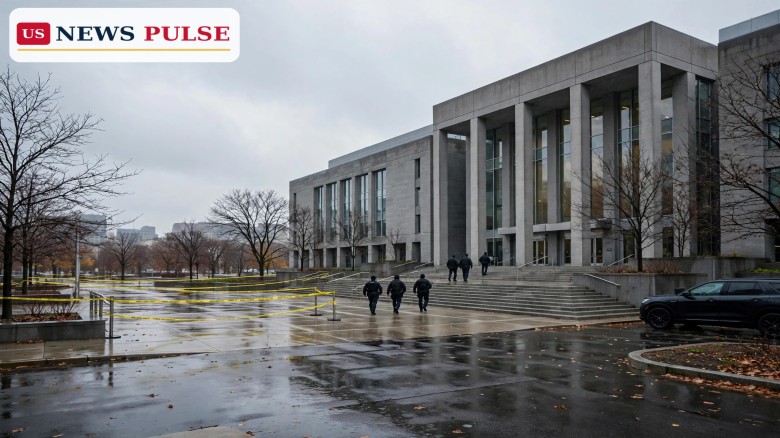



Brian Monahan Resigns as Congress Top Doctor Amid Pentagon Drug Probe Findings

Rear Adm. Brian Monahan, the Navy doctor who has cared for members of Congress for 17 years, has resigned after a Pentagon watchdog found his office mishandled powerful prescription drugs and ran a workplace staff called toxic. Senate Majority Leader John Thune confirmed the departure on Friday, November 13, 2026, the same day the Defense Department's inspector general warned of "health and safety risks" in the Office of the Attending Physician. Neither Monahan nor the Navy announced the resignation publicly, and Punchbowl reported he was removed from the post rather than stepping down on his own.
Key Points
- Rear Adm. Brian Monahan, attending physician of Congress since 2009, has resigned, US officials told The Wall Street Journal. Senate Majority Leader John Thune confirmed it on Friday, November 13, 2026.
- The Pentagon inspector general found a "gap in clinical quality management" in the Office of the Attending Physician, warning of "health and safety risks" for those it serves.
- A February 2026 inventory check found discrepancies in five controlled substances, including opioids, and sleep aids and pain drugs were not properly tracked.
- Staff accused Monahan of a toxic workplace, including ordering sailors to cut lawmakers' toenails and deliver medication to private homes at 3 a.m.
- Monahan recused himself and sent investigators to congressional counsel, which blocked access to records and interviews. A separate Navy investigation continues.
What Happened
The news broke on Friday, when US officials told The Wall Street Journal that Monahan had resigned. Thune confirmed the departure the same day, although neither Monahan nor the Navy issued a public announcement. Punchbowl reported Monahan was removed from his post rather than resigning voluntarily, leaving the circumstances of his exit in dispute.
The timing was striking. The resignation landed the same day the Pentagon's inspector general released its findings on the Office of the Attending Physician, the small unit that cares for members of Congress, their staff and Supreme Court justices. Monahan had held the post since 2009, and his sudden exit left the office without its longtime leader.
Background: The Office of the Attending Physician
The Office of the Attending Physician is one of the least visible corners of Capitol Hill. The Navy has staffed it since 1928, providing a doctor and a small team for the 535 members of the House and Senate, their staff and the justices of the Supreme Court. The office offers check-ups, urgent care and prescriptions, and its doctors have been called on in emergencies on the House and Senate floors.
Its patients are the lawmakers who write the laws and approve the Pentagon's budgets, so the office has long operated with unusual independence. That independence is now at the heart of the scandal: investigators found the office lacked the clinical quality management expected of a military medical facility, and the inspector general was sent to congressional counsel, which blocked access to records and interviews.
Brian Monahan Resigns: What the Pentagon Watchdog Found
The inspector general's findings fall into two parts: drugs, and the treatment of staff. A Controlled Substance Inventory Board check in February 2026 found discrepancies in five controlled substances, including opioid pain medication. Sleep aids and pain drugs were not properly tracked, and the office was accused of dispensing drugs without prescriptions.
For a medical office, those are serious failures. Controlled substances face strict accounting rules in every pharmacy, and the office could not say with confidence where powerful painkillers went or who received them. Handing out drugs without prescriptions would breach basic medical and legal standards.
On the workplace, staff told investigators Monahan ordered sailors to cut lawmakers' toenails and deliver medication to private homes at 3 a.m., tasks that have nothing to do with naval service. The report describes a toxic workplace in which junior staff were used as personal attendants, not medical staff.
Reactions and Quotes
The public record is strikingly thin. Thune confirmed the departure on Friday, but neither Monahan nor the Navy has announced it publicly and no statement from Monahan has been released, unusual for a two-star admiral leaving a post he held for 17 years.
The inspector general's words are the clearest statement in the case: "health and safety risks" and a "gap in clinical quality management". Punchbowl added the other disputed fact: Monahan was removed rather than resigning. If so, the findings were serious enough to end a 17-year tenure without a farewell announcement.
Why It Matters
First, it concerns the safety of the people who run the country. The office looks after 535 lawmakers, thousands of staff and nine justices, and if its drug stocks were not properly tracked, the risk fell on the very people it exists to protect.
Second, it exposes an oversight gap in American government. Congress writes the rules for the Pentagon and the health system, yet its own doctor's office operated with a gap in clinical quality management, its records shielded by congressional counsel even from the Pentagon's watchdog.
Third, it touches the military's own standards. The sailors assigned to the office are Navy personnel, and the allegations describe uniformed members used as personal staff. The Navy's investigation must decide whether those orders were lawful and whether Monahan's command climate was acceptable for a flag officer.
What Happens Next
The most immediate question is who runs the office now. No successor has been named, and the Navy, which has staffed the office since 1928, is expected to appoint an interim physician quickly. Lawmakers and staff still need a doctor.
The separate Navy investigation is the other live thread. Unlike the inspector general, whose access was limited by congressional counsel, the Navy has its own authority over its personnel and medical standards. Congress is also likely to ask why the drug handling went unchecked and what safeguards will now be put in place.
Frequently Asked Questions
Who is Brian Monahan? Rear Adm. Brian Monahan, a two-star Navy admiral, was attending physician of Congress from 2009 until November 13, 2026, caring for lawmakers, staff and Supreme Court justices.
Why did Brian Monahan resign? His departure came the same day the Pentagon inspector general warned of "health and safety risks" in his office. Punchbowl reported he was removed rather than resigning, so the exact circumstances remain disputed.
What did the Pentagon watchdog find? A February 2026 check found discrepancies in five controlled substances, including opioids; sleep aids and pain drugs were not properly tracked. Medicines were also allegedly dispensed without prescriptions, and staff described a toxic workplace.
Who does the Office of the Attending Physician serve? The office cares for the 535 members of the House and Senate, their staff and Supreme Court justices. The Navy has staffed it since 1928.
What happens now? A separate Navy investigation continues, no successor has been named, and Congress is likely to ask why the drug handling went unchecked and why investigators were denied records and interviews.
More from US News Pulse: DOJ English-Only Directive and Mamdani SNAP Deal.
Leave a Comment