


 | Today's Date:




Atmospheric Rivers Slam Pacific Northwest With Feet of Snow, 20-Foot Surf
A relentless parade of atmospheric rivers is slamming the Pacific Northwest and Northern California this weekend, dumping feet of snow in the mountains, driving 20-foot surf onto the coast and raising flood risk as the storms arrive with annual king tides. Parts of Washington's Outer Coast have already recorded more than 8 inches of rain since Tuesday. With saturated ground and three more storms lined up over the next two weeks, officials warn residents to stay away from the water's edge and prepare for flooding, landslides and power cuts.
Key Points
- A powerful storm is sweeping the Pacific Northwest and Northern California from Friday through the weekend, driven by a series of atmospheric rivers.
- Parts of Washington's Outer Coast recorded more than 8 inches of rain between Tuesday and Thursday, with 2 to 3 more inches possible through Monday.
- The northern Sierra could see up to 4 feet of snow by Monday, while 15- to 20-foot swells pound the three coasts.
- High Surf Advisories are in place along all three coasts, with destructive surf, coastal flooding and life-threatening sneaker waves at high tide.
- Three more storms are expected over the next two weeks, potentially disrupting Thanksgiving travel across the West.
What Happened
The latest storm pushed ashore on Friday, November 14, 2026, the newest in a series of systems that has soaked the region for days. By then, Washington's Outer Coast had already taken more than 8 inches of rain between Tuesday and Thursday, with 2 to 3 more inches expected through Monday. In Northern California, 3 to 5 inches were expected over the same stretch.
In the mountains, the story is snow: the northern Sierra could see up to 4 feet by Monday, with the heaviest falls above 7,000 feet. Winter Storm Warnings are in effect across the eastern Sierra slopes, and colder air arriving late Sunday into Monday will drop snow levels to around 3,500 to 4,000 feet, bringing more snow and dangerous travel to the passes.
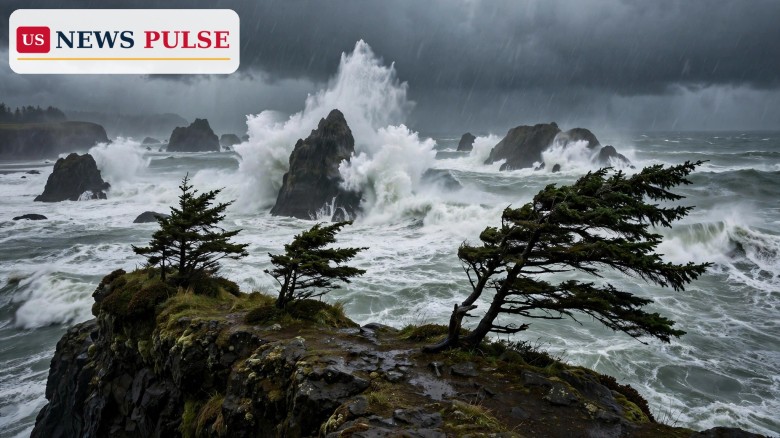
Along the coast, the danger is the sea. Fifteen- to 20-foot swells have dominated the waters off Oregon and Washington all week, and forecasters expect 20- to 25-foot waves, with offshore seas topping 30 feet, through the weekend. The storms coincide with the year's annual king tides, raising flood risk along the coast. Wind gusts of 60 to 80 mph on the coast and 40 mph on the Interstate 5 corridor could take down power lines in saturated ground.
Background and Context
An atmospheric river is a narrow band of concentrated moisture in the atmosphere, sometimes called a river in the sky. These ribbons of warm, wet air can stretch thousands of miles across the Pacific and carry more water than the Mississippi River. When one makes landfall, it brings heavy rain in the lowlands and deep snow in the mountains.
Atmospheric rivers supply much of the region's water, filling reservoirs and building the snowpack that feeds rivers in the dry summer. But a back-to-back series is different: each storm arrives before the ground has drained, so rivers rise higher and flood and landslide risk climbs with every new system. The Southwest learned the same lesson earlier this month, when a separate atmospheric river system brought deadly flash flooding to Arizona.
Pacific Northwest Atmospheric River: Why the Pattern Will Not Let Up
What makes this Pacific Northwest atmospheric river event so punishing is its persistence. A single storm usually passes in a day or two, giving rivers time to fall and soil time to dry. This sequence has done the opposite, hammering the same coastline again and again, with no recovery window.
The danger is greatest where the storms meet the king tides. High tides already push seawater higher up beaches and into coastal waterways, and with persistent wave energy they produce tidal overflow, beach erosion and surf that can surge over coastal structures. Forecasters warn destructive waves may wash over beaches and jetties without warning, and that large waves can dislodge logs with enough force to kill or seriously injure unsuspecting people.
The risk is not theoretical: on Sunday, a sneaker wave dragged a child through rough surf at Cannon Beach, Oregon, before an adult pulled the child to safety. Sneaker waves are sudden surges that run far up the beach, with enough force to roll heavy drift logs.
Reactions and Quotes
The National Weather Service has been blunt. "Destructive waves may wash over beaches, jetties, and other structures unexpectedly," the agency said. "Extreme caution should be used if you plan to visit beaches this week." Its Los Angeles office added: "Large breaking waves can cause injury, wash people off beaches and rocks, and capsize small boats near shore. Remain far away from the water's edge."
The city of Santa Cruz will close all its beaches and the Santa Cruz Wharf through the weekend because of the dangerous surf. Forecasters urge residents in flood-prone areas to watch river levels and be ready to move to higher ground.
Why It Matters
This storm matters because it hits a region already saturated. Rivers are running high, hillsides are soaked, and every extra inch of rain raises the odds of flash flooding and landslides. Gusts of 60 to 80 mph can bring down trees and power lines in the soft ground.
The timing matters too. With Thanksgiving less than two weeks away, three more storms are expected over the next two weeks, and mountain passes will be treacherous and flights could face delays. For how the week's storms have already disrupted American travel, read our report on more than 2,500 flights canceled Saturday.
What Happens Next
The immediate storm will linger through the weekend, with the heaviest rain shifting south into Northern California and colder air arriving late Sunday into Monday, dropping snow levels and bringing more snow to the mountain passes.
After that, the pattern continues: three more storms are expected over the next two weeks. Officials will keep watching river gauges and coastal conditions, and warnings may be extended as the next systems approach. For now the message is simple: stay away from the water, avoid flooded roads, and never drive through standing water. For more on the West's extreme autumn weather, see our coverage of the Arizona flash floods and the record king tides.
Frequently Asked Questions
What is an atmospheric river? A narrow band of concentrated moisture in the atmosphere. At landfall it brings heavy rain in the lowlands and deep snow in the mountains.
How much rain has fallen in the Pacific Northwest? Parts of Washington's Outer Coast recorded more than 8 inches between Tuesday and Thursday, with 2 to 3 more inches possible through Monday.
How big are the waves? Fifteen- to 20-foot swells have pounded the three coasts, with 20- to 25-foot waves expected through the weekend.
What is a sneaker wave? A sudden surge that runs much farther up the beach than normal surf, sweeping people off rocks and beaches. It can be deadly.
Will more storms follow? Yes. Three more storms are expected over the next two weeks, potentially disrupting Thanksgiving travel plans across the West.
Leave a Comment