

 | Today's Date:




Congress Agrees on ADS-B In Mandate After Deadly Flight 5342 Crash That Killed 67
Congress has agreed to require civilian aircraft to carry ADS-B In locator systems that show pilots where nearby planes are flying. The step was driven by the families of the 67 people killed when American Airlines Flight 5342 collided with a United States Army Black Hawk helicopter near Reagan National Airport in January 2025.
Senate Commerce Committee Chairman Ted Cruz, a Texas Republican, and the committee's top Democrat, Maria Cantwell of Washington, announced the agreement in principle on Tuesday, November 17, 2026, at a demonstration on the Capitol lawn organised by the victims' families. House Transportation Chairman Sam Graves joined them.
Key Points
- Senate and House transportation leaders agreed on November 17, 2026, to require ADS-B In locator systems on civilian aircraft.
- The rule covers every aircraft already required to broadcast its position through ADS-B Out, which must now also receive those signals.
- The deal follows the January 29, 2025, collision of Flight 5342 and an Army UH-60 Black Hawk that killed all 67 people aboard both aircraft.
- The framework merges the Senate ROTOR Act (S. 2503) and the House ALERT Act (H.R. 7613), resolving the differences between the two bills.
- The deal addresses all 50 National Transportation Safety Board recommendations issued after the crash.
What Happened
The announcement came at a demonstration on the Capitol lawn, where families of the 67 victims pressed lawmakers for action nearly 22 months after the crash. Cruz and Cantwell said the chambers had settled the dispute that stalled the bill: whether pilots should only broadcast their position, or also see the positions of aircraft around them.
Under the agreement, all aircraft already required to broadcast their location through ADS-B Out will now also receive those signals through ADS-B In. Today, aircraft in crowded airspace must broadcast their location, but they need not carry the complementary system that lets their own pilots see other traffic on a cockpit display. One part is unfinished: the House and Senate Armed Services Committees have yet to sign on to the provisions for military aircraft in civilian skies.
Background: The Night Flight 5342 Fell From the Sky
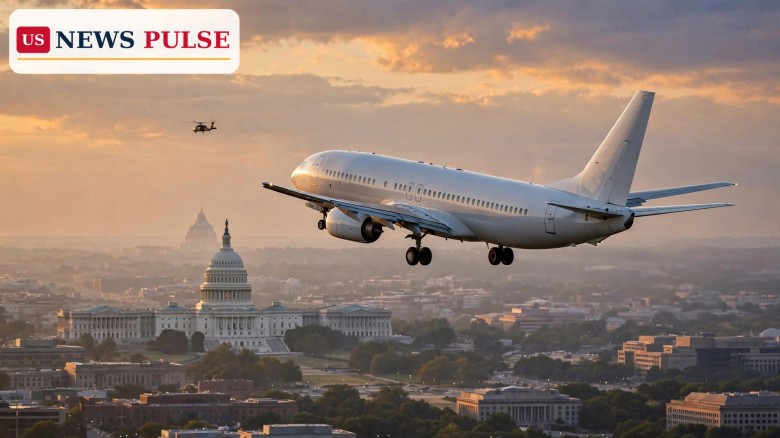
On the night of January 29, 2025, American Airlines Flight 5342, a regional jet bound for Reagan National Airport, was on final approach when it collided in midair with a United States Army UH-60 Black Hawk helicopter. All 67 people aboard both aircraft were killed.
On the night of the collision, the Army helicopter was flying without its ADS-B Out system turned on, citing security concerns, even though it was only a training flight, so it was not broadcasting its position to other aircraft or to air traffic control.
The National Transportation Safety Board issued 50 safety recommendations on how military and civilian aircraft share the crowded airspace around the capital. The victims' families took them up as their cause, travelling to Washington repeatedly to demand action on every one.
The ADS-B In Mandate: What the Deal Requires
ADS-B, short for Automatic Dependent Surveillance-Broadcast, lets aircraft share their position, altitude and speed by radio. ADS-B Out is the broadcasting half: an aircraft sends its position out so controllers and other aircraft can track it. ADS-B In is the receiving half, showing nearby traffic on a cockpit display.
Under the agreement, any civilian aircraft already required to carry ADS-B Out will also have to carry ADS-B In, reaching the aircraft in the busiest airspace in the country, including commercial jets, regional airliners and business aircraft around major airports such as Reagan National.
For pilots, the change is straightforward but important: instead of relying only on air traffic control and looking out of the window, a pilot will see nearby aircraft on a screen, including aircraft hard to spot at night or in poor visibility.
Reactions and Quotes
Cruz, who has championed the ROTOR Act in the Senate, said he believes Congress can pass the bill before the end of the year, or at least before the end of the 119th Congress. The agreement is bipartisan.
Cantwell, the Senate Commerce Committee's ranking Democrat, joined Cruz, giving the framework bipartisan Senate support. Graves, who leads the House Transportation Committee, also joined them. The victims' families, who organised the demonstration, have driven the legislation, pressing lawmakers for nearly two years to adopt all 50 recommendations.
The remaining question is whether the Armed Services Committees will agree to the military-aircraft provisions. Their members have yet to sign on, and until they do, the parts of the bill governing military helicopters and planes in civilian airspace will remain unresolved.
Why It Matters
The agreement turns the central lesson of the Flight 5342 disaster into law. Sixty-seven people died in part because two aircraft sharing the same crowded sky could not see each other in time. A mandate giving pilots a live picture of the traffic around them is the most direct answer to that failure, and the one the safety board recommended.
The crash also exposed a gap hiding in plain sight. For years, aircraft in busy airspace had to broadcast their position, but nothing required them to receive anyone else's, leaving pilots dependent on controllers and their own eyesight at night and in poor visibility.
What Happens Next
The next step is for the Armed Services Committees in the House and Senate to sign on to the military-aircraft provisions. Without their support, the bill cannot move in its full form, and the provisions governing helicopters like the one in the crash would remain in limbo.
Once those committees are on board, the bill must be written into final language and passed by both chambers, which Cruz believes can happen before the end of the year. After passage, the Federal Aviation Administration would write the rules and set deadlines for aircraft owners to install the equipment, a process that can take months or longer.
Frequently Asked Questions
What is ADS-B In?
ADS-B In is the receiving half of the Automatic Dependent Surveillance-Broadcast system: it picks up position signals from nearby aircraft and shows them in the cockpit.
How is ADS-B In different from ADS-B Out?
ADS-B Out broadcasts an aircraft's own position, altitude and speed; ADS-B In receives the broadcasts of other aircraft. Until now, aircraft in crowded airspace had to broadcast, but not receive.
What happened to American Airlines Flight 5342?
On January 29, 2025, Flight 5342 collided in midair with a United States Army UH-60 Black Hawk near Reagan National Airport in Washington. All 67 people aboard the two aircraft were killed.
What are the ROTOR Act and the ALERT Act?
The ROTOR Act (S. 2503) is the Senate bill requiring ADS-B In on civilian aircraft; it passed the Senate unanimously but fell one vote short in the House. The ALERT Act (H.R. 7613) is the House version, which previously passed the House.
When will the ADS-B In mandate take effect?
There is no start date yet. Congress must first pass the bill, which Cruz believes can happen before the end of the year, and the Federal Aviation Administration would then set deadlines for aircraft to be equipped.
Read our earlier reports on the air traffic control crisis, Trump on the FAA ground stop, and flight chaos as 6,150 flights were cancelled.

The US News Pulse newsroom covers breaking news across the United States and the world, working from wire services, official statements and on-the-record sources. Every story is reviewed against our editorial standards before publication. Corrections and tips: info@usnewspulse.com
About our newsroomLeave a Comment