

 | Today's Date:





Federal Scientists Link Glyphosate Weedkiller to Blood Cancers in Major Review
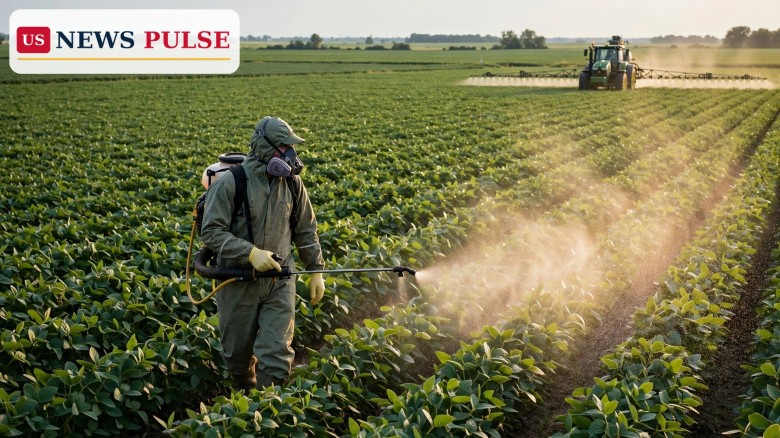
WASHINGTON. — Federal scientists have concluded that exposure to glyphosate-based herbicides is linked to blood cancers, including non-Hodgkin lymphoma and leukaemia, in a major systematic review that challenges the Environmental Protection Agency's longstanding position that the world's most widely used weedkiller is not likely to cause cancer. The review, by the Report on Carcinogens group at the National Institute of Environmental Health Sciences (NIEHS), was released as a preprint dated November 20, 2026, and was requested by the Department of Health and Human Services.
The findings land days after Bayer won court approval for a $7.25 billion settlement of tens of thousands of Roundup cancer claims. The review does not prove causation in individual cases and has not yet been peer-reviewed — but its authors say the pattern is consistent.
Key Points
- Federal scientists at the NIEHS found glyphosate-based herbicides are positively associated with lymphohematopoietic cancers, including non-Hodgkin lymphoma and leukaemia.
- The review, requested by the Department of Health and Human Services, screened more than 800 papers and narrowed the evidence to eight studies.
- Every study included had at least one positive association between glyphosate exposure and a blood cancer.
- In the Agricultural Health Study of more than 54,000 applicators, acute myeloid leukaemia risk rose with lifetime intensity of glyphosate use.
- A second NIEHS review found glyphosate caused several tumour types in lab animals and, with high confidence, harmed sperm health in animals.
What Happened
The review was published as a preprint on November 20, 2026. The NIEHS team weighed the human evidence on glyphosate and cancers of the blood and lymphatic system — non-Hodgkin lymphoma, leukaemia and multiple myeloma. From more than 800 papers, strict quality criteria left eight studies, among them the US Agricultural Health Study, the AGRICOH consortium and the InterLymph pooled analysis.
The headline result was consistency: every study contained at least one positive association between glyphosate exposure and a blood cancer. The reviewers concluded bias was unlikely to explain all of it — a careful formulation, but a striking one from a federal science group. The strongest evidence came from the Agricultural Health Study, which has followed 54,000 licensed applicators in Iowa and North Carolina for decades: acute myeloid leukaemia risk rose with lifetime intensity of use, a dose-response pattern epidemiologists weigh heavily.
Background: Decades of Dispute Over the World's Most Used Herbicide
Glyphosate is the active ingredient in Roundup, first sold by Monsanto and now owned by Bayer, and the most widely used herbicide on the planet, sprayed on farms, lawns, parks and roadsides across the United States. In 2015, the World Health Organization's cancer agency classified it as "probably carcinogenic to humans". The EPA, by contrast, has repeatedly concluded it is not likely to be carcinogenic — a split that has fuelled a decade of litigation, with tens of thousands of Roundup users who later developed non-Hodgkin lymphoma suing Bayer and Monsanto.
The legal picture shifted sharply this year. In June, the Supreme Court ruled 7-2 in the Durnell case that federal pesticide law pre-empts state "failure-to-warn" claims. Then on November 20, a Missouri judge approved Bayer's $7.25 billion settlement covering about 65,000 claims, with payouts of $10,000 to $165,000. Bayer maintains glyphosate is safe and admitted no liability.
Glyphosate Blood Cancer Link: What the NIEHS Review Found
The central finding is an association, not proof of causation in individual cases, and the distinction matters. The authors asked whether people exposed to glyphosate-based herbicides develop blood cancers more often than comparable unexposed people — and across the eight qualifying studies, the answer kept coming back positive. They also looked for reasons the pattern might mislead, and concluded bias was unlikely to explain all of it.
The Agricultural Health Study carried particular weight because it is prospective: applicators reported pesticide use before any cancer diagnosis. AGRICOH and InterLymph added support from European and North American farmworkers. A companion NIEHS review found glyphosate caused several tumour types in lab animals and, with high confidence, harmed sperm health in animals — some effects at or below the EPA's own reference dose, the level the agency regards as safe.
Reactions
David Andrews, chief science officer at the Environmental Working Group, said the findings should force a rethink at the EPA. "Another bad week for Bayer's glyphosate. This new research adds to the mounting evidence linking the weedkiller to cancer and further undermines the EPA's longstanding conclusion that it is not likely to be carcinogenic. It's time for the EPA to put public health ahead of pesticide industry interests and take meaningful action to protect Americans from glyphosate, starting with residues on the foods our kids eat."
The Environmental Working Group said the findings "further challenge" the EPA's position. Bayer has consistently defended glyphosate's safety, citing regulatory assessments including the EPA's, and did not immediately respond to the preprint.
Why It Matters
The review matters because of who wrote it. This is not an advocacy report or a single university study: it is a systematic review by federal scientists using the Report on Carcinogens framework the US government uses to classify cancer hazards. When a federal science body finds a consistent association between the country's most sprayed herbicide and blood cancers, it changes the terms of a decade-long debate.
It matters most for the farmworkers and applicators who handle glyphosate daily — the dose-response finding speaks directly to them. The animal findings on sperm health, at exposures at or below the EPA's reference dose, raise questions beyond cancer and beyond farmworkers, touching food residues and the safety margins the public relies on.
What Happens Next
The most immediate test is peer review: the preprint's conclusions will be scrutinised by independent scientists before journal publication. If they survive, pressure will build on the EPA as it completes its own fresh glyphosate review by the end of the year.
Congress and the courts are likely to pick the review up, and lawyers in the roughly 200 federal Roundup cases excluded from the settlement will seek to introduce it as evidence. Bayer is expected to argue association is not causation. The science is now moving faster than the settlement.
Frequently Asked Questions
What did the NIEHS review find about glyphosate?
Glyphosate-based herbicides are positively associated with lymphohematopoietic cancers, including non-Hodgkin lymphoma and leukaemia, across eight qualifying studies.
Has the review been peer-reviewed?
Not yet. It was released as a preprint dated November 20, 2026, and its conclusions will be tested by independent scientists before journal publication.
How many studies did the review examine?
The team screened more than 800 papers and kept eight, including the Agricultural Health Study and InterLymph.
Does this prove glyphosate causes cancer?
No. The review found a consistent association, but an association in observational studies is not proof of causation in individual cases.
What is the EPA's position on glyphosate?
The EPA has long held glyphosate is not likely to cause cancer in humans. The NIEHS findings challenge that, and a fresh EPA review is due by the end of 2026.
Read more: Missouri Judge Approves Bayer's $7.25 Billion Roundup Cancer Settlement — Calley Means Demands Wiles Preserve Records After Rogan Corruption Claims

The US News Pulse newsroom covers breaking news across the United States and the world, working from wire services, official statements and on-the-record sources. Every story is reviewed against our editorial standards before publication. Corrections and tips: info@usnewspulse.com
About our newsroomLeave a Comment