

 | Today's Date:





Senators Propose Permanent Election Security Fund From Presidential Campaign Cash
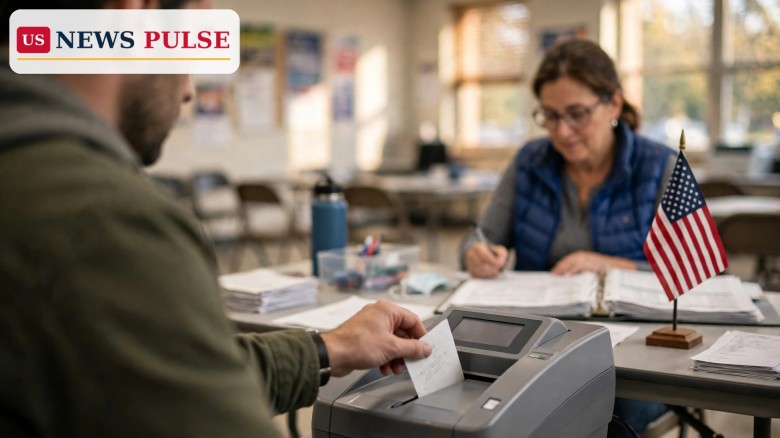
WASHINGTON. — Four senators from both parties introduced a bill on Friday, Nov. 20, 2026, to turn a little-used presidential campaign fund into a permanent Election Security Fund, giving state and local election offices steady money to protect voting systems instead of the stop-and-start grants they rely on today. The Election Infrastructure Security Act would convert the Presidential Election Campaign Fund, unused by any major-party presidential candidate since 2008, into a dedicated fund worth about $200 million a year.
Key Points
- Sens. Alex Padilla (D-Calif.), Mark Warner (D-Va.), Susan Collins (R-Maine) and Mitch McConnell (R-Ky.) introduced the bipartisan Election Infrastructure Security Act on Nov. 20, 2026.
- The bill would permanently convert the Presidential Election Campaign Fund into a dedicated Election Security Fund.
- It would raise the voluntary income-tax checkoff from $3 to $5 for individuals and from $6 to $10 for married couples filing jointly, with inflation adjustments.
- Each state would get at least $3 million a year and each territory at least $600,000, with at least 67 percent going directly to local jurisdictions.
- The bill has not become law; it still needs to pass the Senate and the House.
What Happened
The four sponsors span the Senate's leadership on elections and national security: Padilla is the ranking Democrat on the Rules Committee, which oversees federal elections; Warner is vice chair of the Intelligence Committee; Collins chairs Appropriations; and McConnell chairs Rules. They introduced the bill on Friday, Nov. 20, days after the midterm elections that handed Democrats control of both chambers starting in January.
The bill's central move is a conversion, not a new tax or a new spending programme. The Presidential Election Campaign Fund was set up to finance presidential candidates through voluntary contributions taxpayers mark on their tax returns. Participation has fallen sharply as candidates rely on private fundraising, and no major-party presidential candidate has used the programme since 2008. Congress has already redirected a combined $80 million from the fund to election-security grants across fiscal years 2024, 2025 and 2026; the new bill would make that shift permanent.
Background and Context
The proposal lands after an election cycle that exposed how unevenly election offices are funded. State and local election officials often lack the consistent federal resources needed to maintain secure systems, the sponsors said, and federal funding is limited and unpredictable, forcing officials to rely on already-strained state and local budgets.
The 2026 midterms offered fresh examples. In Westchester County, New York, ballot scanners failed on Election Day and voters placed ballots in orange bags while replacements were rolled out. In Arizona, the Justice Department referred three groups to the FBI in a voter-registration probe. In June, Padilla and Sen. Adam Schiff proposed up to $10 billion for state and local election administration.
Election Security Fund: How the Money Would Work
The bill would raise the voluntary checkoff on federal income tax returns from $3 to $5 for individuals and from $6 to $10 for married couples filing jointly, with adjustments for inflation. Sponsors cite a Bipartisan Policy Center estimate of about $200 million a year, though that is a projection, not an appropriation.
Every state would be guaranteed at least $3 million a year, and every territory at least $600,000. At least 67 percent would go to local election jurisdictions. The money could be used to modernise election technology, strengthen cybersecurity, upgrade voting equipment, protect voter registration systems, reimburse prior security investments and shorten wait times. It could not be used for litigation. The Election Assistance Commission would administer the fund, and states would publish transparent spending plans subject to public comment, with annual reports and periodic audits.
Reactions
Padilla framed the bill as common sense. "American elections are safe and secure, but in a time of rising threats at home and abroad we will ensure they stay that way with the right investments in our election infrastructure," he said.
Warner said sporadic funding is not enough. "Free and fair elections are the foundation of our democracy," he said. "Keeping our elections secure requires more than sporadic funding; it requires sustained investment." Collins said the bill would protect public confidence. "Protecting the integrity of our elections is essential to maintaining public confidence in our democratic process," she said. McConnell stressed that the bill creates no new federal spending programme. "Election security is a fundamental responsibility of government," he said. "This bipartisan legislation would put an outdated federal fund to better use."
Election groups welcomed the plan, including Responsive Gov Action and the Project for Election Infrastructure, which called it a fiscally responsible way to give officials the tools and cybersecurity protections they need.
Why It Matters
The bill matters because of the gap it is designed to close. Election security in the United States is run by thousands of local offices, many of them small, and their budgets are set by state and county governments that are themselves under strain. Federal help has arrived in bursts, which makes it hard for officials to plan multi-year upgrades to voting machines and cyber defences. A permanent fund, even a modest one, would let them schedule replacements before machines fail on Election Day rather than after.
It also matters because of the politics. Bipartisan agreement on election policy has been rare in recent years, and this bill pairs two senior Democrats with two senior Republicans. Its endorsers include the Bipartisan Policy Center and 23 state and local election associations. And the money comes from a fund that is barely used, avoiding the hardest argument in Washington — finding new money.
What Happens Next
The bill has not become law, and it faces the usual path through Congress. It would need to clear the Senate Rules Committee, which McConnell chairs, pass both chambers and be signed by the president. Democrats take control of both chambers in January after their Nov. 3 midterm victories.
The larger $10 billion proposal from Padilla and Schiff remains on the table, and the new Congress will have to decide whether to pursue the smaller, self-financing conversion, the larger appropriation, or both. Election officials are already planning for the next cycle, and the sponsors say a permanent fund would let local offices start replacing ageing equipment sooner.
Frequently Asked Questions
What is the Election Security Fund?
A proposed permanent fund for state and local election security, created by converting the little-used Presidential Election Campaign Fund.
Where would the money come from?
From the voluntary tax-return checkoff, raised from $3 to $5 for individuals and from $6 to $10 for married couples — about $200 million a year.
How much would each state get?
At least $3 million a year per state and $600,000 per territory, with at least 67 percent going directly to local jurisdictions.
What can the money be used for?
Election technology, cybersecurity, voting equipment, voter registration protections and shorter wait times — not litigation.
Has the bill become law?
No. Introduced Nov. 20, 2026, it still needs to pass the Senate and the House and be signed by the president.
Related coverage: Westchester ballot scanners down on Election Day as voters use orange bags and Arizona voter registration probe: DOJ refers three groups to FBI.

The US News Pulse newsroom covers breaking news across the United States and the world, working from wire services, official statements and on-the-record sources. Every story is reviewed against our editorial standards before publication. Corrections and tips: info@usnewspulse.com
About our newsroomLeave a Comment