

 | Today's Date:




Armenia Launches Trump Route Construction as US Takes 74% Stake in Corridor
Yerevan, Armenia — Armenia has formally launched construction of the Trump Route, the 42-kilometre transport corridor through its southern Syunik region linking mainland Azerbaijan with its Nakhchivan exclave, in a ceremony on Monday, November 23, 2026. Prime Minister Nikol Pashinyan addressed the event, while President Donald Trump sent a video message announcing a new joint venture, the TRIPP Development Company, to build and run the route. The launch came months earlier than expected — and drew a blunt warning from Iran, which borders the corridor to the south.
Key Points
- Armenia launched the Trump Route for International Peace and Prosperity (TRIPP) on Monday, November 23, 2026, with preparatory work under way in Syunik.
- The United States will hold a 74% controlling stake in the TRIPP Development Company; Armenia holds 26%.
- The 42-kilometre corridor will carry road, rail, power and fibre links between mainland Azerbaijan and Nakhchivan, with a connection onward to Turkey.
- Syunik Governor Robert Ghukasyan, speaking from Meghri where work is under way, called it "the largest project in Armenia since independence".
- Iran warned against the corridor: adviser Ali Akbar Velayati said on November 5 that if Trump and his allies "want to cross this Iranian red line, we will break their legs".
What Happened
The ceremony marked the formal start of the project's practical implementation, more than a year after the August 8, 2025, Washington declaration first set it in motion. Pashinyan addressed the event in person, while Trump appeared by video message, announcing the TRIPP Development Company and inviting the Armenian prime minister to the White House next year for the National Prayer Breakfast.
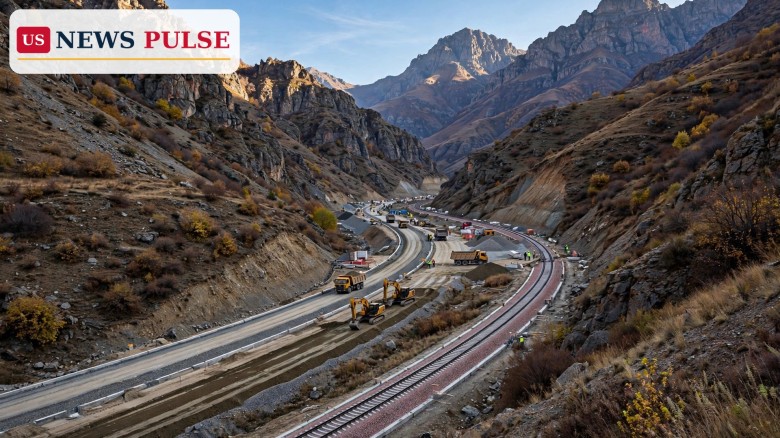
Preparatory construction has begun in Syunik, the mountainous province separating mainland Azerbaijan from Nakhchivan. Ghukasyan spoke from Meghri, where crews are already at work, and said building has started in several sections, with major construction to follow. The timing surprised many observers: as recently as October, Armenia's ambassador to the United States had suggested a groundbreaking could take place in early 2027.
Background and Context
The corridor runs about 42 kilometres, or 26 miles, through Armenian territory, connecting mainland Azerbaijan with Nakhchivan, the Azerbaijani exclave wedged between Armenia, Turkey and Iran. For decades, that strip — known as the Zangezur corridor — has been one of the most contested questions in the South Caucasus, a legacy of the Armenia-Azerbaijan conflict and of Soviet-era borders.
The breakthrough came on August 8, 2025, when Pashinyan and Azerbaijani President Ilham Aliyev signed a declaration in Washington in Trump's presence. Under the framework announced in January by Secretary of State Marco Rubio and Armenian Foreign Minister Ararat Mirzoyan, the United States will hold a 74% controlling stake in the TRIPP Development Company, with Armenia holding 26%. The company gets development rights for an initial 49 years, with a possible 50-year extension.
The structure is unusual: the route will be developed and operated by a company in which Washington is the controlling shareholder, not by either neighbouring state. For Armenia, it brings American investment and a direct American commercial presence along its southern border. For Azerbaijan, it delivers the land link to Nakhchivan it has sought for decades. For the United States, it creates a trade link across a region where Russia and Iran have traditionally held sway.
What the Trump Route Will Carry
The plans call for a highway and a railway running side by side, together with electricity transmission lines and fibre-optic cables, creating a single bundle of connections for goods, energy and data. The route will also link onward to Turkey, extending the chain toward Europe. Trump described the new company's purpose as creating new commercial routes for goods, energy and travel — a framing that presents the project as an economic venture, even though its location makes it a security matter too.
Reactions and Quotes
The strongest statement from the Armenian side came from Ghukasyan, who is overseeing the work on the ground. Speaking from Meghri, he called the project "the largest project in Armenia since independence" — a measure of what Yerevan expects from a corridor that could bring jobs, transit revenue and new infrastructure to a southern province that has long felt exposed and neglected.
The sharpest reaction came from Tehran. Iran shares a border with Armenia along Syunik and has long opposed any change to its northern frontier. Velayati, a senior adviser to Supreme Leader Ayatollah Ali Khamenei, wrote on November 5 that if Trump and his allies "want to cross this Iranian red line, we will break their legs". The warning frames the corridor as a direct challenge to Iranian interests, and a first test of whether the American-backed route can proceed without a confrontation with Tehran.
Why It Matters
The launch matters first because it turns a diplomatic declaration into physical facts on the ground. Excavators in Syunik are harder to reverse than signatures in Washington, and every kilometre of road and rail makes the corridor more real and the peace process behind it harder to unwind. For two countries that fought a war as recently as 2020, a shared project run by an American company is a new kind of guarantee.
It matters second because of the map: a working corridor gives Azerbaijan its long-sought land link to Nakhchivan and Turkey, and the region a new east-west trade route bypassing Russia and Iran. And third, Iran: Velayati's warning was explicit, and Tehran has treated its Armenian border as a strategic asset for decades. Whether the corridor proceeds smoothly or becomes a flashpoint will depend on how far Tehran is willing to go — and how firmly Washington stands behind a project in which it holds a controlling stake.
What Happens Next
The immediate next step is the move from preparatory work to major construction, with the TRIPP Development Company organising the full build-out of the road, railway, power and fibre links through difficult mountain terrain. Diplomatically, the next marker is Pashinyan's visit to the White House next year. The more consequential question is how Iran responds as construction advances, and whether Armenia and Azerbaijan can keep the wider peace process moving.
Frequently Asked Questions
What is the Trump Route, or TRIPP?
A 42-kilometre corridor through Armenia's Syunik region linking mainland Azerbaijan with Nakhchivan, carrying road, rail, power and fibre links, with an onward connection to Turkey.
Who owns the TRIPP Development Company?
The United States holds 74% and Armenia 26%, under a framework announced by Marco Rubio and Ararat Mirzoyan. Development rights run 49 years initially, with a possible 50-year extension.
Why does Iran oppose the corridor?
Iran borders Armenia along Syunik. Senior Khamenei adviser Ali Akbar Velayati wrote on November 5 that if Trump and his allies "want to cross this Iranian red line, we will break their legs".
Where did the project come from?
The August 8, 2025, Washington declaration signed by Pashinyan and Aliyev in Trump's presence.
When will the corridor be finished?
No completion date has been announced. Preparatory work began in November 2026, with major construction to follow.
Read more: Senate Republicans Mull Iran War Funding Deal; Zelenskyy Says US Wants Trilateral Trump-Putin Talks; US Energy Exports Hit Record Highs in 2026.

The US News Pulse newsroom covers breaking news across the United States and the world, working from wire services, official statements and on-the-record sources. Every story is reviewed against our editorial standards before publication. Corrections and tips: info@usnewspulse.com
About our newsroomLeave a Comment