

 | Today's Date:



Appeals Court Gives Trump a Path to Erase Hush Money Conviction - US News Pulse
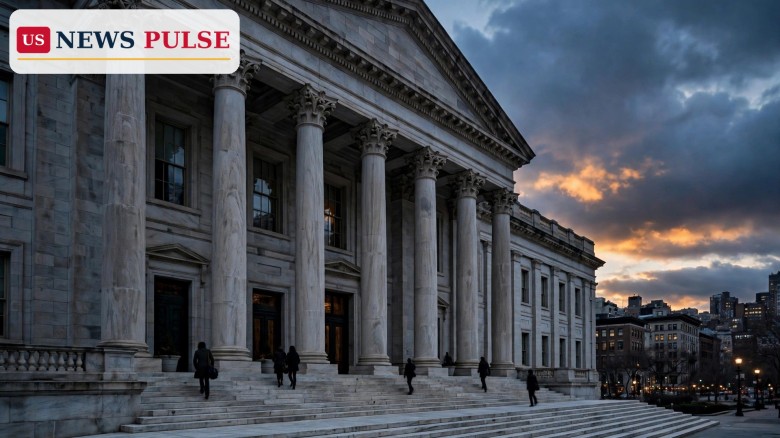
A federal appeals court has given Donald Trump a path to erasing the only criminal conviction of a sitting president. In a two-page order on Monday, November 23, 2026, a three-judge panel of the 2nd US Circuit Court of Appeals ruled that the late Judge Alvin Hellerstein was wrong to block Trump's bid to move the Trump hush money case to federal court, where he could seek to have the verdict thrown out on immunity grounds. The ruling revives a transfer fight Trump has pressed since his indictment and pauses the state appeal already under way.
Key Points
- A three-judge 2nd Circuit panel ruled on Monday, November 23, 2026, that Judge Alvin Hellerstein erred in blocking Trump's bid to move his hush money case to federal court.
- The panel ordered a federal judge to decide promptly whether Manhattan's federal court should keep the case.
- If the case stays in federal court, Trump can argue the 34-count verdict should be discarded on presidential immunity grounds.
- The decision also pauses Trump's state appeal, argued earlier in November and undecided.
- Trump praised the "prompt and correct ruling" and said the case should be "removed to federal court, and immediately overturned and dismissed".
What Happened
The panel — Judges Raymond J. Lohier Jr., John M. Walker Jr. and Jose A. Cabranes — held that Hellerstein "erred in holding that removal is categorically unavailable in a state criminal case". The judges also found Hellerstein wrong to deny that Trump had good cause for his two attempts, one after indictment, one after trial.
The order directs a federal judge to decide promptly whether the Manhattan federal court should keep the case. It does not move the case or decide whether the conviction should stand. But it reopens the door Hellerstein shut three times.
The ruling also freezes the parallel track. Trump's state appeal, argued earlier in November before New York's Appellate Division, is paused while the federal question is sorted out. Hellerstein, who rejected removal three times, died last month, and the case has not yet been assigned to another judge.
Background: The Conviction and the Long Fight to Move It
The case dates to May 2024, when a Manhattan jury convicted Trump on 34 felony counts of falsifying business records. Prosecutors said the records hid a $130,000 payment to Stormy Daniels, made by Trump's then-fixer Michael Cohen weeks before the 2016 election. Trump denies wrongdoing.
The verdict made Trump the first former president, and now the first sitting president, convicted of a crime. Justice Juan Merchan sentenced him in January 2025 to an unconditional discharge, leaving the conviction intact but imposing no punishment.
His lawyers have pursued that goal on two fronts. In the state courts, they argue the prosecution was politically motivated and the legal theory and jury instructions flawed; the Appellate Division heard those arguments on November 5 and has yet to rule. In the federal courts, they argue the case belongs in the federal system because it touches on presidential immunity.
The federal bid has a long history. Trump first sought removal after his indictment, then again after the trial. Hellerstein rejected the request three times, writing in August 2026 that "paying hush money to an adult film star or engaging in a cover-up of an embarrassment are not subsumed in presidential immunity."
Trump Hush Money Conviction: The Immunity Question
The immunity argument is the heart of the federal bid. Trump's lawyers contend the conduct behind the conviction falls within the Supreme Court's protection for official presidential acts. If the case moves to federal court, they will ask the judge there to dismiss it on that basis.
The state has resisted at every step. Prosecutors argue the payments and falsified records were private conduct, tied to the 2016 campaign rather than to any official presidential act, and that the case belongs in state court. A lawyer for the state defended Hellerstein's rulings before the panel and urged the judges to leave the case where it is.
The panel's short order does not resolve that dispute. It decides only that the federal court must take the question seriously, and that Hellerstein was wrong to treat removal as unavailable after a conviction.
Reactions and Quotes
Trump welcomed the decision quickly, praising the "prompt and correct ruling" and saying the Supreme Court's immunity decision mandates that the case be "removed to federal court, and immediately overturned and dismissed". The White House has long called the prosecution politically motivated, a claim the Manhattan district attorney's office rejects.
A retired New York judge who reviewed the state appeal called the odds of overturning the conviction "highly unlikely" — a reminder that a path to federal court is not the same as a dismissal.
Why It Matters
The case matters because it is the only criminal conviction of a sitting president, and its fate will shape how far presidential immunity reaches. If a transfer leads a federal judge to dismiss the case on immunity grounds, it would narrow state prosecutors' ability to bring cases against a president. If the judge keeps the case but rejects immunity, the conviction is likely to stand.
It also tests the two-court strategy. Parallel appeals are unusual, and the hearings this month showed the friction: two courts weighing the same conviction at once. The 2nd Circuit's answer decides whether that can continue.
What Happens Next
The case now returns to the Manhattan federal court, where a judge — yet to be assigned after Hellerstein's death — must decide promptly whether to keep it. If the court retains the case, Trump's lawyers are expected to ask for dismissal on immunity grounds, and the state is expected to oppose it.
Separately, the state Appellate Division's ruling remains pending, its proceedings now paused. Either side is likely to appeal further, and the dispute could eventually reach the Supreme Court.
Frequently Asked Questions
What did the Second Circuit decide on Monday?
It ruled Hellerstein was wrong to block Trump's bid to move his hush money case to federal court, and ordered a federal judge to decide promptly whether to keep it.
What was Trump convicted of?
In May 2024, a Manhattan jury convicted him on 34 felony counts of falsifying business records over a $130,000 payment to Stormy Daniels. He received an unconditional discharge, with no punishment.
Why does Trump want the case in federal court?
So his lawyers can argue the verdict should be discarded on presidential immunity grounds under the Supreme Court's immunity ruling.
Does the ruling erase the conviction?
No. It only revives the bid to move the case. A federal judge must still decide whether to keep it and whether immunity requires dismissal.
Related:

The US News Pulse newsroom covers breaking news across the United States and the world, working from wire services, official statements and on-the-record sources. Every story is reviewed against our editorial standards before publication. Corrections and tips: info@usnewspulse.com
About our newsroomLeave a Comment