

 | Today's Date:


Satellite Images Show Smoke Plume Over Ras Tanura Refinery After Houthi Strike
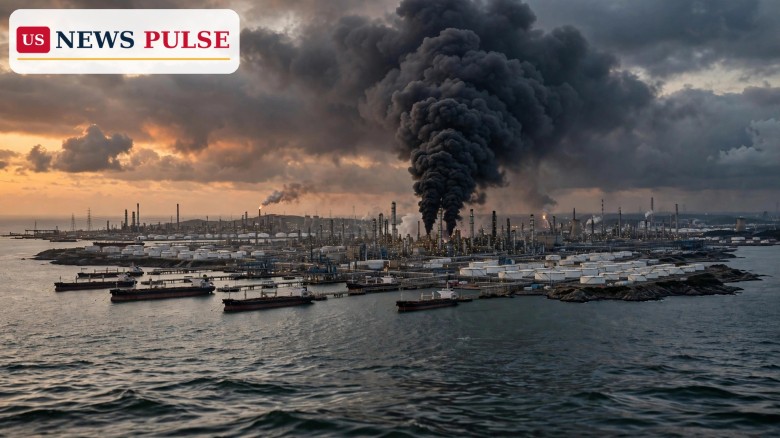
Satellite images taken on Wednesday show a huge plume of black smoke rising over Saudi Arabia's Ras Tanura peninsula, a day after Yemen's Houthis said they had struck the kingdom's biggest oil refinery. The images, published on Thursday, are the first visual sign of a fire at the site, which sits at the heart of one of the world's largest crude oil export terminals. A shipping source told CNN on Thursday that oil loadings at the terminal were suspended after the attack, and it was not clear whether they had resumed. Brent rose 3.5 percent on Wednesday as traders priced in the risk to global supply.
Key Points
- Satellite images from Wednesday, November 25, 2026, show a huge black smoke plume over Ras Tanura after the Houthis said they hit Saudi Arabia's largest refinery.
- A shipping source told CNN on Thursday, November 26, that oil loadings at the terminal were suspended; it was unclear whether they had resumed.
- Houthi spokesman Yahya Saree said the strikes were "accurate and direct" and caused a fire at the 550,000-barrel-a-day facility.
- The Saudi-led coalition said it intercepted and destroyed four drones over Ras Tanura on Wednesday, with falling debris but no injuries.
- Brent rose 3.5 percent on Wednesday and WTI 2 percent, with Brent at $94.71 a barrel in early Asian trading on Thursday.
What Happened
Yemen's Iran-backed Houthis said on Wednesday that they had attacked the Ras Tanura refinery, the largest in Saudi Arabia, and claimed the strike caused a fire. Satellite imagery taken the same day and published on Thursday showed a thick column of black smoke rising from the peninsula, the first independent visual evidence of a blaze at the site. CNN reported that a shipping source told the network on Thursday that oil loadings at the terminal had been suspended, with no word on whether they had restarted.
The Saudi-led coalition said its air defences intercepted and destroyed four drones in Ras Tanura on Wednesday, with falling debris but no injuries, and did not confirm a fire or damage. Saudi Aramco has not commented, and CNN has not independently verified the attacks. In the same Wednesday statement, the Houthis also claimed a strike on Riyadh's King Abdullah Financial District, which Saudi authorities said wounded 11 people, the third such attack this month in the capital. Saudi-led airstrikes on Sanaa and Hodeidah followed on Thursday.
Background: A Campaign Against Saudi Energy Sites
Ras Tanura is one of the most important energy sites on earth. Its refinery can process 550,000 barrels of crude a day, and the peninsula forms one of the world's largest crude oil export terminals, loading tankers bound for Asia, Europe and beyond. Any disruption there matters far beyond Saudi Arabia.
The Houthis have attacked Saudi energy sites for months, and the campaign escalated sharply this autumn. On October 30, the group said it had struck Ras Tanura, the Rabigh refinery and the Abqaiq facility, and the coalition said it intercepted a cruise missile aimed at the kingdom's west. Oil prices surged that day, with Brent climbing above $117 a barrel.
The attacks have since spread beyond refineries. On November 24, the Houthis claimed a strike on a tower in Riyadh, and on November 25 they said they had hit Ras Tanura and the capital's financial district in one day. That claim carried a caveat: the fire was unverified. Thursday's images changed that, turning an unconfirmed claim into visible evidence of a blaze. At sea, tankers have repeatedly hit mines near the Strait of Hormuz, the latest a fourth tanker exploding east of the strait.
Ras Tanura Refinery Strike Puts the World's Biggest Oil Terminal in the Crosshairs
The images matter because they settle the question left open by Wednesday's claim: whether anything was actually burning at Ras Tanura. A huge black smoke plume, visible from space, is hard to explain away. What they cannot show is how much damage was done, which units were hit, or how long the refinery and terminal will be affected.
The suspension of oil loadings is the clearest sign the attack had a real operational effect. Ras Tanura loads crude onto tankers around the clock, and a halt ripples through shipping schedules and into the oil market. The shipping source could not say whether loadings had resumed, and Aramco has said nothing, so the images are the strongest evidence so far but not a full damage assessment.
Reactions
Houthi spokesman Yahya Saree called the strikes "accurate and direct" and said they had caused a fire at Ras Tanura, as retaliation for Saudi strikes on Yemen. The group also claimed the Riyadh financial district strike in the same statement.
The Saudi-led coalition said its air defences destroyed four drones over Ras Tanura on Wednesday, and on Thursday its aircraft hit "operational capabilities" at Hodeidah port. The oil market moved before the images appeared: Brent finished 3.5 percent higher on Wednesday and WTI rose 2 percent, with Brent at $94.71 in early Asian trading on Thursday.
Why It Matters
Ras Tanura loads a large share of the crude exports of Saudi Arabia, the world's biggest oil exporter. A sustained disruption would tighten global supply, push fuel prices higher everywhere, and add to inflation pressures. The strike also shows how far the conflict has spread: what began as a war in Yemen now reaches the Saudi capital, the kingdom's biggest refinery and the Gulf's shipping lanes. For the United States, the stakes are direct, with higher oil prices feeding into gasoline prices at home and American bases and warships stationed across the Gulf.
What Happens Next
First, whether oil loadings at Ras Tanura have resumed. A brief suspension will fade quickly; a long one will push Brent higher, and Aramco's first statement will be watched for damage detail. The second is what the coalition does next: its Thursday strikes on Sanaa and Hodeidah suggest more force, and the Houthis show no sign of stopping. The third is diplomatic. With the fighting now hitting world energy supply directly, pressure for a ceasefire, or for more military deployments, will grow.
Frequently Asked Questions
What is Ras Tanura?
Ras Tanura is a peninsula on Saudi Arabia's Gulf coast with the kingdom's largest refinery, 550,000 barrels a day, and one of the world's largest crude export terminals.
What did the satellite images show?
Images from Wednesday, November 25, 2026, showed a huge plume of black smoke over the peninsula, the first visual evidence of a fire after the Houthis claimed the strike.
Has the damage been confirmed?
Not fully. The images confirm a fire and loadings were suspended, but Aramco has not commented and CNN has not independently verified the attacks.
Why did oil prices rise?
Brent rose 3.5 percent on Wednesday on fears the strike could disrupt exports from a major oil terminal. It was at $94.71 a barrel in early Asian trading on Thursday.
What happens next?
Attention turns to whether oil loadings resume, what Aramco says, and whether the cycle of attacks and airstrikes continues.
Related coverage: the Houthis' original Ras Tanura claim, the Riyadh attack that injured 11 people, and the fourth oil tanker to explode near the Strait of Hormuz.

The US News Pulse newsroom covers breaking news across the United States and the world, working from wire services, official statements and on-the-record sources. Every story is reviewed against our editorial standards before publication. Corrections and tips: info@usnewspulse.com
About our newsroomLeave a Comment