

 | Today's Date:





Earth Records Six Straight Days Above 2C in First-Ever Streak, Peaking at 2.24C
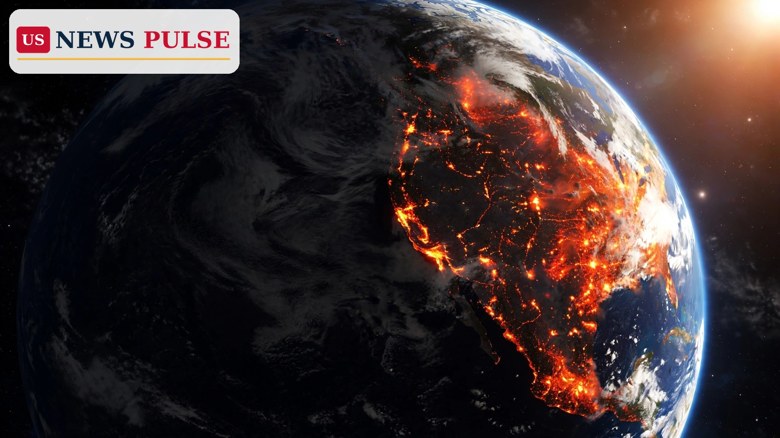
For the first time in recorded history, Earth's daily temperature has stayed more than 2°C above pre-industrial levels for six consecutive days, peaking at a record 2.24°C, according to Copernicus Climate Change Service data reported by The Guardian on Tuesday, November 25. The streak, still running when the figures were published, smashes the previous single-day record of 2.05°C set in 2023. Scientists say the spike is driven by long-term human-caused warming from burning fossil fuels, amplified by an exceptionally strong El Niño nearing its peak.
Key Points
- Global daily temperatures stayed above 2°C over the 1850-1900 pre-industrial baseline for six straight days, a first.
- The daily peak was a record 2.24°C above the baseline on Monday, November 23, beating the 2023 single-day record of 2.05°C.
- Only two earlier periods crossed 2°C, in November 2023 and February 2024, and neither lasted as long nor reached as high.
- The spike is driven by long-term warming from fossil fuels plus an exceptionally strong El Niño nearing its peak.
- Six days above 2°C does not breach the Paris Agreement, measured as a long-term average.
What Happened
The record run began late last week. A reading of 2.12°C on Friday, November 20, was itself the hottest day on record at the time, overtaking the 2.05°C mark set in 2023. Temperatures kept climbing and peaked on Monday, November 23, at 2.24°C above the 1850-1900 baseline, the standard pre-industrial reference. The streak then ran for six consecutive days and was still ongoing when The Guardian reported the figures on Tuesday, November 25, with similar levels forecast for several more days.
The scale of the jump is what startled researchers. The new peak beat the 2023 record by nearly two-tenths of a degree, a large margin where records are usually broken by hundredths, and the run stands apart from the only two earlier crossings of the 2°C line, in November 2023 and February 2024, both shorter and cooler.
Background: The Earth 2C Record in Context
The streak arrives in a year that has already rewritten the climate books. October 2026 was the warmest October on record globally, averaging 1.75°C above the pre-industrial level, and Copernicus has said 2026 is virtually certain to exceed 1.5°C for the full calendar year, only the second year ever to do so after 2024. October's record heat put 2026 on course to pass 1.5°C for the year, and the World Meteorological Organization said 2026 is on track to be one of the four warmest years ever recorded. The COP31 talks in Turkey then collapsed without agreement, leaving governments without a new plan as the planet posts its most extreme daily readings.
Earth 2C Record: What Is Driving the Heat
Two forces are combining to produce the spike. The first is long-term warming from burning fossil fuels, which has lifted the planet's baseline by about 1.44°C on a long-term average, according to Copernicus. The second is an exceptionally strong El Niño, the natural Pacific warming pattern that releases stored ocean heat into the atmosphere and pushes global temperatures higher for months. This El Niño is nearing its peak, and its timing explains why the record has fallen now, in late November, rather than during the northern summer.
Scientists stress what the streak does not mean. Six days above 2°C does not breach the Paris Agreement, because its limits are measured as long-term averages over many years, not daily readings. A simple extrapolation puts 1.5°C around 2029, against the agreement's own projection of 2042: a daily spike is a warning, not a verdict, but the direction of travel is unmistakable.
Reactions
Copernicus strategic lead Samantha Burgess called the readings "an exceptional global temperature anomaly". Berkeley Earth researcher Zeke Hausfather said the 2023 record had been "smashed", underlining that this is not a marginal new high but a decisive break with the previous benchmark.
The reaction from the scientific community has been one of alarm rather than surprise. Climate researchers have warned for years that rising greenhouse gas concentrations combined with a strong El Niño would produce exactly this kind of record, and the 2.24°C peak is being read as confirmation that the warnings were, if anything, conservative. With COP31 ending without agreement, campaigners argue the gap between what the science shows and what governments are doing has never been wider, and the hottest day on Earth was recorded not in high summer but in late November.
Why It Matters
The streak matters first because of the speed of change. The previous single-day record of 2.05°C was set only in 2023, and it has now been beaten by nearly 0.2°C within three years. Records that used to stand for decades are falling in quick succession, and six days shows the extreme heat is no longer a one-day spike but a sustained state.
It matters second because of the 2°C threshold itself. The Paris Agreement aims to hold warming well below 2°C and to pursue efforts to limit it to 1.5°C. Daily readings above 2°C do not break that agreement, but they show how close the planet now sits to the line. The UN's climate report warned that 2026 would rank among the four hottest years on record, and the November streak confirms it will be one of the hottest years ever measured.
What Happens Next
The streak was still ongoing when the figures were published on Tuesday, November 25, and Copernicus data suggested similar levels would persist for several more days. The key question now is how long the run lasts and whether the daily peak climbs higher still before the El Niño begins to fade.
Attention will turn to the El Niño itself. The event is nearing its peak, and as it weakens, daily temperatures should ease back from the 2°C line. But the underlying warming from fossil fuels will not ease, so the next strong El Niño is likely to push daily readings higher again, and for longer.
Frequently Asked Questions
What is the new Earth temperature record?
Global daily temperatures stayed more than 2°C above pre-industrial levels for six consecutive days, peaking at a record 2.24°C on Monday, November 23, 2026, per Copernicus.
Does six days above 2°C breach the Paris Agreement?
No. The Paris Agreement limits are measured as long-term averages over many years, not daily readings. Copernicus puts the long-term average warming at 1.44°C.
What caused the record streak?
Long-term warming from burning fossil fuels, combined with an exceptionally strong El Niño nearing its peak.
What was the previous record?
The previous single-day record was 2.05°C, set in 2023. The only earlier crossings were in November 2023 and February 2024, and neither lasted as long nor reached as high.
How long will the streak last?
The streak was still ongoing on Tuesday, November 25, and was forecast to persist at similar levels for several more days.

The US News Pulse newsroom covers breaking news across the United States and the world, working from wire services, official statements and on-the-record sources. Every story is reviewed against our editorial standards before publication. Corrections and tips: info@usnewspulse.com
About our newsroomLeave a Comment