

 | Today's Date:



India-US Trade Deal Nears Completion as Goyal Hails US 17% Tariff Cap Offer
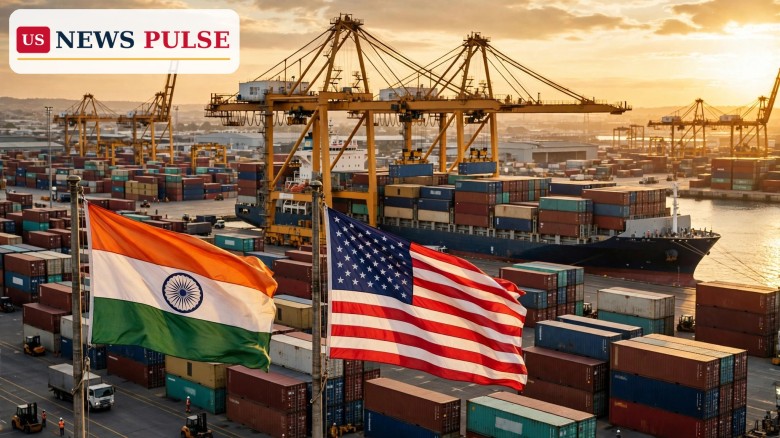
India's long-awaited trade deal with the United States is close to completion, Trade Minister Piyush Goyal said on Friday, November 27, 2026, raising hopes that months of stop-start negotiations are finally nearing an end. Speaking online to an industry conference, Goyal said the deal "is close to culmination" and that the process that had held it back "is now taking some shape". His comments came two days after US Trade Representative Jamieson Greer said Washington would cap tariffs on Indian imports at 17% if an agreement is reached, sparing New Delhi from a rise to 25%.
Key Points
- Trade Minister Piyush Goyal said on Friday that the India-US trade deal "is close to culmination".
- US Trade Representative Jamieson Greer said Washington would cap tariffs on Indian imports at 17% if a deal is reached, averting a rise to 25%.
- India's trade ministry is examining the USTR notice and told Washington that India has no structural excess capacity in any industry.
- New Delhi engaged "constructively" in the capacity investigation and wants trade concerns handled inside the pact talks.
- No signing date has been announced, and the final terms still need settling.
What Happened
Goyal spoke on Friday to an industry conference held online, giving the clearest signal yet that the two sides are near the finish line. "The process and pathway, which was always something which held back finalising the deal, is now taking some shape," he said, adding that the agreement "is close to culmination".
His remarks followed Greer's statement on Wednesday that Washington would cap tariffs on Indian imports at 17% if a deal is reached, averting a rise to 25%. India's trade ministry said it was examining the USTR notice.
New Delhi also addressed a separate strand, saying India had told Washington it did not have structural excess capacity in any industry and had engaged "constructively" in the investigation. It called for trade concerns to be tackled inside the pact talks themselves.
Background and Context
The deal has been in the works for most of the year. A month ago, on October 27, the White House described the US-India trade talks as "productive", with Goyal saying then that most discussions had concluded and only fine-tuning remained. Friday's comments suggest that fine-tuning is now close to done.
The tariff question has hung over the talks from the start. Under a framework agreed on February 7, tariffs were cut from 50% to 18%, and a separate Section 301 duty of 10% has applied since July 24. Against that backdrop, Greer's offer of a 17% cap is a meaningful step down from the threatened 25%.
The talks have carried a much wider agenda. India has signalled an intent to buy $500 billion of American goods, while dairy has been one of the hardest sticking points, with New Delhi wary of opening its farm sector. Washington has also been rolling out new duties elsewhere, including new Section 301 tariffs on 14 partners announced this week. A settled deal with India would stand out as one of the few tariff disputes actually being closed.
India-US Trade Deal: What the 17% Tariff Cap Would Mean
The 17% cap matters most for what it prevents. Had the rate risen to 25%, Indian exporters would have faced a materially higher cost of selling into the American market. A cap at 17% would instead lock in a rate below the threatened level and below the 18% set under the February framework, giving businesses a fixed ceiling.
For India, the cap removes months of uncertainty for exporters. For Washington, the offer is a bargaining chip: a lower ceiling in exchange for the market access and purchase commitments India has put on the table. But 17% is still a substantial tariff, and the final text will decide which goods it covers and what India gives in return. Until the agreement is signed, the cap remains an offer, not a settled rate.
Reactions and Quotes
Goyal's own words carried the news. "The process and pathway, which was always something which held back finalising the deal, is now taking some shape," he told the industry conference, before declaring the deal "is close to culmination". The phrasing pointed to the mechanics of the negotiation, not just its politics, as the thing that had finally moved.
Greer's statement supplied the substance behind the optimism. By putting a number on the table — a 17% cap if a deal is reached — the US trade representative gave negotiators a concrete landing zone and Indian exporters a figure to measure against the threatened 25%.
India's trade ministry struck a more cautious note, saying it was examining the USTR notice, a sign New Delhi is not treating the offer as a done deal. On the capacity investigation it was firmer: India had engaged "constructively" and denied any structural excess capacity. Neither side has given a date for signing, or said what the last obstacles are.
Why It Matters
The deal matters because it would close one of the longest-running tariff disputes of the year between two of the world's largest economies. Months of uncertainty have weighed on Indian exporters and on American firms hoping to sell more into India, and a signed agreement would replace that uncertainty with fixed terms, at least for the goods it covers.
It also matters as a test of how Washington handles trade disputes in this tariff-heavy year. The administration has used duties aggressively, and a negotiated settlement with India would show the tariff lever can end in a deal rather than a permanent standoff. For India, the stakes go beyond tariffs: the $500 billion purchase intent and how far New Delhi opens sensitive sectors such as dairy will shape the deal's real value.
What Happens Next
The immediate next step is in New Delhi, where the trade ministry is examining the USTR notice and the 17% cap offer. Its response will show whether the two sides are aligned on the headline number or still apart on the details.
After that, negotiators must settle the final text: which goods the cap covers, what market access India offers, and how agriculture is handled. If the text is settled, the announcement could come quickly; if new obstacles emerge, the talks could drift again.
FAQ
What did Piyush Goyal say about the India-US trade deal?
He said on Friday, November 27, 2026 that the deal "is close to culmination" and that the process that had held it back "is now taking some shape".
What tariff cap did the US offer?
US Trade Representative Jamieson Greer said Washington would cap tariffs on Indian imports at 17% if an agreement is reached, averting a rise to 25%.
What is the US capacity investigation about?
Washington has been investigating whether Indian industries have structural excess capacity. India says it has none in any industry and engaged "constructively".
When will the deal be signed?
No signing date has been announced. India's trade ministry is examining the USTR notice, and the final terms need settling.
How does this follow the October talks?
On October 27 the White House called the talks "productive", with Goyal saying only fine-tuning remained. Friday's remarks suggest that fine-tuning is now close to complete.

The US News Pulse newsroom covers breaking news across the United States and the world, working from wire services, official statements and on-the-record sources. Every story is reviewed against our editorial standards before publication. Corrections and tips: info@usnewspulse.com
About our newsroomLeave a Comment