

 | Today's Date:



Hamas Weighs Response After Israel Kills Three Senior Officials in Gaza
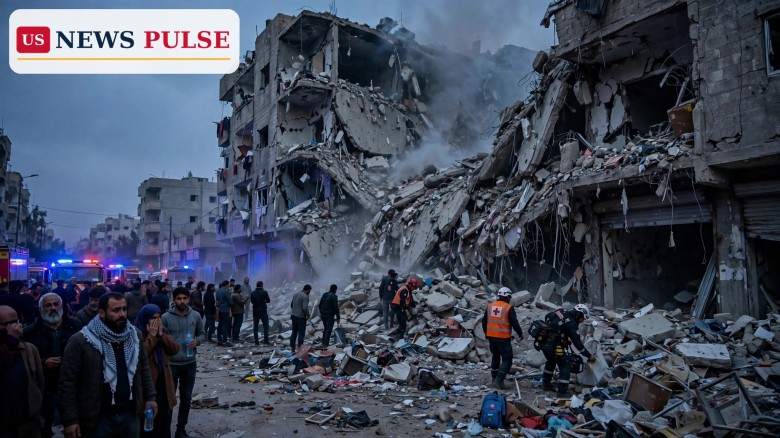
Hamas is weighing how to respond after Israel killed a third senior official in three days, a warning from the group's chief that the fragile, year-old Gaza ceasefire may be reaching breaking point. Khalil al-Hayya, Hamas's chief negotiator and political leader in Gaza, said on Thursday that the group would consult other Palestinian factions about a response to what he called Israel's "policy of daily killing", accusing the ceasefire's guarantors of silence. The warning came hours after an overnight airstrike on an apartment in Deir al-Balah killed Khaled Abu Nada, a member of Hamas's political bureau who ran its economy portfolio, along with his wife.
Key Points
- Hamas chief Khalil al-Hayya said on Thursday, November 26, that the group will discuss a response with other Palestinian factions.
- Khaled Abu Nada, a Hamas political bureau member, was killed with his wife in an overnight strike in Deir al-Balah.
- Abu Nada was the third senior Hamas official killed since Tuesday, after two internal security chiefs.
- At least 10 people were killed in Gaza on Thursday, including a 12-year-old boy and two Hamas police officers.
- Israel says it has killed about 80 Hamas militants in the past month and that "no terrorist is immune".
What Happened
The latest killing came in the early hours of Thursday, when an Israeli airstrike hit an apartment in Deir al-Balah, in central Gaza. Abu Nada was killed alongside his wife. He sat on Hamas's political bureau and served as deputy education minister, but his key role was economic: he ran the group's economy portfolio, overseeing its banks and investment network.
He was the third senior official killed in three nights. On Tuesday, Naim Mohammed Ashour Abu Nahal, head of Hamas's internal security apparatus in Gaza, was killed. On Wednesday, Mohammed Abu al-Aouf, who headed internal security in northern Gaza, died in a strike on the Al-Shati camp with his wife and two daughters.
Thursday was the week's bloodiest day in Gaza. At least 10 people were killed, including a 12-year-old boy, two Hamas police officers and a 62-year-old man shot in the Bureij camp.
Background: A Ceasefire Under Strain
The ceasefire that was supposed to end the war in Gaza has held on paper for about a year, but it has been tested almost daily. Israel has continued strikes it describes as responses to violations or operations against Hamas figures it says are rebuilding the movement's capabilities. Hamas and Gaza health authorities have reported a steady toll, and each round of killings has raised the same question: how much can the agreement absorb before one side treats it as broken?
The deal was built around a phased end to the fighting, the release of hostages, the flow of aid and a political framework overseen by an international Board of Peace associated with President Donald Trump. Hayya accused the board and the deal's other guarantors of a "policy of silence" while Israel kept killing. Earlier this month Israel killed Jamal Abu Saeed, head of operations in Hamas's military intelligence, in a Gaza City strike. That killing followed the same pattern as this week's, as did seven people killed in Gaza strikes and a drone strike in Jabaliya.
Hamas Response Could Decide the Ceasefire's Future
What makes Hayya's statement significant is that it moves Hamas from condemning the strikes to openly weighing a response. Until now the group has absorbed the killings while working within the ceasefire framework. Hayya said the question would be discussed with other Palestinian factions, suggesting a shared position rather than a solo act.
The options are limited and risky. A return to rocket fire would almost certainly draw a far heavier Israeli response and could end the ceasefire outright. A political response, such as suspending cooperation or appealing to the guarantors, would be safer but might look like weakness after three senior figures were killed in three days.
Reactions and Quotes
Hayya's statement was the clearest signal yet that Hamas's patience is wearing thin. "The equation of killing and blockade cannot be accepted under the (ceasefire) agreement," he said, framing the strikes and the restrictions on Gaza as a breach of the deal itself. He accused the Board of Peace and the guarantors of a "policy of silence".
Hamas confirmed Abu Nada's death and condemned the targeting of what it called academics and civilian figures as a "heinous crime". By describing Abu Nada as a civilian administrator, the group argues the strike crossed a line from targeting fighters to targeting the people who run Gaza's civilian institutions.
Prime Minister Benjamin Netanyahu and Defence Minister Israel Katz said Israel has killed about 80 Hamas militants in the past month, presenting the strikes as a continuing security operation. Katz has said that "no terrorist is immune". The gap between the two positions is the core of the crisis, and with no neutral arbiter, each new killing widens it.
Why It Matters
The stakes go beyond the three men killed this week. The Gaza ceasefire is the only framework holding back a return to full-scale war, and the basis for aid into Gaza, rebuilding and the political process the Board of Peace was created to oversee. If Hamas responds with force, the ceasefire could collapse quickly.
The episode also tests the guarantors' credibility. A deal that cannot stop the daily killing of senior officials on one side, or give the other side a reason to stop striking, will lose the confidence of both. For the United States, closely associated with the Board of Peace, a collapse would undermine the claim that the agreement is a success.
What Happens Next
The immediate question is what Hamas and the other Palestinian factions decide. Hayya said the response would be discussed with the factions, and that consultation is now under way. Any decision is likely to be announced publicly, and its form — a statement, a suspension of cooperation or a military action — will be the clearest signal of whether the ceasefire survives. For now, Gaza waits.
Frequently Asked Questions
Who was Khaled Abu Nada?
A member of Hamas's political bureau and deputy education minister, Abu Nada ran the group's economy portfolio. He was killed with his wife in an overnight strike in Deir al-Balah.
Why is Hamas considering a response now?
Three senior Hamas officials have been killed in three consecutive nights, and at least 10 people died in Gaza on Thursday alone. Hamas chief Khalil al-Hayya said the group will consult other Palestinian factions about a response.
Is the Gaza ceasefire still in force?
Yes, formally. The agreement has been in place for about a year, but strikes have continued throughout, and both sides accuse the other of violating it. This is its most serious test since it was signed.
What has Israel said about the strikes?
Prime Minister Benjamin Netanyahu and Defence Minister Israel Katz said Israel has killed about 80 Hamas militants in the past month. Katz has said that "no terrorist is immune".
What happens next?
Hamas will discuss a response with other Palestinian factions, and the ceasefire's guarantors will come under pressure to intervene. Whether Israel pauses its strikes will be a key sign of where the agreement is heading.

The US News Pulse newsroom covers breaking news across the United States and the world, working from wire services, official statements and on-the-record sources. Every story is reviewed against our editorial standards before publication. Corrections and tips: info@usnewspulse.com
About our newsroomLeave a Comment