

 | Today's Date:


Kurdistan Protests Erupt as Baghdad Seizes Oilfields and Border Crossings
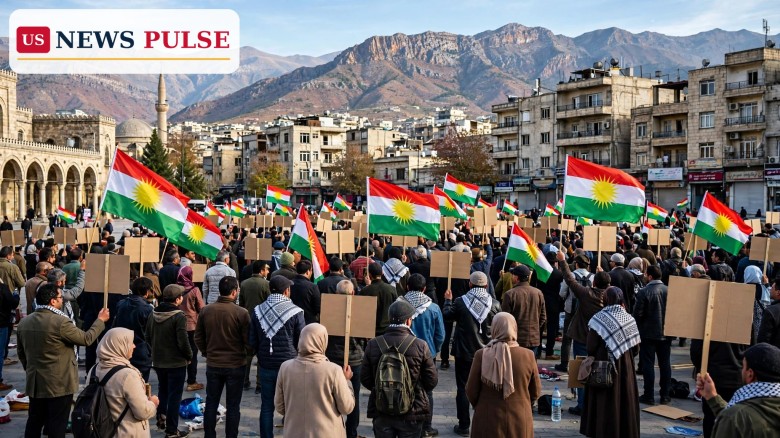
Thousands of Kurds took to the streets of Erbil, Duhok and other cities on Thursday, November 26, 2026, to protest Baghdad's moves to seize control of Kurdish-run oilfields and border crossings, a day after Iraq's highest court ruled that federal forces may deploy along every international border, including inside the Kurdistan Region. The Kurdistan protests brought rival Kurdish parties together, marching under a banner in Erbil reading "Kurdistan Region will not submit to an unconstitutional decision".
Key Points
- Thousands of Kurds protested on November 26 in Erbil, Duhok and other cities against Baghdad's takeover of Kurdish-run oilfields and border crossings.
- Iraq's Federal Supreme Court ruled on November 25 that Baghdad may deploy federal forces along all international borders, including inside the Kurdistan Region.
- On November 24, Prime Minister Ali al-Zaidi ordered the federal Oil Ministry to manage oilfields in Kirkuk, Nineveh, Salahuddin and Diyala.
- On November 26, Iraqi border forces closed two Kurdish-run crossings: al-Waleed with Syria and Bashta with Iran.
- Baghdad denies that army units are advancing on the Kurdistan region, and Iraq's top leaders have agreed to a national dialogue.
What Happened
The protests erupted as Baghdad moved on two fronts at once. Thousands gathered in Erbil, the Kurdish capital, in Duhok and in other cities Their anger was aimed at orders from Prime Minister Ali al-Zaidi that would strip the Kurdistan Regional Government, known as the KRG, of control over the oilfields and border crossings it has run for years.
On Tuesday, al-Zaidi ordered the federal Oil Ministry to take over oilfields under Kurdish security control in Kirkuk, Nineveh, Salahuddin and Diyala, and ordered the Border Ports Authority to take over all KRG-run crossings, with the KRG permitted to export crude only through the federal Oil Ministry. On Thursday, Iraqi border forces closed two KRG-run crossings: al-Waleed, with Syria in Nineveh province, and Bashta, with Iran in Halabja province.
The moves followed a ruling on Wednesday by Iraq's Federal Supreme Court that Baghdad may deploy federal forces along all international borders, "including the borders located within the territories administered by the Kurdistan Region". The court also ruled that KRG authority covers only land the region administered on March 19, 2003, the day the United States-led invasion of Iraq began.
Background: A Long Fight Over Oil, Land and Authority
The Kurdistan Region has governed itself with wide autonomy for decades, running its own security forces and managing oilfields and border crossings. But the limits of that autonomy have never been settled, and the disputed territories around Kirkuk, Nineveh, Salahuddin and Diyala have been contested between Baghdad and Erbil for generations. Oil is at the heart of it: whoever controls the fields and export routes controls a share of Iraq's most valuable resource.
Al-Zaidi's crackdown is part of a wider campaign to bring armed groups and smuggling networks under state control. Just a week earlier, he ordered the army to prepare to enter Jurf al-Sakhar, south of Baghdad, where the government accuses the Iran-aligned Kataib Hezbollah militia of running a smuggling operation. Iraqi forces entered the Kataib Hezbollah stronghold of Jurf al-Sakhar after an oil-smuggling probe The Kurdistan orders extend the same logic north: Baghdad says it is asserting state authority over oil, borders and weapons, wherever they are.
The region has also been hit from the air this year. A drone attack halted Iraq's Khor Mor gas field, cutting two-thirds of Kurdistan's power, after a strike late on Sunday, November 8, shut down production and cut gas to five power stations.
Kurdistan Protests: What Baghdad Wants and What Erbil Fears
For Baghdad, the goal is one state, one oil policy and one border authority. Al-Zaidi, 41, a multimillionaire businessman and political novice who came to power in a compromise just six months ago, has staked his young government on proving the state can impose its writ everywhere, from militia strongholds south of Baghdad to the oilfields and crossings of the north. For Erbil, the fear is that the court ruling and the orders amount to the dismantling of Kurdish autonomy by legal means.
Reactions and Quotes
The clearest message from the streets came from the banner carried through Erbil: "Kurdistan Region will not submit to an unconstitutional decision". It was a direct challenge to the Federal Supreme Court's ruling, framing the dispute as a constitutional one, not merely a quarrel over oil money.
The court's own words were just as direct. Its ruling said Baghdad may deploy federal forces along all international borders, "including the borders located within the territories administered by the Kurdistan Region". That sentence is now the legal foundation for the Oil Ministry orders, the Border Ports Authority takeover and the closure of the al-Waleed and Bashta crossings. Baghdad, for its part, has tried to calm fears of a military confrontation: the government denies that army units are advancing on the Kurdistan region. At a meeting at the Baghdad Palace on Wednesday, Iraq's top leaders agreed to a national dialogue, bringing together President Nizar Amedi, Parliament Speaker Haibat Al Halbousi and Supreme Judicial Council head Faiq Zaidan.
Why It Matters
Iraq's stability depends on a bargain between Baghdad and Erbil that has held, uneasily, for years. If Baghdad takes the oilfields and crossings and the Kurds accept it, the federal government will have asserted more authority over the north than at any time since 2003. If the Kurds resist, Iraq faces a political crisis inside its own borders, with rival security forces and competing claims to the same oilfields. The economics matter too: oil is Iraq's lifeline, and the fields in Kirkuk, Nineveh, Salahuddin and Diyala are valuable prizes. The United States has pressed Iraq over its oil policy before, including pushing Baghdad to leave OPEC.
What Happens Next
The national dialogue agreed at the Baghdad Palace meeting is the first test. President Amedi, Speaker Al Halbousi and judicial chief Zaidan are now part of an effort to talk the crisis down, but no date or format has been announced, and the protests have not stopped. The key questions are whether Baghdad will press ahead with deploying federal forces to the borders, whether the closed crossings at al-Waleed and Bashta reopen, and whether Kurdish crude keeps flowing only through the federal Oil Ministry.
Frequently Asked Questions
Why are Kurds protesting?
Thousands protested on November 26 against Baghdad's moves to take over Kurdish-run oilfields and border crossings, after Iraq's top court backed federal troop deployments along all borders, including inside the Kurdistan Region.
What did Iraq's Federal Supreme Court rule?
On November 25, the court ruled Baghdad may deploy federal forces along all international borders, including those inside the Kurdistan Region, and that KRG authority covers only land administered on March 19, 2003.
Which border crossings were closed?
On November 26, Iraqi border forces closed two Kurdish-run crossings: al-Waleed with Syria, in Nineveh province, and Bashta with Iran, in Halabja province.
What happens to Kurdish oil exports?
Under Prime Minister al-Zaidi's November 24 orders, the federal Oil Ministry will manage the oilfields, and the KRG may export crude only through the federal Oil Ministry.

The US News Pulse newsroom covers breaking news across the United States and the world, working from wire services, official statements and on-the-record sources. Every story is reviewed against our editorial standards before publication. Corrections and tips: info@usnewspulse.com
About our newsroomLeave a Comment