


 | Today's Date:



Justice Department Resignations Grow as Two More Top Officials Quit Friday
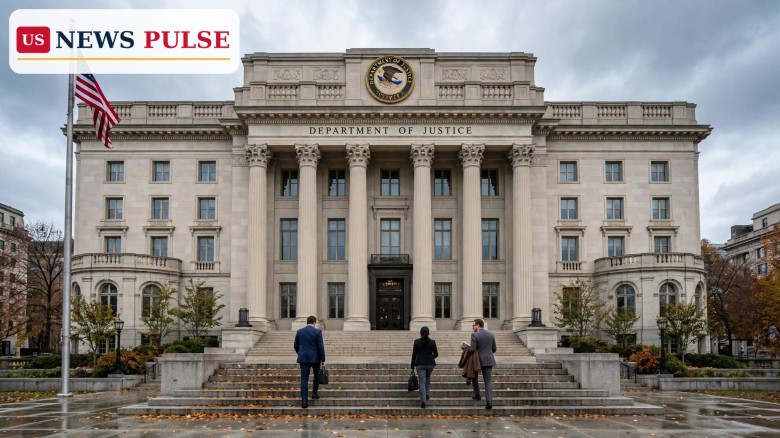
Two more senior Justice Department officials resigned on Friday, November 6, 2026, deepening a post-midterm exodus at the department just three days after Democrats swept both chambers of Congress. Jason Reding Quiñones, the US attorney for the Southern District of Florida, and John Eisenberg, head of the National Security Division, both stepped down on the same day, bringing senior departures since the election to three.
Key Points
- Jason Reding Quiñones, US attorney for the Southern District of Florida, resigned from the Justice Department on Friday, November 6, 2026.
- John Eisenberg, who led the department's National Security Division, also resigned on Friday, the third senior departure since the November 3 midterms.
- CNN reported that Quiñones resigned under pressure from department leadership, despite his willingness to pursue some of the president's most controversial investigations.
- Quiñones led the so-called "grand conspiracy" probe into former Obama- and Biden-era intelligence officials over the 2016 Russia investigation, which has produced no indictments.
- Yara Klukas, the first assistant US attorney for the Southern District of Florida, will take over the Miami office in an acting capacity, according to Bloomberg Tax.
What Happened
Attorney General Todd Blanche announced Quiñones' resignation on X on Friday, saying the department is "grateful for Jason's leadership." The announcement gave no reason for the departure. CNN reported that Quiñones resigned under pressure from department leadership, even though he had been willing to pursue some of the president's most controversial investigations.
Hours later, Eisenberg's resignation from the National Security Division was also announced, making Friday a double blow for a department already reeling from the departure of Civil Rights Division chief Harmeet Dhillon on Thursday. Dhillon had led the division since April 2025. Three of the department's most senior leaders have now left within 48 hours of each other.
The resignations come three days after Republicans suffered historic midterm losses, with Democrats winning control of the House and the Senate. The shake-up follows a wider round of post-election changes, including the president's decision on Friday to name Stephen Miller as White House chief of staff, replacing Susie Wiles.
Background: The Grand Conspiracy Probe That Produced No Indictments
Quiñones' signature assignment was the so-called "grand conspiracy" investigation into former Obama- and Biden-era intelligence officials over the 2016 Russia investigation. He promised a case within months. But the probe has produced no indictments of the alleged conspiracy, and top Justice Department officials blamed Quiñones when the plans failed to materialise, according to CNN.
His office did take other aggressive steps. It subpoenaed former CIA Director John Brennan, former Director of National Intelligence James Clapper and former FBI Director James Comey, three of the most senior intelligence officials of the Obama era. And it won the indictment of former Cuban president Raúl Castro. None of those moves, however, produced the conspiracy case the administration had promised.
Justice Department Resignations: Three Departures in Two Days
The three resignations in two days amount to the most abrupt leadership turnover at the Justice Department since the start of the president's second term. Dhillon's Civil Rights Division had already been hollowed out, with about 300 of its roughly 400 lawyers leaving in the first seven months of her tenure. Her division also oversaw the deployment of about 1,000 election monitors to all 50 states on Election Day, the largest monitoring effort ever, as reported in Harmeet Dhillon Resigns as Justice Department Civil Rights Chief After Midterms.
Quiñones' exit is seen by some inside the department as possibly the final blow to the grand-conspiracy effort. Without a US attorney willing to carry the case forward, and with a new Democratic Congress likely to scrutinise the investigation, the probe's prospects look thinner than ever. The administration will also struggle to confirm replacements, because a Democratic-controlled Senate must confirm any new nominees, although the president can install acting leaders to fill the gaps. Yara Klukas, the first assistant US attorney, will take over the Miami office in an acting capacity, according to Bloomberg Tax.
Reactions and Statements
Attorney General Todd Blanche announced Quiñones' resignation on X, saying the department is "grateful for Jason's leadership." He did not give a reason for the departure. CNN's reporting offered the sharper account, saying Quiñones resigned under pressure from department leadership, with top officials blaming him after the promised indictments did not arrive.
Blanche had struck a warmer tone a day earlier when he announced Dhillon's resignation, praising her for defending "the civil liberties of every American" and enforcing "the law without fear or favor." No successor has been named for the Civil Rights Division, and none has been named yet for the National Security Division either. The White House has not commented publicly on the Friday resignations.
Why It Matters
The Justice Department is the arm of government that decides who gets prosecuted, which cases are brought and which are dropped. Losing three senior leaders in two days, including the heads of the Civil Rights Division and the National Security Division and the top federal prosecutor in South Florida, leaves gaps at the top of the institution at a moment of maximum political sensitivity.
There is also a practical problem. With Democrats controlling the Senate, confirming permanent replacements will be difficult, and acting leaders have limited authority and tenure.
What Happens Next
The first question is who fills the three vacancies. Klukas will run the Miami office in an acting capacity, and the president can name acting leaders for the Civil Rights and National Security Divisions. Permanent nominees will need Senate confirmation, and with Democrats in control, the administration should expect tough hearings and slow votes, if the nominations advance at all.
The second question is the fate of the grand-conspiracy probe. Without Quiñones, the investigation loses its driving force in Florida, and the department will have to decide whether to keep the grand jury in Fort Pierce active, wind it down quietly or hand the matter to another office. Democrats take control of the House and Senate in January, and the Justice Department's leadership turnover is likely to feature in early oversight hearings.
Frequently Asked Questions
Who resigned from the Justice Department on Friday?
Jason Reding Quiñones, the US attorney for the Southern District of Florida, and John Eisenberg, the head of the National Security Division, both resigned on Friday, November 6, 2026.
Why did Quiñones resign?
The department gave no official reason. CNN reported that he resigned under pressure from department leadership, with top officials blaming him after the "grand conspiracy" probe he led produced no indictments.
What was the grand conspiracy probe?
It was an investigation, run from a grand jury in Fort Pierce, Florida, into whether former Obama- and Biden-era intelligence officials conspired over the 2016 Russia investigation. It produced subpoenas of John Brennan, James Clapper and James Comey, but no conspiracy indictments.
Who is running the Miami office now?
Yara Klukas, the first assistant US attorney for the Southern District of Florida, will take over the office in an acting capacity, according to Bloomberg Tax.
How many senior Justice Department officials have left since the midterms?
Three: Civil Rights Division chief Harmeet Dhillon resigned on Thursday, and Quiñones and Eisenberg resigned on Friday, within 48 hours of each other.
Leave a Comment